Somaliland marks independence anniversary amid diplomatic isolation and internal dissent
President Abdirahman Mohamed Abdullahi challenges the global community to grant statehood, while activists report arrests and regional tensions escalate over the new alliance.
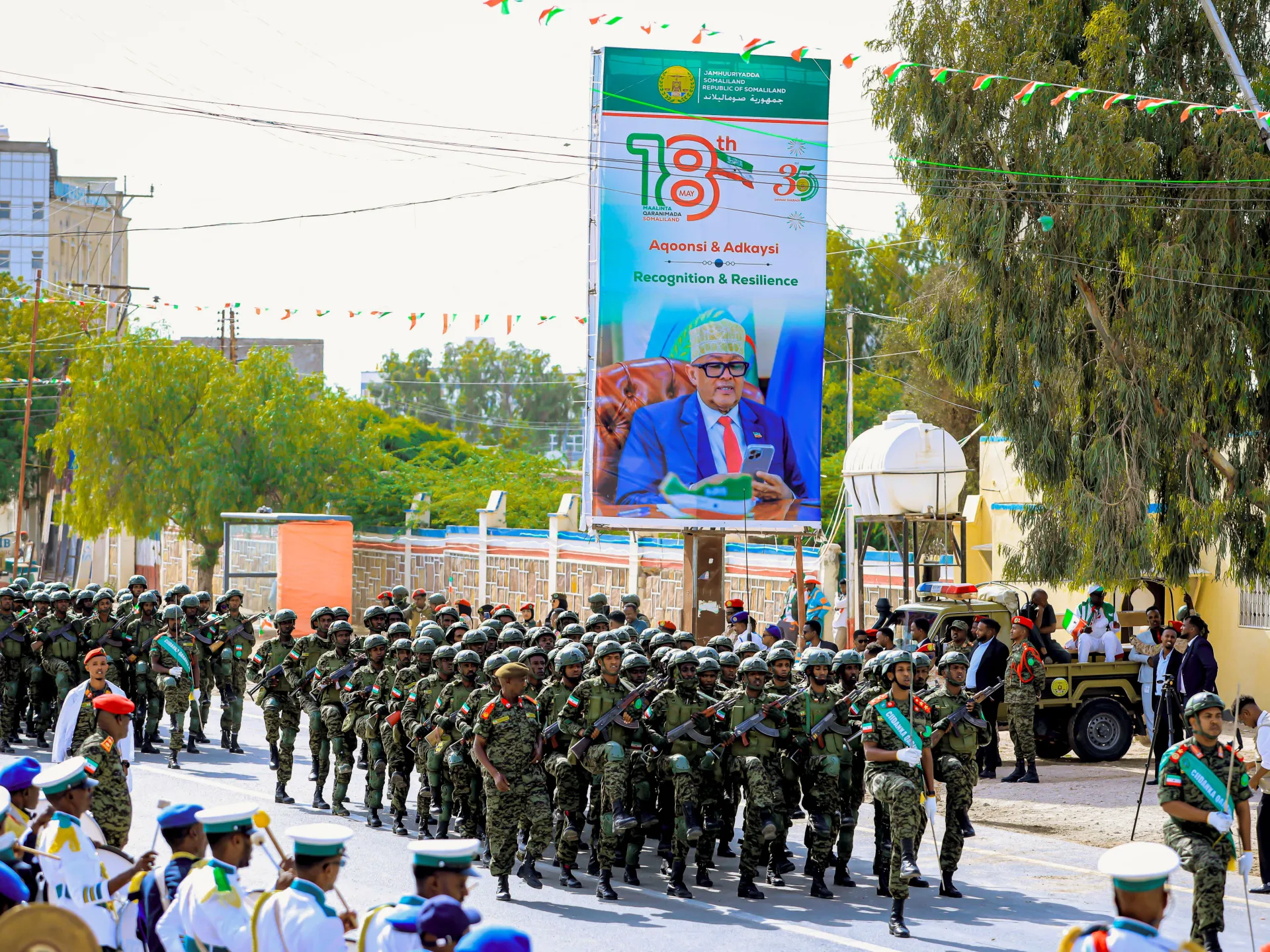
Somaliland has marked its first year of independence following recognition by Israel, with thousands gathering in the capital Hargeisa for a military parade and traditional dances. The event underscores the territory’s assertion of sovereignty, yet it has also exposed deep divisions within the breakaway region and highlighted the persistent barriers to wider diplomatic acceptance.
President Abdirahman Mohamed Abdullahi addressed the crowd, declaring that Somaliland has fulfilled the criteria of a responsible, law-abiding, and democratic nation. He framed the anniversary as a turning point in the territory’s diplomatic efforts, stating that the question for the world is no longer whether Somaliland deserves recognition, but when it will be granted.
Leaders in Hargeisa point to the territory’s relative stability and its strategic location on the Gulf of Aden as key assets. They argue that proximity to key shipping lanes and conflict-torn Yemen positions Somaliland as a potential military and trading hub. Despite these arguments, and hopes that partners such as the United States, United Arab Emirates, and Ethiopia would follow Israel’s lead, formal recognition from the broader international community remains elusive.
The African Union and many other international partners continue to oppose formal recognition, citing fears that it could embolden separatist movements across the continent. This diplomatic stalemate is compounded by internal dissent regarding the alliance with Israel. While some residents have embraced the ties, others view them with suspicion, particularly given Israel’s ongoing war in Gaza and the territory’s predominantly Muslim population.
Local activists report that dozens of individuals, including religious scholars and young men displaying Palestinian flags, have been arrested during protests against the new relationship. In Hargeisa, resident Dahir Omar Bile expressed concern that Israel’s conduct in Gaza could damage Somaliland’s search for wider recognition, while others fear potential reprisals from Yemen’s Houthi rebels, who have threatened strikes if an Israeli military presence is established.
Tensions also persist in the eastern regions, where Somaliland does not fully control the territory it claims. The newly formed North East State of Somalia asserts authority over some eastern areas, leading to clashes between Somaliland forces and local clans in 2023. Amnesty International reported that these conflicts resulted in hundreds or thousands of casualties and displaced approximately 200,000 people.
Ahmed Ali Shire, a member of parliament for Somalia’s North East State, warned that Israel’s involvement risks reigniting foreign interference similar to that which fuelled Somalia’s civil war in the 1980s. As Somaliland celebrates its first anniversary, the territory remains caught between its aspirations for statehood and the complex geopolitical realities of the Horn of Africa.