Silicon Valley’s ‘Artificial State’: Lepore Critiques Musk and Altman’s Sci-Fi Misreadings
An analysis published in WIRED contends that Elon Musk and Sam Altman have misinterpreted science fiction to justify abolishing democratic structures in favour of accelerated AI development and space colonisation.
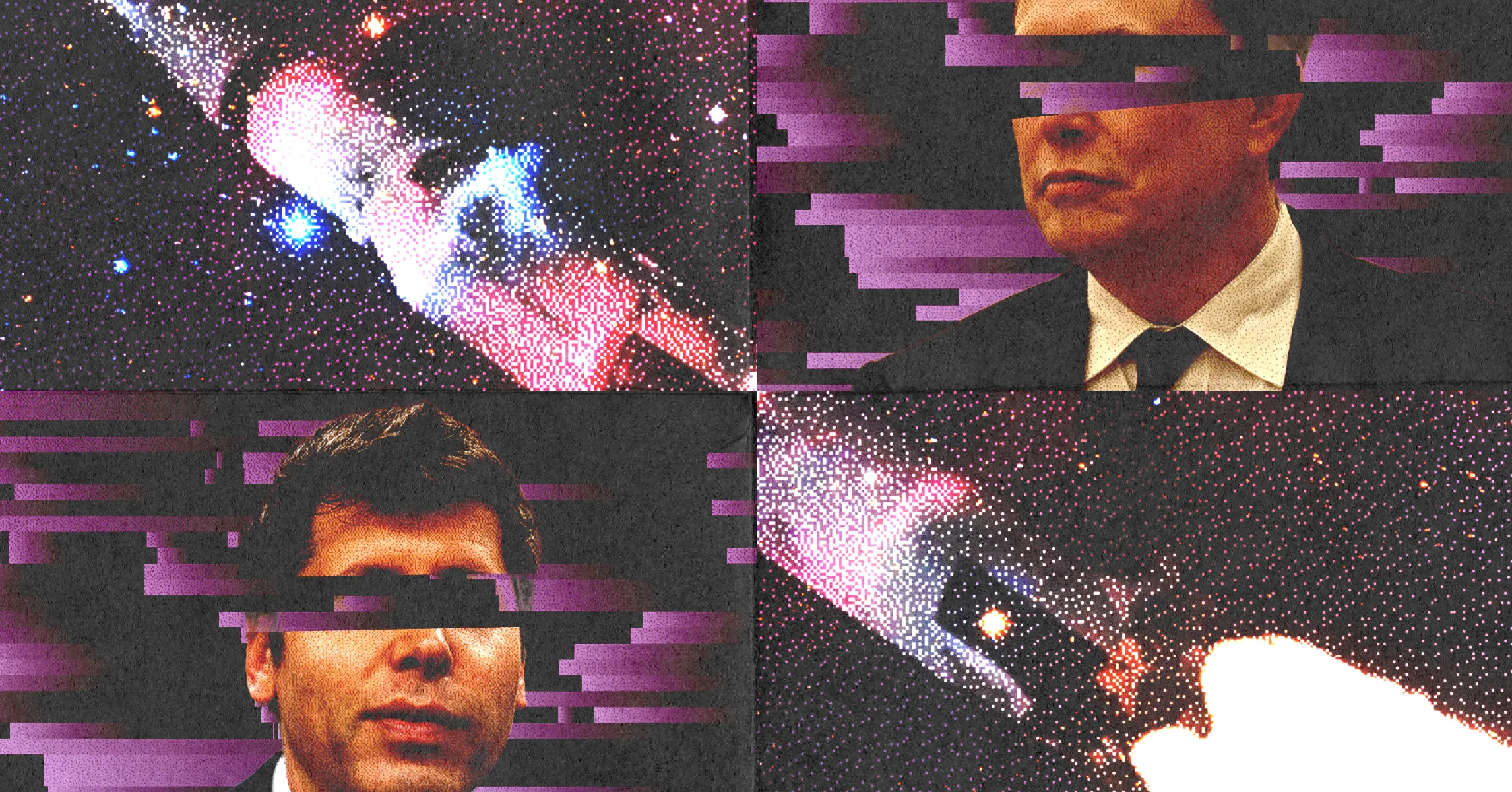
Jill Lepore, a historian at Harvard University, has published an analysis in WIRED arguing that Silicon Valley leaders, specifically Elon Musk and Sam Altman, have fundamentally misinterpreted science fiction to justify the creation of what she terms an "Artificial State." Lepore contends that these figures treat cautionary tales literally, viewing democracy and the nation-state as impediments to be abolished rather than necessary frameworks for governance.
The analysis suggests that these billionaire entrepreneurs are using distorted readings of classic literature to advocate for accelerated artificial intelligence development. Their stated aim is to facilitate their own escape from Earth through space colonisation or digital immortality, a pursuit that Lepore argues risks rendering the planet uninhabitable while the wealthy prepare to abandon humanity.
Lepore highlights Elon Musk’s interpretation of Douglas Adams’ *The Hitchhiker’s Guide to the Galaxy* as a prime example of this flawed logic. While Musk claims the book taught him that "phrasing the question" is more important than the answer, Lepore notes that the novel is a biting satire of imperialism and unregulated capitalism. The text points out that Adams wrote the work during the height of international pressure on South Africa’s apartheid regime, embedding a critique of the very systems Musk now embodies.
Sam Altman’s fascination with consciousness uploading is similarly scrutinised. Lepore cites Altman’s interest in having his brain frozen for future digital reincarnation, inspired by the novel *We Are Legion (We Are Bob)*, as evidence of taking science fiction too literally. The article argues that Altman and others have signed up for cryonics not as a metaphor, but as a literal instruction manual for escaping the "prison of their own bodies," effectively prioritising elite survival over collective human welfare.
The piece underscores a significant disconnect between the rhetoric of AI governance and reality. Despite early lip service to public involvement, Lepore asserts that no democratic or constitutional structures were built for AI oversight. Instead, architects of the Artificial State used stories of existential threats to drive investment, even as empirical data suggests limited benefits. A 2026 survey of nearly 6,000 companies in the US, UK, Germany, and Australia found that 80 percent reported gaining nothing from AI use.
Meanwhile, the environmental cost of this technological acceleration is mounting. The article notes that the total bio-mass of wild mammals has declined by 70 percent since the 1850s, while industrial robot manufacturing in the US quadrupled between 2010 and 2023. Lepore concludes that the pursuit of an "Artificial State" is not about saving humanity, but about preparing a small group of merchant princes to leave a devastated world behind.