Serbia’s student-led protests swell as government cancels rail services
President Aleksandar Vucic signals elections could be held between September and November, while the Council of Europe pledges to monitor the situation as tensions mount between demonstrators and pro-government loyalists.
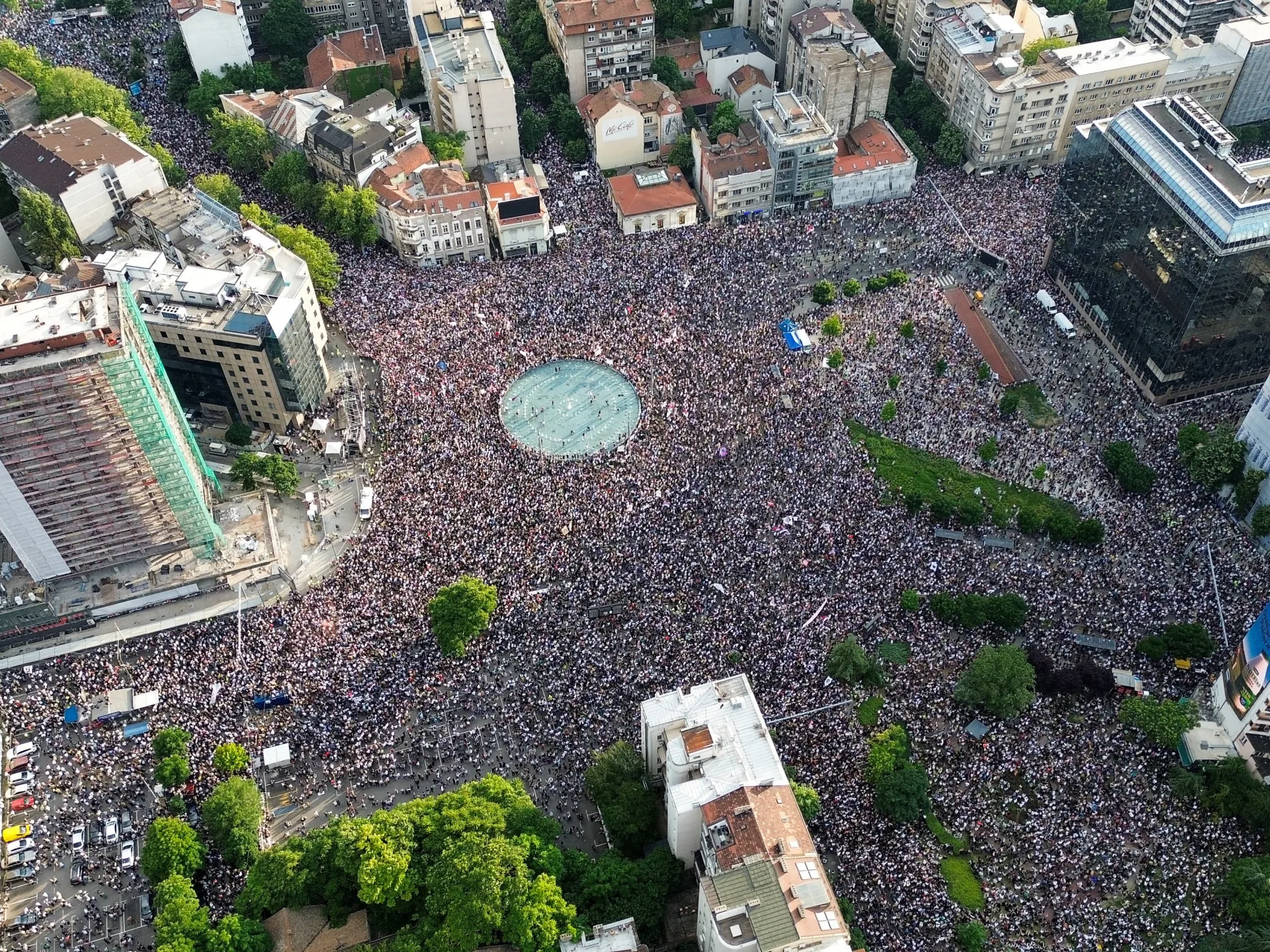
Tens of thousands of people, primarily university students, have converged on Belgrade’s Slavija Square to protest against the Serbian government and demand early elections. The demonstrations, which form part of a broader anticorruption movement, gained significant momentum following the November 2024 Novi Sad rail station disaster that claimed 16 lives. While the initial protests called for a transparent investigation and led to the resignation of then-Prime Minister Milos Vucevic, the campaign has since evolved into a direct challenge to President Aleksandar Vucic’s administration.
Protesters streamed into the capital from various directions, with columns of cars arriving from other Serbian towns throughout the day. Many demonstrators wore T-shirts bearing the motto “Students win,” reflecting the youth-led nature of the movement. Despite the scale of the gathering, journalist Tetyana Kekic noted that the movement lacks a single leader or a clear political platform, presenting a structural challenge in its efforts to unseat the current government.
In response to the anticipated turnout, Serbia’s state railway company cancelled all train services to and from Belgrade on Saturday, a move widely interpreted as an attempt to hinder attendance from other regions. Meanwhile, concerns have been raised regarding the potential for violent clashes between the student protesters and pro-government loyalists. Loyalists have established a camp in a park near the presidential building, surrounded by riot police, creating a tense standoff at the heart of the capital.
President Vucic has faced intensifying pressure to schedule early elections, stating this week that a ballot could be held between September and November. However, the political climate has become increasingly polarised, with Vucic, government officials, and pro-government media branding critics as “terrorists” and foreign agents. This rhetoric has heightened tensions, particularly in Slavija Square, the site of a previous large-scale protest in March 2025 that ended in sudden disruption and allegations of sonic weapon use.
International scrutiny of the government’s handling of the protests has also increased. The Council of Europe commissioner for human rights, Michael O’Flaherty, criticised the Serbian government in a report this week and pledged to monitor the situation closely. Additionally, the EU’s top enlargement official has warned that democratic backsliding under Vucic could cost Serbia approximately 1.5 billion euros in EU funding, adding economic pressure to the political demands for early elections.