Serbian police deploy tear gas as tens of thousands demand end to Vucic rule
Tensions surge in the capital as demonstrators challenge President Aleksandar Vucic’s 12-year tenure, while international bodies warn of democratic backsliding and funding risks.
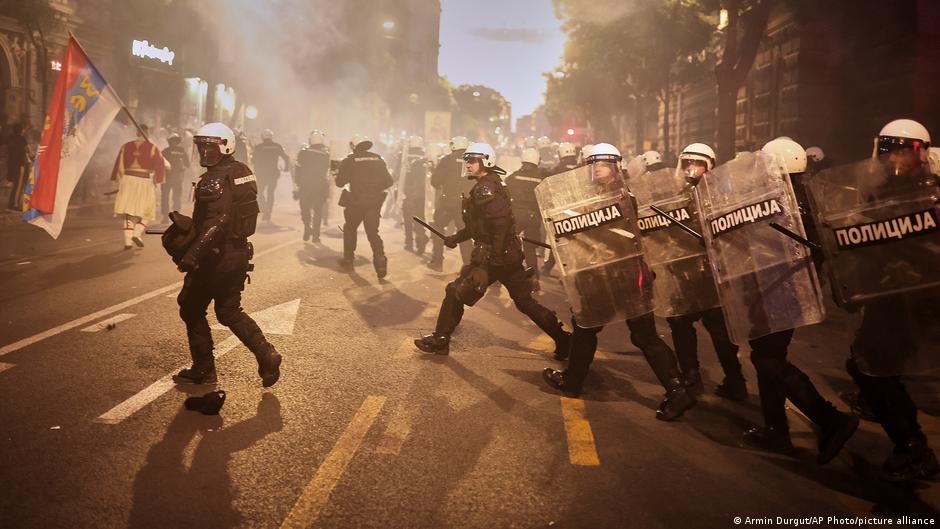
Police in Belgrade deployed tear gas and stun grenades on Saturday to disperse demonstrators during a large-scale rally demanding early parliamentary elections and the end of President Aleksandar Vucic’s 12-year rule. The student-led protest, which drew tens of thousands of participants, saw tensions escalate when some attendees threw flares, rocks, and bottles at officers, prompting a forceful response from riot police.
The demonstration proceeded despite significant logistical hurdles, including the cancellation of state rail services to and from the capital. The state rail operator cited a bomb scare for the disruption, a move that organizers accused the government of using to prevent citizens from other parts of Serbia from attending the gathering.
The current unrest is rooted in a tragedy approximately 18 months ago, when a newly renovated roof collapsed at a railway station in Novi Sad, killing 16 people. The incident, linked to a Chinese-funded infrastructure project, was attributed to corruption, negligence, and poor workmanship. While the movement initially focused on restoring the rule of law and addressing state corruption, it has evolved into a broader political challenge against Vucic’s administration.
During the rally at Slavija Square, participants carried banners bearing the names of their towns and wore T-shirts with the slogan "Students win." While the main protest remained largely peaceful, groups of young demonstrators later split off, leading to the violent clashes. This follows a massive anti-government protest in March 2025 at the same location, which drew 300,000 people and ended in controversial circumstances involving allegations of sonic weapon use.
As the protests continue, pro-government loyalists have established a camp in a park outside the Serbian presidency building, a structure set up in March 2025 as a buffer against demonstrators. Meanwhile, Vucic and pro-government media have intensified their rhetoric, labeling critics as terrorists and foreign agents.
International scrutiny of Serbia’s political climate has also intensified. The Council of Europe’s human rights commissioner recently raised serious concerns about deteriorating human rights, citing attacks on journalists, shrinking civic space, and police violence. Additionally, the European Union has warned that democratic backsliding under Vucic could cost the country approximately €1.5 billion in funding, despite Serbia’s formal application for membership.