Serbian authorities intensify media consolidation as parliamentary elections approach
With approximately 90% of the landscape linked to President Vucic's regime, experts warn of a new phase of propaganda engineering targeting independent journalism
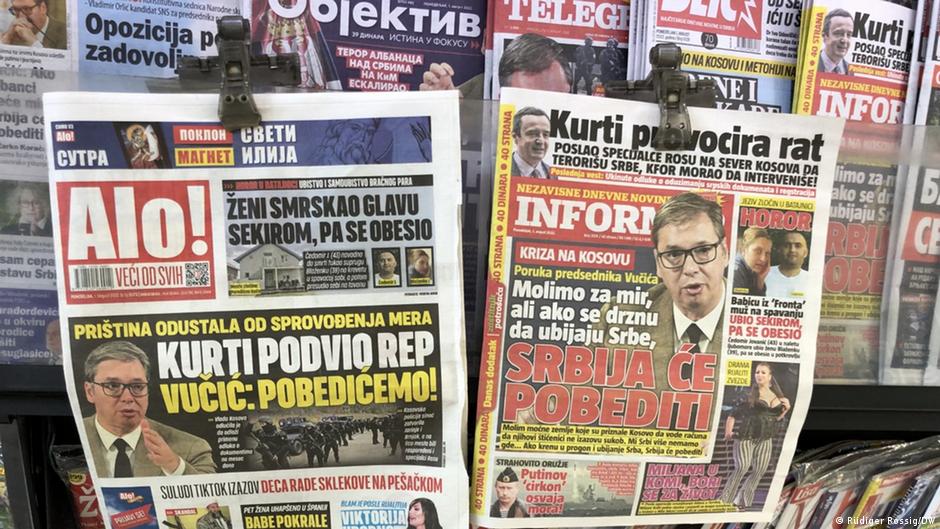
Serbia's ruling Serbian Progressive Party (SNS) is systematically tightening its grip on the nation's media infrastructure in the run-up to parliamentary elections expected between June and the end of 2026. Analysts indicate that authorities are actively replacing moderate pro-government loyalists with "super-loyalists" to transform news outlets into political weapons designed to discredit opposition figures. This shift marks a departure from simple positive coverage toward the propagation of blatant lies and the creation of deep societal divisions.
The consolidation of control, which has seen the regime link roughly 90% of media outlets to President Aleksandar Vucic since 2012, relies on a triad of mechanisms: the direct purchase of local outlets by ruling elites, the strategic allocation of state advertising, and project co-financing. Over the past decade, approximately €120 million has been spent on project co-financing, with the majority directed toward pro-government entities. State advertising remains a larger, less transparent channel of support, while market pressures force private companies to avoid independent media to maintain favourable relations with the authorities.
The nature of this media engineering has evolved significantly in recent months. According to journalist and media analyst Nedim Sejdinovic, the narrative now explicitly labels opposition figures as "traitors," "foreign mercenaries," or "enemies of the state." Critical voices are routinely discredited, and scandals are reported without context, framed solely through the lens of government officials. This environment has saturated the public space with the presence of President Vucic, whose addresses frequently interrupt regular programming across national, regional, and local stations.
In response to a deepening political crisis, the government is reportedly expanding its propaganda machinery. The Association of Independent Electronic Media (ANEM) noted the registration of 78 new outlets since the beginning of 2026 alone. Bojan Cvejic of ANEM described these registrations as an expansion of the machinery for spreading government propaganda, noting that many texts are unsigned and almost identical, functioning more like pamphlets than journalistic content used in campaigns against critics.
International observers have documented the deteriorating conditions for press freedom in the country. The latest World Press Freedom Index published by Reporters Without Borders places Serbia at 104th globally, classifying the situation as "difficult." The report highlights increasing political pressure and limited media pluralism, warning that the current administration is fundamentally opposed to professional journalism and that resolving the issue of media freedom requires a change of government.
As the election timeline approaches, experts fear the suppression of independent reporting will intensify. The systematic dominance achieved since 2012 has created a hostile environment where dissent is delegitimised and the line between journalism and state propaganda is increasingly erased. With the next phase potentially involving stronger pressure on the digital sphere, the structural challenges facing the sector appear insurmountable without a shift in the political landscape.