Seoul defies Washington as Trump claims positive contact with Kim Jong Un
Diplomatic friction mounts as Donald Trump links defence strategy to allied support in the Middle East, while Pyongyang maintains its strategic autonomy.
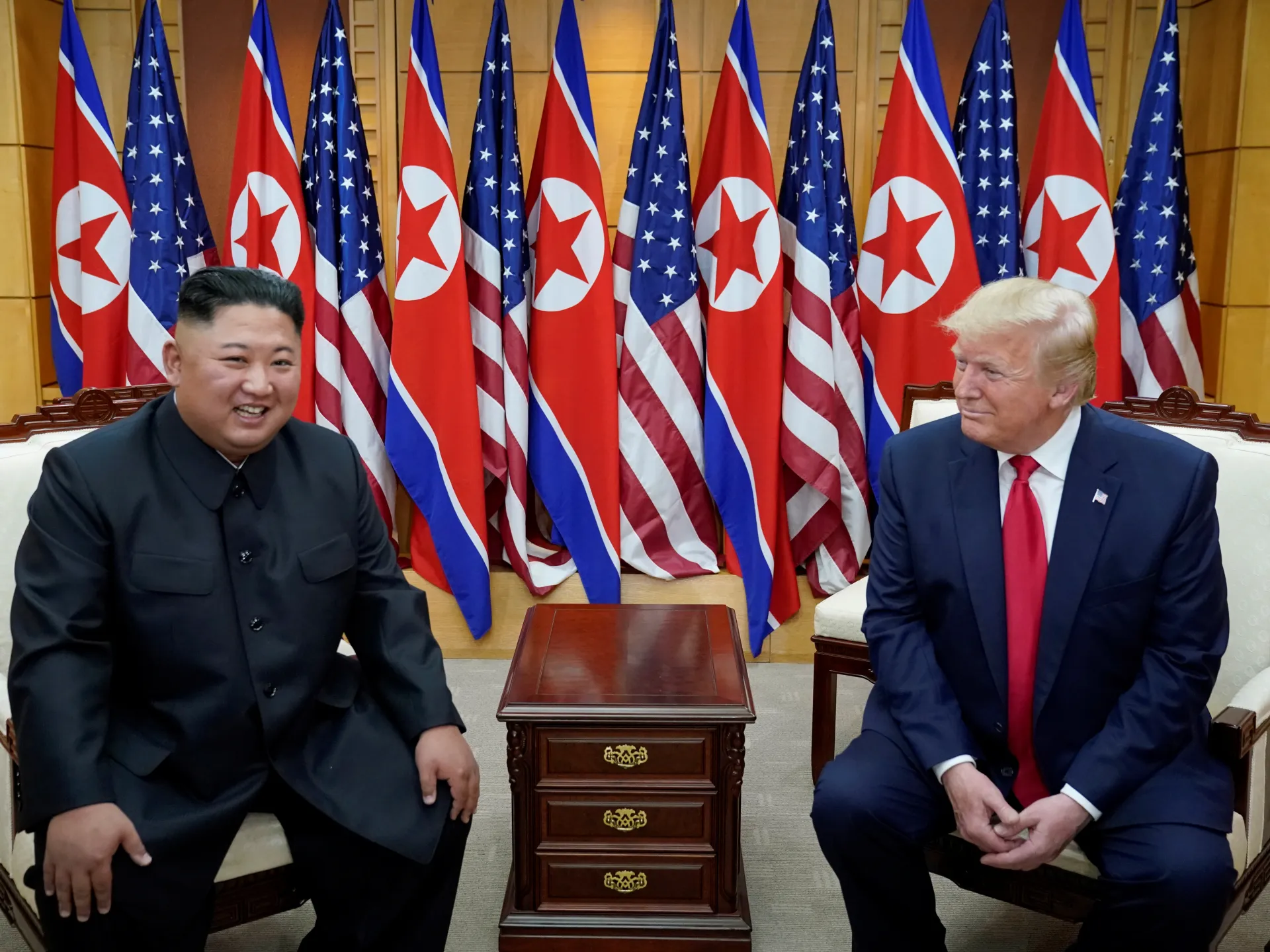
US President Donald Trump has asserted that North Korean leader Kim Jong Un has responded to his recent outreach for a conversation, describing the exchange as “very positive”. The claim emerged on Monday, a day after Trump instructed the Pentagon to substantially reduce the scope of annual joint military exercises with South Korea, a move that has immediately complicated allied defence protocols.
Trump stated that the scaling back of the drills, known as Ulchi Freedom Shield, was justified by his personal relationship with Kim and Seoul’s refusal to join the US-Israel military operation in Iran. Writing on his Truth Social platform, the US president argued that the exercises send an “inappropriate and hostile” signal to North Korea, which he described as “unthreatening and respectful” during his presidency.
The directive has created immediate tension with South Korean officials, who confirmed that the drills are proceeding as scheduled. Seoul’s presidential office stated on Tuesday that the exercises do not reflect any intention to attack North Korea or escalate tensions on the peninsula. President Lee Jae Myung reiterated that the fundamental purpose of the drills is to safeguard the peaceful daily lives of the people, rather than to treat any specific entity as an adversary.
Trump further criticised South Korea’s stance on the Iran conflict, noting the presence of 39,000 US soldiers in the country. “We have 39,000 soldiers over there, guarding you from Kim Jong Un... and you’re not going to help us on a very easy military operation in Iran. That’s strange,” Trump said at the Oval Office. He questioned US support for allies that refuse to contribute to the Iran war, suggesting that Washington cannot protect countries that do not reciprocate assistance.
Despite the diplomatic friction, South Korean officials expressed hope that the personal chemistry between Trump and Kim might revive direct talks. However, analysts remain cautious about the immediate impact of Trump’s overtures. Victor Cha, head of the Korea programme at the Center for Strategic and International Studies, suggested that North Korea is likely to “bide its time”, while also noting that Trump’s renewed interest in Kim may be an attempt to shift headlines away from the complexities of the Iran war.
North Korea has significantly strengthened ties with Russia since Trump and Kim last met in 2019, with Pyongyang’s troops reportedly fighting alongside Russian forces in Ukraine. Kim Yo Jong, Kim Jong Un’s sister, has previously dismissed the idea that personal relationships could be used to end Pyongyang’s nuclear programme, stating such efforts would be met with “mockery”. The content and nature of Kim’s response to Trump’s request remain undisclosed, leaving the future of US-North Korea diplomacy uncertain.