Security lapses and light screening at White House Correspondents' Dinner in Butler
A BBC correspondent details how a cursory ticket check and unthorough pocket inspections allowed a gunman to breach the venue, prompting Secret Service agents to rush the administration to safety.
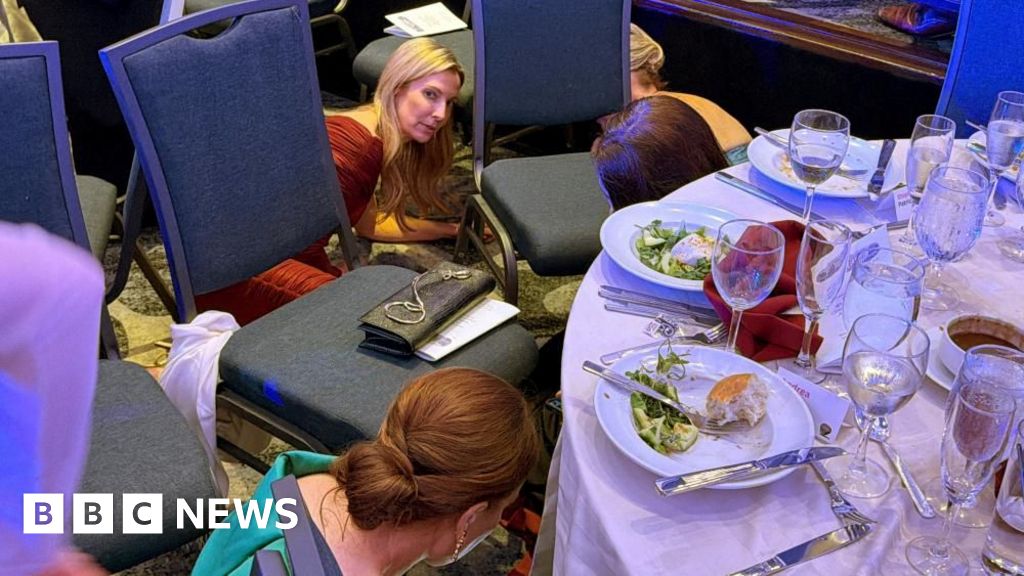
Shots were fired at the White House Correspondents' Dinner held at the Washington Hilton in Butler, Pennsylvania, forcing attendees to dive for cover under tables while Secret Service agents rushed to evacuate President Trump, First Lady Melania Trump, and Vice-President JD Vance. The incident has drawn immediate scrutiny regarding the security posture at the venue, with reports indicating that screening procedures were significantly lighter than expected for an event hosting the sitting President.
Gary O'Donoghue, a blind BBC correspondent present at the gathering, described the immediate sensory experience of the attack, noting the low thudding sound of semi-automatic weapons and the shattering of glass before he and others dived under the table cloth. As the shots rang out, witnesses reported seeing dozens of people running into the ballroom from the corridor outside, creating a scene of confusion and panic within the crowded venue.
Secret Service agents were observed on the stage behind the tables, rushing the President, First Lady, and Vice-President away from the line of fire, while other agents stood in helmets and bulletproof vests with guns trained on the crowd. In the immediate aftermath, FBI Director Kash Patel was seen on the floor shielding his girlfriend as an agent ran to his aid, highlighting the rapid response required to protect high-ranking officials during the active threat.
The specific identity and background of the gunman have not been detailed in the provided source material, yet the breach underscores significant gaps in venue security. A ticket check at the entrance was described as cursory, with an agent taking only a cursory look at a ticket from six feet away, failing to detect the severity of the threat before guests entered the ballroom.
Compounding concerns about the security protocol, a correspondent reported that a security agent did not thoroughly inspect the contents of a jacket pocket despite it triggering a bleep during a wand search. The agent did not ask the individual to turn out their belongings, allowing the suspicious item to pass undetected in an environment where the security felt more like a regular dinner without the sitting president in attendance.
President Trump has since confirmed he was unharmed and stated that the shooter has been apprehended, though the exact number of shots fired and the total number of casualties or injuries remain unspecified. This incident occurs against a backdrop of heightened security concerns following previous assassination attempts and unconfirmed loud noises that triggered an earlier evacuation for the President.
Separately, the US Justice Department has dropped a criminal probe into Federal Reserve Chair Jerome Powell regarding cost overruns on headquarters renovations, a matter now transferred to the Fed's Office of the Inspector General. While this development is distinct from the security response at the dinner, it reflects a broader shift in how federal investigations are being managed across key institutions during this period.