Scientists identify largest dinosaur species from Southeast Asia in Thailand
The 27-metre herbivore, unearthed in northeast Thailand and fully excavated in 2024, has been formally classified as a new species following analysis published in *Scientific Reports*.
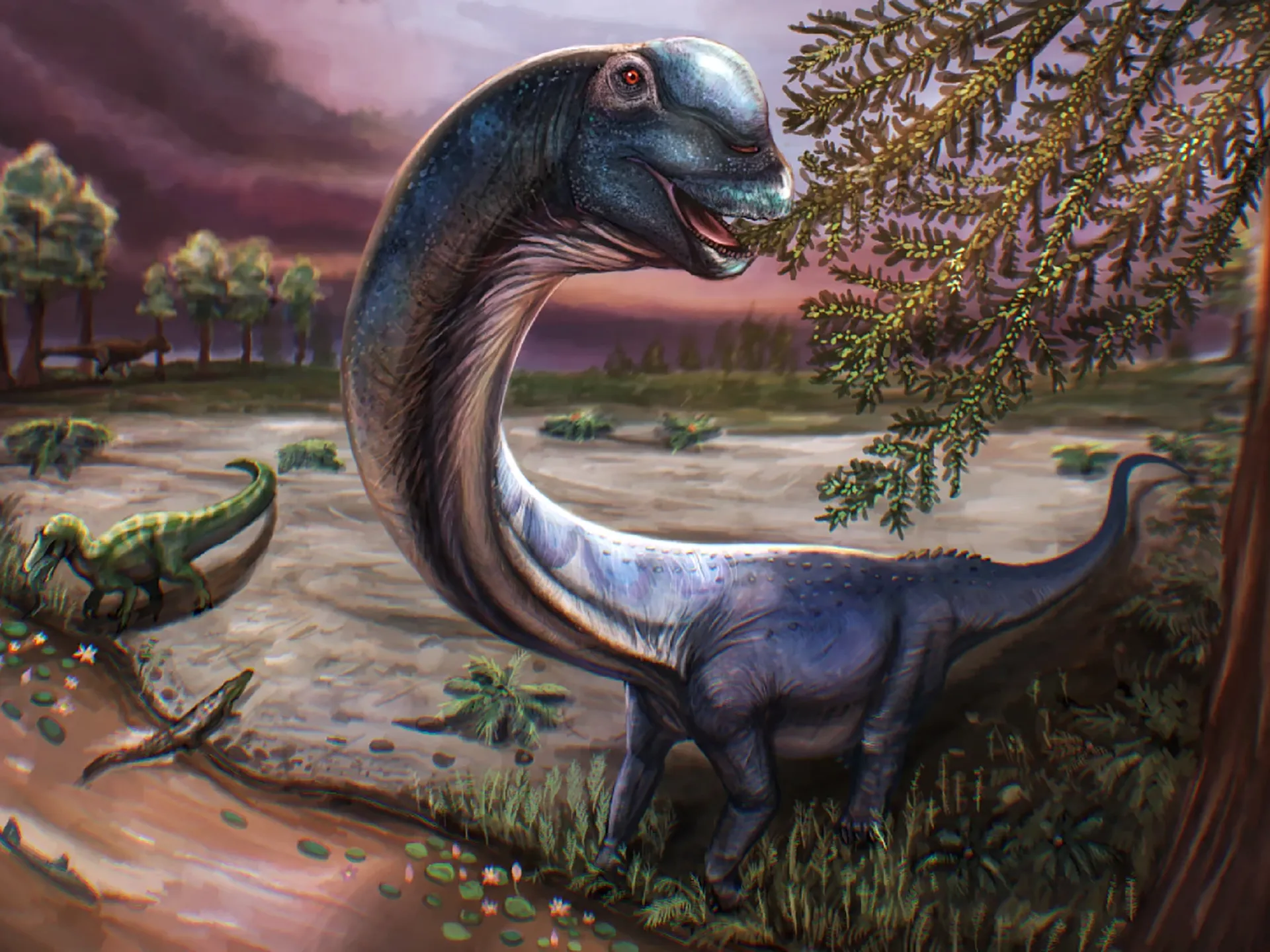
Scientists have formally identified *Nagatitan chaiyaphumensis*, a new species of sauropod dinosaur discovered in Thailand, marking the largest dinosaur species known from Southeast Asia. The herbivore, which lived between 100 and 120 million years ago, measured 27 metres in length and weighed approximately 27 tonnes. Although the remains were initially unearthed by locals a decade ago, the full excavation was completed in 2024, with the findings published in *Scientific Reports*. The species is described as the region's last "titan," as sauropods disappeared from the area when it became a shallow sea. A life-size reconstruction is currently on display at Bangkok’s Thainosaur Museum.
The study, published on Thursday, details the identification of the sauropod, a lineage characterised by long necks, tails, small heads, and four columnar legs. Lead author Thitiwoot Sethapanichsakul, a University College London PhD student in palaeontology, noted that the dinosaur likely weighed at least 10 tonnes more than *Dippy* the Diplodocus, the famous composite cast previously displayed at London’s Natural History Museum. Sethapanichsakul described *Nagatitan* as "the last titan" because it was unearthed in one of the youngest rock formations where dinosaurs have been found in Thailand.
While the head and teeth were not recovered during the excavation, researchers inferred the dinosaur’s feeding habits based on other sauropods. Sethapanichsakul stated that *Nagatitan* was probably a bulk browser that consumed high volumes of vegetation requiring little to no chewing, such as conifers and possibly seed ferns. The remains partially resembled those of previously discovered sauropods but possessed enough unique features to be classified as a distinct new species.
The name *Nagatitan* references the Naga, a serpent-like being prominent in Thai religious traditions and temple depictions. Sauropods originated approximately 140 million years ago, and by 90 million years ago, they had become the only surviving sauropod subgroup worldwide, thriving until the end of the dinosaur age 66 million years ago. However, in Southeast Asia, the group vanished when the region transformed into a shallow sea during the Cretaceous period.
In total, there are 14 known named dinosaurs from Thailand. The initial discovery of *Nagatitan chaiyaphumensis* occurred roughly ten years ago when local residents unearthed the remains in northeast Thailand. The comprehensive excavation process was only completed in 2024, leading to the formal scientific recognition and subsequent publication of the findings.