Saudi Arabia, Turkiye and Pakistan forge Mecca defence pact amid US security doubts
Analysts say the Mecca Joint Defence Agreement is designed to supplement, not replace, American guarantees, reflecting growing concerns over Washington’s reliability following the recent conflict with Iran.
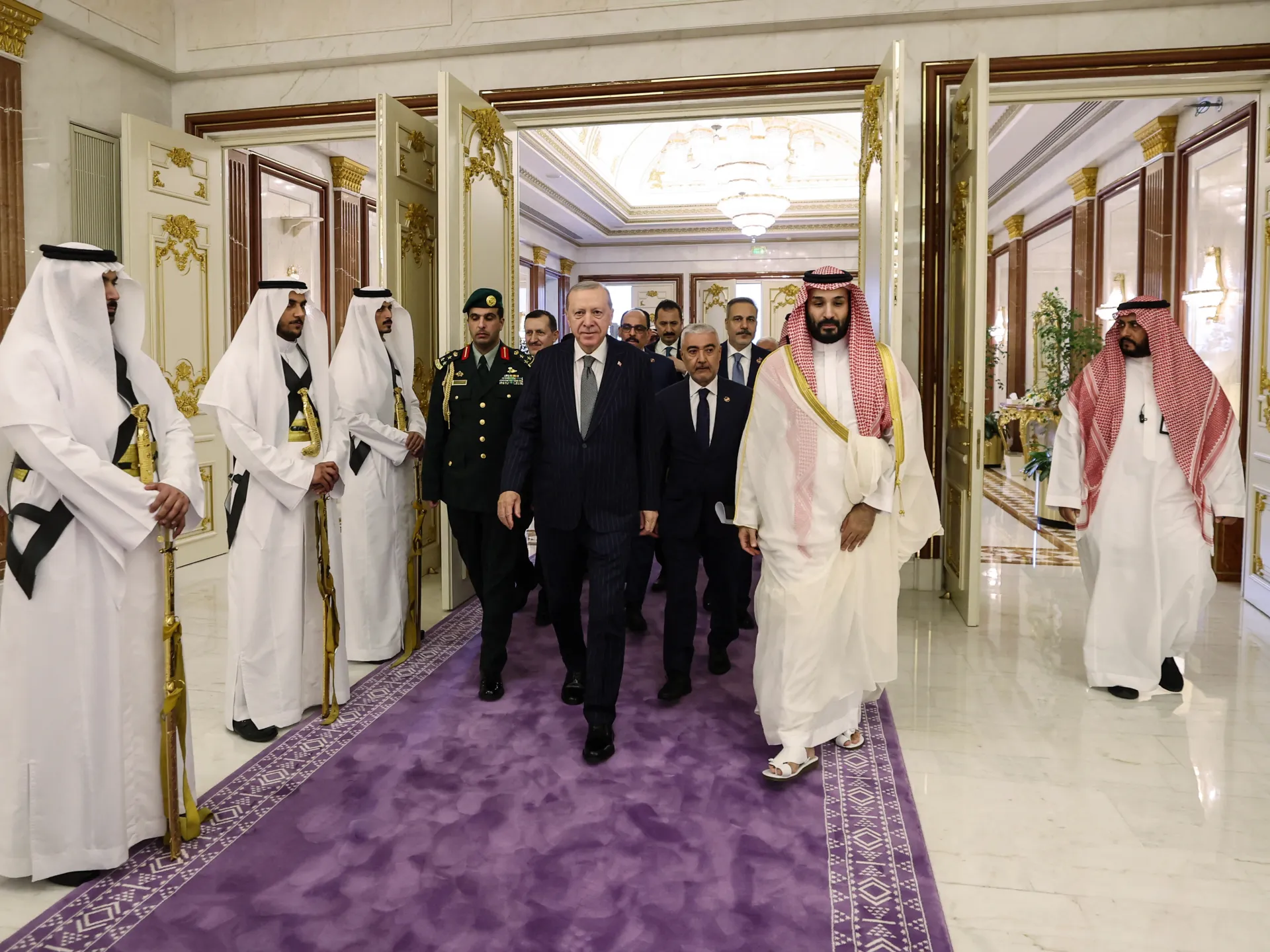
Saudi Arabia, Turkiye and Pakistan signed the Mecca Joint Defence Agreement in Mecca on Friday, establishing a framework for collective deterrence that stipulates an armed attack against any one signatory will be regarded as an attack against all three. The pact, which also provides for the enhancement of all aspects of defence cooperation among the three states, marks a significant development in Middle Eastern security architecture. While operational details remain unspecified, the agreement underscores a strategic recalibration by regional partners seeking to bolster their security postures in the wake of the recent US-Israel war on Iran.
The timing of the agreement has drawn attention from analysts who view it as a response to perceived gaps in US military support. Reports indicate that Washington struggled to provide sufficient air defence munitions to regional partners during the conflict, with many supplies diverted to Israel. This shortfall, combined with Iranian missile and drone strikes against US military facilities and the closure of the Strait of Hormuz, has strained longstanding security relationships. The war, which began in late February, saw Iranian forces targeting civilian infrastructure, including energy and desalination plants, imposing steep economic costs on the region.
Kristian Coates Ulrichsen, a Middle East fellow at Rice University’s Baker Institute for Public Policy, told Al Jazeera that regional states have harboured doubts about the reliability of US security partnerships for more than a decade. He noted that the decision to begin military operations against Iran, along with the subsequent conduct of the war, has intensified those concerns and accelerated efforts to diversify security and defence relations. However, Ulrichsen emphasised that building new defence pacts is not intended to replace or supplant the United States, but rather to provide additional strategic and policy options.
Sina Toossi, an analyst at the Center for International Policy, described the current period as a “fluid, tabula rasa era” in the Middle East, a sentiment echoed by Brett McGurk, a former Middle East policy architect. Toossi argued that the pact is one of the first major geopolitical signs that the regional order is being reshaped by the Iran war. He suggested that Saudi Arabia, a long-standing US partner, appears to be broadening its security partnerships and laying the groundwork for more intra-regional security arrangements, rather than relying primarily on Washington.
Despite the new alliance, analysts caution against interpreting the agreement as a move towards greater confrontation with Iran. Yasmine Farouk, an analyst at the International Crisis Group, told Al Jazeera that all three signatories have generally called for mediation and de-escalation since the attacks on Iran began. She described the pact as a form of “normative deterrence,” aimed at deterring Iran, which has emerged from the conflict hardened and more confident in its ability to use force. Farouk stressed that these countries are not seeking regional escalation and recognise that no framework can replace the United States, viewing the agreement as an effort to supplement, not supplant, existing security commitments.