Saudi Arabia, Turkiye and Pakistan forge collective defence pact in Mecca
The Mecca Joint Defence Agreement commits the three nations to treat an armed attack on any signatory as an attack on all, a move that follows heightened tensions since the onset of the Iran war.
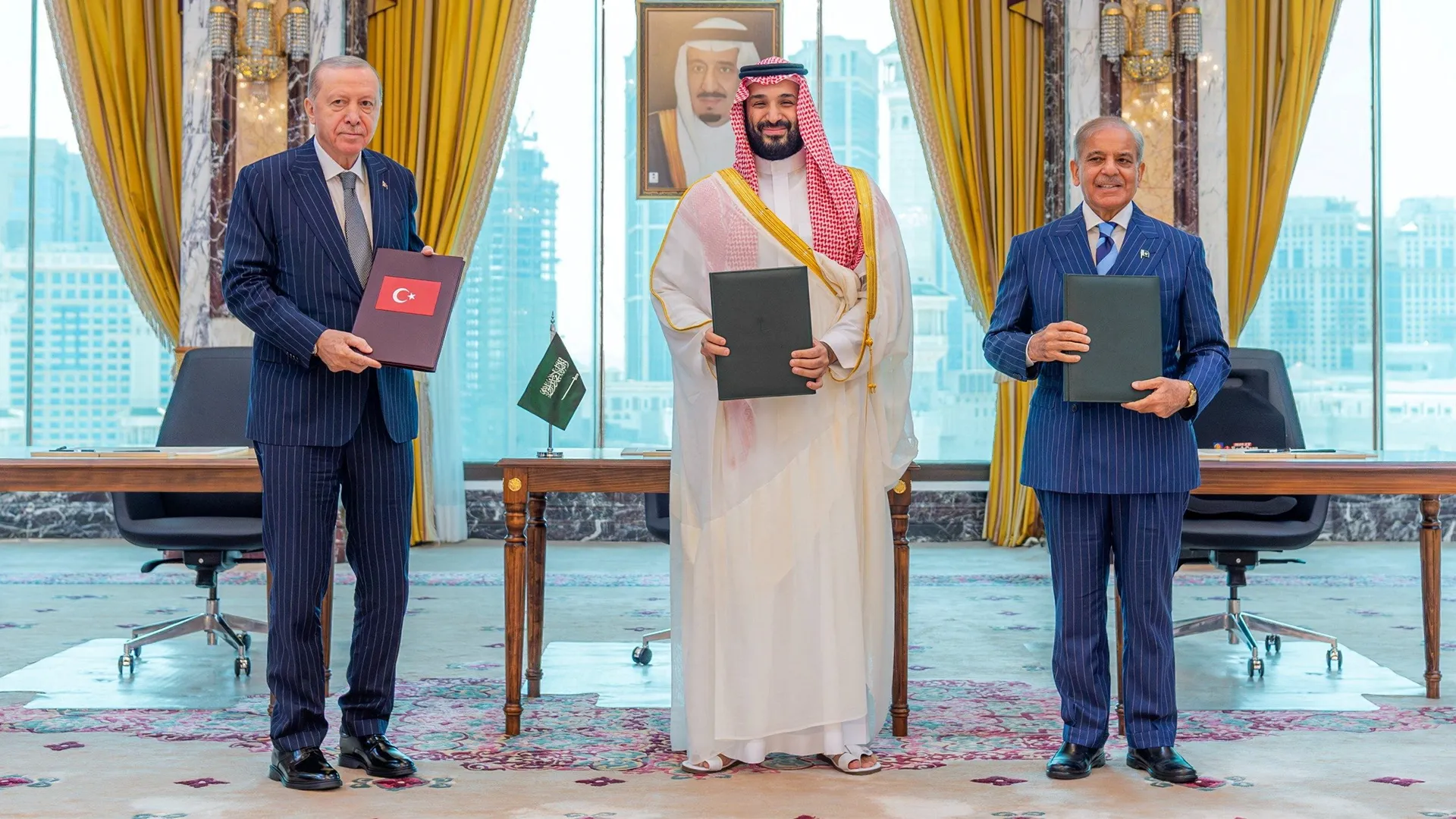
Saudi Arabia, Turkiye and Pakistan have formalised a joint defence agreement in Mecca, establishing a collective security framework that treats an armed attack against any one of the three states as an attack against them all. The pact was signed by Saudi Crown Prince Mohammed bin Salman, Turkish President Recep Tayyip Erdogan and Pakistani Prime Minister Shehbaz Sharif during a meeting in the Saudi holy city.
The agreement, dubbed the Mecca Joint Defence Agreement by Saudi broadcaster Al Arabiya, comes in the wake of repeated strikes on Saudi territory by Iran and Tehran-backed Houthi rebels. These hostilities began with the onset of the Iran war on 28 February 2026, a period that has seen escalating military activity across the region and significantly heightened diplomatic urgency among the signatories.
A Turkish official overseeing the deal confirmed that the agreement is not directed against any specific actor and remains open to other regional countries. This clarification suggests an intent to broaden regional stability rather than isolate a particular adversary, although the timing of the signing coincides with a period of intense military engagement involving the parties.
The signing occurred on Thursday, a day marked by continued violence in Yemen where Houthi forces killed at least 58 Yemeni government troops in missile and drone attacks on military bases in the Marib and Hadramawt provinces. In related attacks on the same day, more than 10 civilians, including a four-year-old child, were killed, underscoring the volatile security environment in which the diplomatic agreement was reached.
Officials noted that the new pact does not abrogate or replace existing bilateral defence agreements between the signatories. By layering a multilateral collective defence commitment over existing bilateral ties, the three nations have sought to institutionalise a unified response mechanism without dismantling their individual strategic partnerships.