Saudi Arabia, Turkey and Pakistan forge Mecca Joint Defence Agreement
Leaders in Mecca sign mutual defence accord aimed at collective deterrence, though details of military obligations remain unspecified
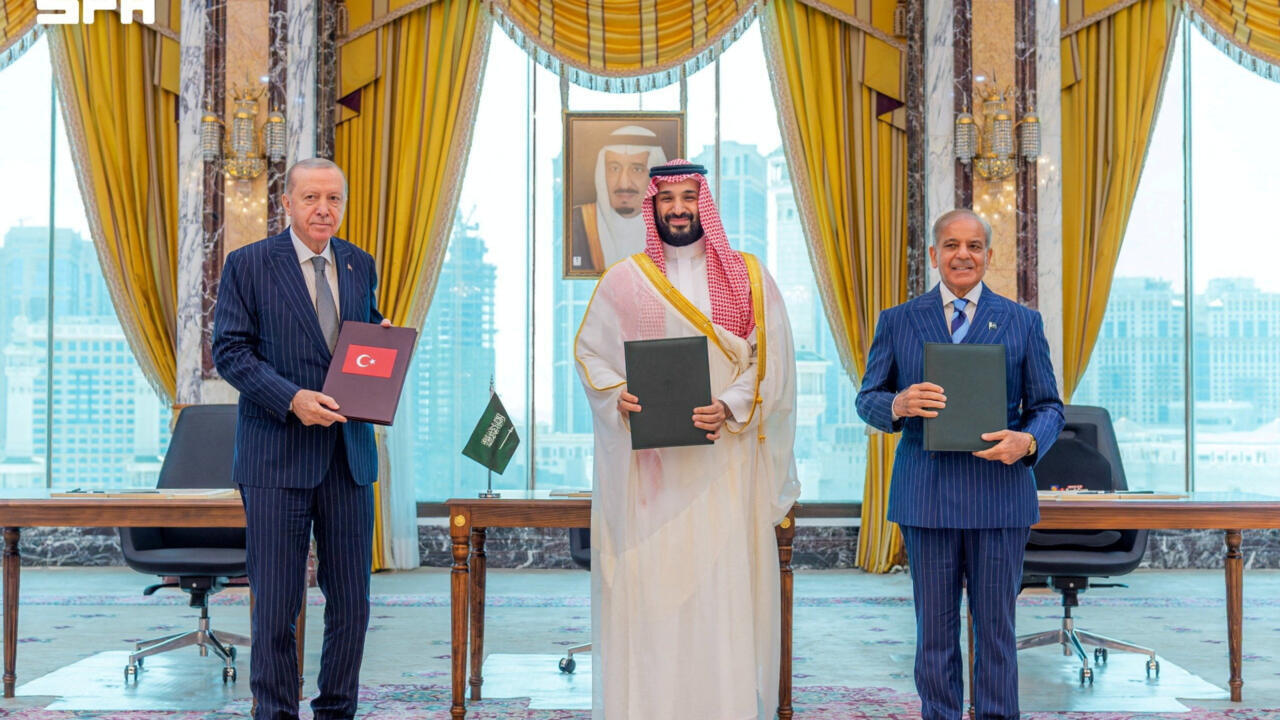
Saudi Arabia, Turkey and Pakistan have formalised the Mecca Joint Defence Agreement, establishing a collective security framework that treats an armed attack against any of the three nations as an attack on all. The pact was signed in Mecca on Friday by Saudi Crown Prince Mohammed bin Salman, Turkish President Recep Tayyip Erdogan and Pakistani Prime Minister Shehbaz Sharif, following nearly a year of negotiations.
The agreement aims to strengthen collective deterrence against acts of aggression, yet the joint statement did not specify the precise military actions required from signatories in defence of one another. Turkish Vice President Cevdet Yilmaz stated the accord was not aimed at any specific country, while a Turkish official clarified that it did not abrogate existing agreements the nations hold with other states.
The signing occurs against a backdrop of heightened regional instability, including Iranian missile fire on Gulf states and blockades of energy shipments. These tensions escalated following US and Israeli attacks on Iran on 28 February 2026, which have drawn Saudi Arabia, Kuwait, Bahrain, Qatar, the United Arab Emirates, Oman, Jordan and Israel into the conflict.
Officials emphasised the defensive nature of the pact. Rayed Krimly, Saudi deputy minister for public diplomacy, stated on social media that the agreement does not represent an effort to establish a military axis, a sectarian bloc, or link to nuclear ambitions or an arms race. This clarification addresses concerns regarding Pakistan, the only nuclear-armed Muslim country, which has previously stated its atomic deterrent was not on the radar for alliance purposes.
The trilateral framework reflects a growing willingness among regional middle powers to coordinate on security matters as the United States struggles to contain regional upheaval. Abdulaziz Sager, chairman of the Gulf Research Center, noted the pact could strengthen the countries' collective diplomatic and defence weight, contributing to a more regionally driven security architecture.
Israel’s Prime Minister Benjamin Netanyahu’s office declined to comment on the development. Meanwhile, a spokesperson for India’s Foreign Ministry described the pact as a development the country was closely following, highlighting the global interest in the shifting security dynamics of the Middle East.