Saudi Arabia, Turkey and Pakistan forge collective defence pact in Mecca
The Mecca Joint Defence Agreement establishes a framework where an attack on one signatory is regarded as an attack on all, leveraging the combined financial, military and nuclear capabilities of the three nations.
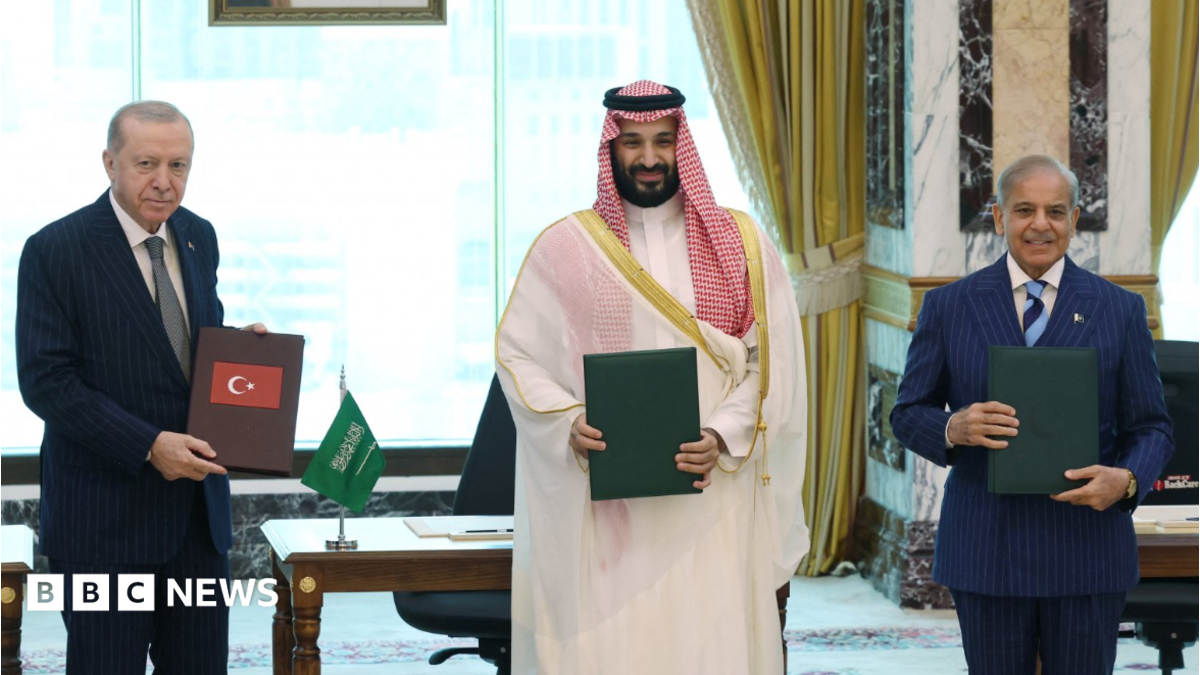
Saudi Arabia, Turkey and Pakistan have formalised a joint defence agreement in Mecca, establishing a collective security framework where an armed attack against any one of the three states is regarded as an attack against them all. The pact was signed by Saudi Crown Prince Mohammed bin Salman, Turkish President Recep Tayyip Erdogan and Pakistani Prime Minister Shehbaz Sharif during a meeting in the Saudi holy city.
The agreement, described by Saudi broadcaster Al Arabiya as the Mecca Joint Defence Agreement, aims to strengthen security ties amid escalating hostilities between the United States and Iran. The conflict, which began on 28 February, has disrupted maritime shipping through the Strait of Hormuz and the Red Sea, prompting the three Sunni states to consolidate their defensive posture.
Pakistan’s foreign ministry stated that an attack on any of the three states “shall be regarded as an attack against them all”. While the pact pledges mutual support, it provides no specific details regarding the operational obligations of each party. A Turkish official confirmed to Reuters that the agreement is purely defensive in nature and is not directed against any specific actor, remaining open to other regional countries.
The strategic foundation of the pact relies on the complementary strengths of the signatories. Saudi Arabia contributes significant financial power and is one of the world’s largest arms purchasers. Turkey brings the second-largest military force in NATO and an advanced defence production capacity. Pakistan adds nuclear capabilities to the alliance, which follows a previous joint defence announcement between Saudi Arabia and Pakistan last year.
The signing occurs against a backdrop of heightened regional violence. Iran and its allies have launched attacks on targets in Saudi Arabia and other Gulf states, while Iran-backed Houthi rebels in Yemen have imposed a maritime embargo and targeted Saudi infrastructure. Saudi Arabia has responded with strikes on Houthi positions and formed a new naval coalition to protect shipping in the Red Sea and Gulf of Aden.
The three nations share a common ally in the United States, which is currently struggling to contain the regional repercussions of the conflict. The Mecca Joint Defence Agreement represents a significant shift in regional security architecture, as the three powers seek to bolster deterrence amid ongoing instability and the failure of diplomatic efforts to abate the conflict between Israel and Iran.