Saltwater threatens the Sundarbans’ traditional medicine network
Rising salinity, cyclones and habitat change are making medicinal plants harder to find, placing pressure on local healers and communities with limited access to affordable healthcare.
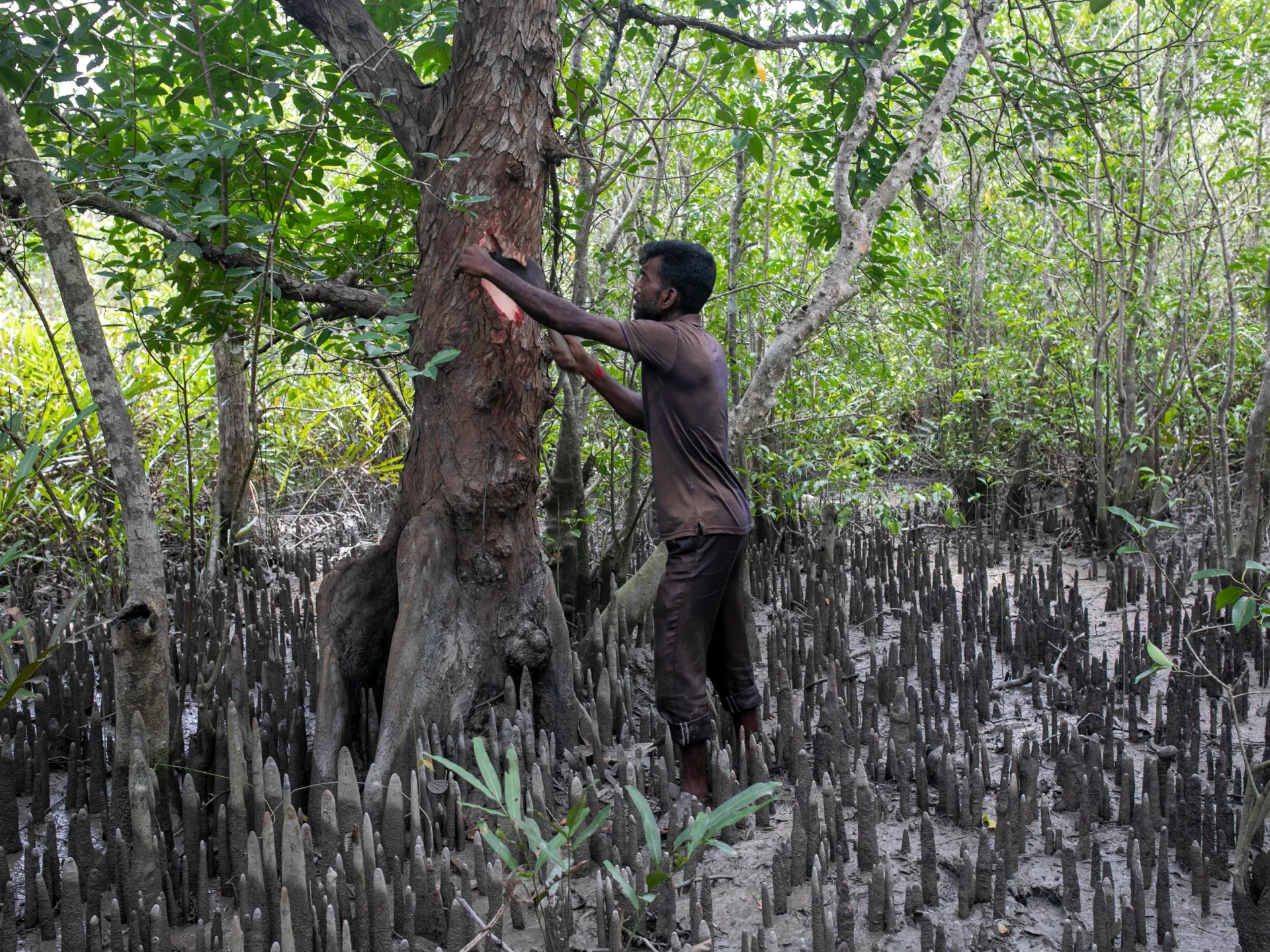
Traditional healers in Bangladesh’s Sundarbans say familiar medicinal plants are becoming increasingly difficult to find as saltwater intrusion, rising seas and repeated cyclones alter the mangrove ecosystem. The changes threaten both local healthcare practices and knowledge passed orally between generations.
Suranjan Raptan, a kabiraj in Koyra Upazila, told Al Jazeera Global News that plants including Sundari, hogla and bain had become harder to collect after forest conditions changed noticeably around 2015–16. He said his medicinal garden, which once contained more than 100 plants, was destroyed when Cyclone Aila drove saltwater into the area in 2009.
Reported measurements indicate that salinity in tidal water rose from 21 to 33 parts per thousand between 2017 and 2021, while soil salinity increased by 31 per cent. A honey collector in the area said bain trees had not flowered that season, leaving no bain honey locally. The reported decline may also reflect cyclones, habitat change and changing land use, rather than salinity alone.
Kabiraj traditionally provide low-cost care using leaves, roots and bark, particularly in communities where formal treatment can involve costly travel, consultations and medicines. Bangladesh had about 14,000 community clinics operating by 2015, but residents near the forest still report long journeys, shortages of medicines and lengthy waits.
Healers say their collections are shrinking and that they must travel farther to source ingredients. They also describe a decline in the number of local practitioners. A 2026 study in Barguna found that 18.5 per cent of surveyed kabiraj were over 60, while 81.5 per cent had learned through family inheritance.
The loss is therefore ecological and institutional: as plants disappear, the practical knowledge associated with them becomes harder to preserve. Claims about the potency or medical effects of individual remedies remain largely based on local observations, and traditional treatments should not replace evidence-based care. Snakebite requires urgent medical attention, while herbal remedies cannot remove hepatitis B.