Russian barrage targets Ukrainian urban infrastructure in deadliest overnight assault
President Zelensky urges immediate international action to strengthen air defences as rescue operations continue in the east
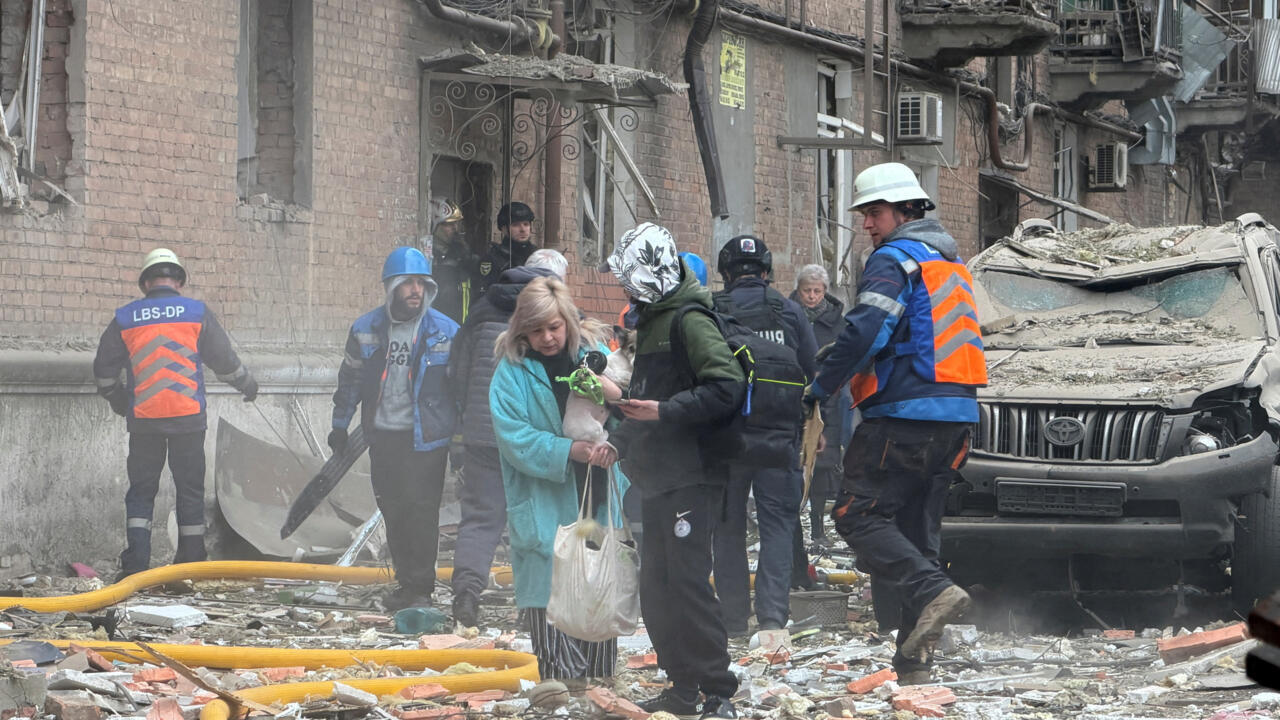
Russia executed a significant escalation of its offensive capabilities overnight on Friday, launching a barrage of more than 660 drones and missiles against Ukraine. The assault, which involved 619 drones and 47 missiles, resulted in the deaths of four people and injuries to more than 30 others, according to Ukrainian officials. This event marks a distinct shift from the smaller nightly raids Moscow has recently employed, representing a return to large-scale attacks designed to overwhelm air defence systems.
The primary focus of the strike was the eastern city of Dnipro, where the impact on urban infrastructure was severe. Rescue teams were deployed on Saturday morning to search for survivors trapped under the rubble of damaged buildings. Regional governor Oleksandr Hanzha confirmed that two corpses had been recovered from a specific building hit by the strike, while estimates suggest five other individuals may still be trapped beneath the debris. In total, 21 people were wounded in Dnipro during the incident.
Further casualties were recorded in the northern region of Chernihiv, where missile and drone attacks claimed two lives and injured seven others. President Volodymyr Zelensky addressed the destruction on social media, noting that practically all night, Russian forces bombed Dnipro and other communities. He emphasised that the majority of the targets were urban infrastructure, underscoring the strategic intent behind the specific selection of locations for the bombardment.
Ukraine's air force reported that it successfully intercepted the majority of the incoming threats, downing 580 drones and 30 missiles during the assault. Despite the high interception rate, the sheer volume of the attack allowed a portion of the munitions to reach their intended targets, causing substantial damage to residential areas and critical facilities. The disparity between the number of projectiles launched and those neutralised highlights the intensity of the pressure being exerted on Ukrainian air defence networks.
In response to the devastation, President Zelensky issued a stern warning to international partners regarding the necessity of immediate and firm action. He argued that such strikes serve as a stark reminder of the urgent need for rapid strengthening of air defences to mitigate future losses. The President's statement frames the current military situation not merely as a tactical engagement but as a crisis requiring decisive political and logistical support from allied nations.
The attack occurs against a backdrop of growing domestic political pressure within Russia, where repeated strikes on Baltic ports have led regional governors to declare areas like St Petersburg as front-line regions. Concurrently, Ukraine's intensified strikes on Russian energy infrastructure have contributed to a slump in Russian oil exports to their lowest levels since 2023. These developments suggest a complex interplay of military escalation and economic strain affecting both sides of the conflict.