Renewed Tigray fighting tests Ethiopia’s Pretoria peace agreement
Fighting reported across three Ethiopian regions has revived concerns about regional spillover, as the African Union urges restraint and renewed talks.
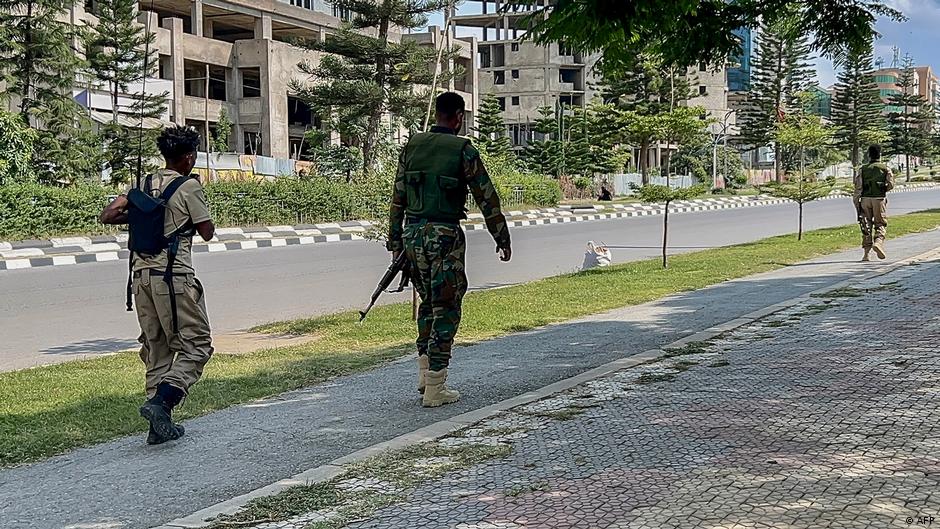
Tigrayan forces launched a major offensive on 23 September, with fighting also reported in Ethiopia’s Afar and Amhara regions. The renewed hostilities threaten the 2022 Pretoria agreement, which ended the previous large-scale war but left political and territorial disputes unresolved.
The escalation comes after months of rising tensions between Tigrayan forces and the federal government. The Tigray People’s Liberation Front recently joined six other Ethiopian armed groups in an alliance seeking to remove Prime Minister Abiy Ahmed’s government. The groups have different objectives and do not form a unified military force.
The African Union called for an end to actions that could escalate tensions, renewed direct talks under the Pretoria agreement and restraint by neighbouring states. It tasked its Horn of Africa high representative, Olusegun Obasanjo, with supporting diplomatic efforts.
Regional spillover remains a concern rather than an established outcome. Horn of Africa expert Martin Plaut told Deutsche Welle that conflict involving Ethiopia and Eritrea could draw in Sudanese forces. Sudan has been at war between the Sudanese Armed Forces and the Rapid Support Forces since 2023. The scale and duration of the renewed fighting, and any direct Eritrean involvement, remain unclear.
The renewed fighting also places attention on Afar, which borders Eritrea and Djibouti and hosts a key trade corridor linking landlocked Ethiopia to Djibouti. Relations between Ethiopia and Eritrea have deteriorated since Eritrean forces fought alongside Ethiopia’s federal government during the 2020–2022 war. Experts warn that conflicts and rivalries in the region could become interconnected, but say a wider regional war is not inevitable.