Relativity Networks secures $22 million for hollow-core fibre to cut data centre latency
The company has raised capital from Rhapsody Venture Partners and Bell Ventures Inc. to deploy vacuum-core technology that reduces signal delay, addressing spatial constraints in multi-site AI deployments.
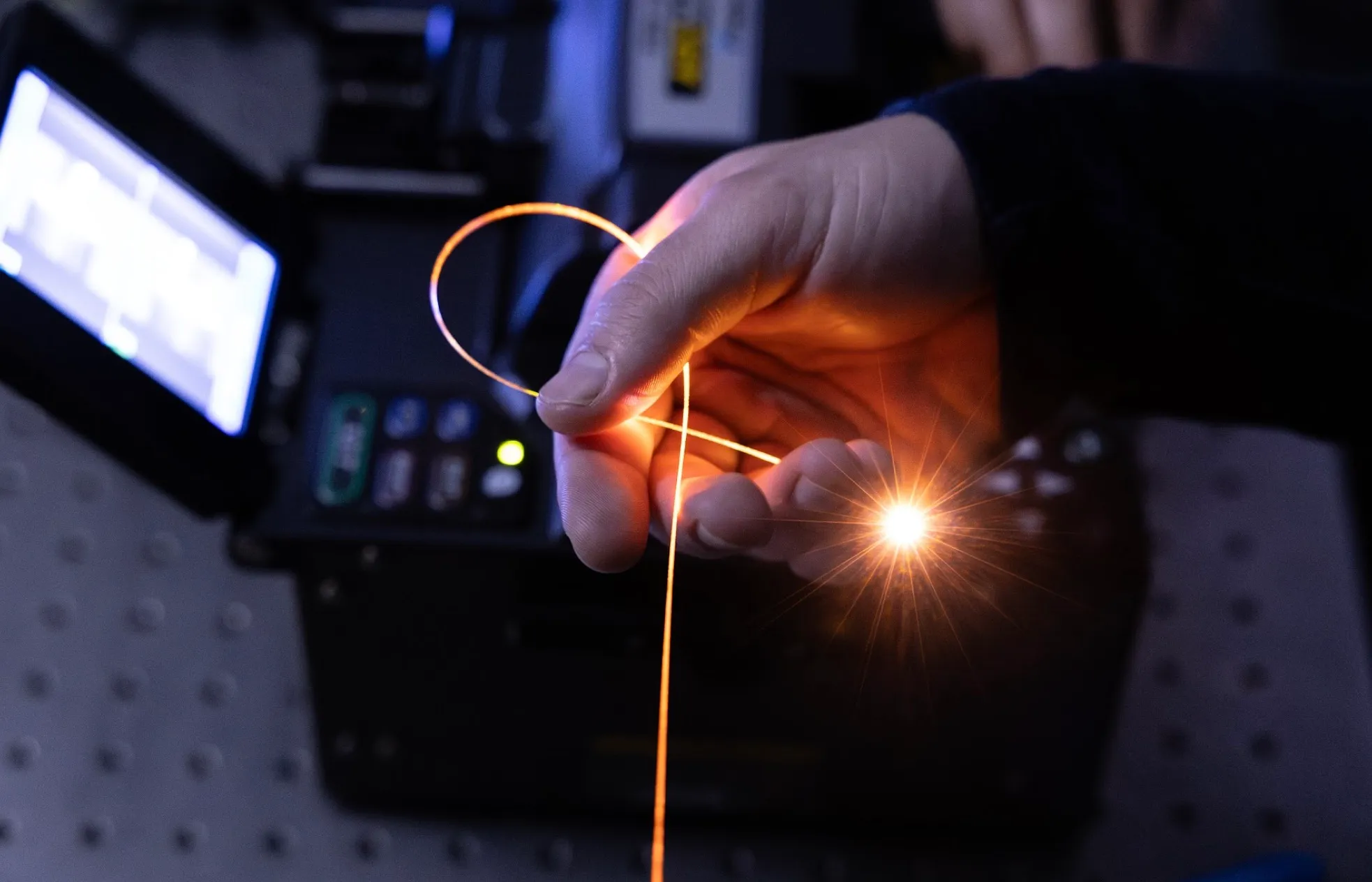
Relativity Networks has secured $22 million in SAFE note funding to develop and deploy hollow-core fibre technology for data centre infrastructure. The capital, drawn by investors including Rhapsody Venture Partners, Bell Ventures Inc., and Faster Than Glass LLC, will support the company’s efforts to reduce latency in multi-campus AI deployments. The announcement also revealed a $40 million follow-on order from an unnamed leading hyperscaler.
The technology utilises a vacuum core rather than traditional glass to transmit light, bringing data transmission closer to the theoretical speed of light. According to CEO Jason Eisenholz, this shift reduces latency from approximately five microseconds to 3.5 microseconds per kilometre, representing a 30 per cent improvement in speed over conventional fibre.
As artificial intelligence compute scales, the physical distance between GPU clusters has expanded, making latency a critical factor in synchronisation. Eisenholz noted that while early AI systems optimised for raw compute power and internal networking, the industry is now entering an era focused on optimising geography. This shift is driven by the need to distribute workloads across multiple existing campuses to access available power and space.
The reduction in latency allows developers to span 30 per cent larger distances before signal delay becomes a limiting factor. This capability aims to alleviate the spatial constraints that currently restrict data centre buildouts, which are projected to see spending reach $4 trillion by the end of the decade amid political and power-grid limitations.
A SAFE note is a standard pre-seed and seed investment instrument that converts into shares upon the company’s first priced round. While the identity of the hyperscaler providing the $40 million order remains undisclosed, the engagement underscores growing demand for infrastructure solutions that can handle the physical realities of distributed AI compute.