Record El Niño unlikely to save Colorado River from historic drought
Despite the strongest El Niño on record, experts warn that increased rainfall may not replenish the Upper Basin snowpack critical to the river’s supply, leaving 40 million people vulnerable as a century-old water compact expires.
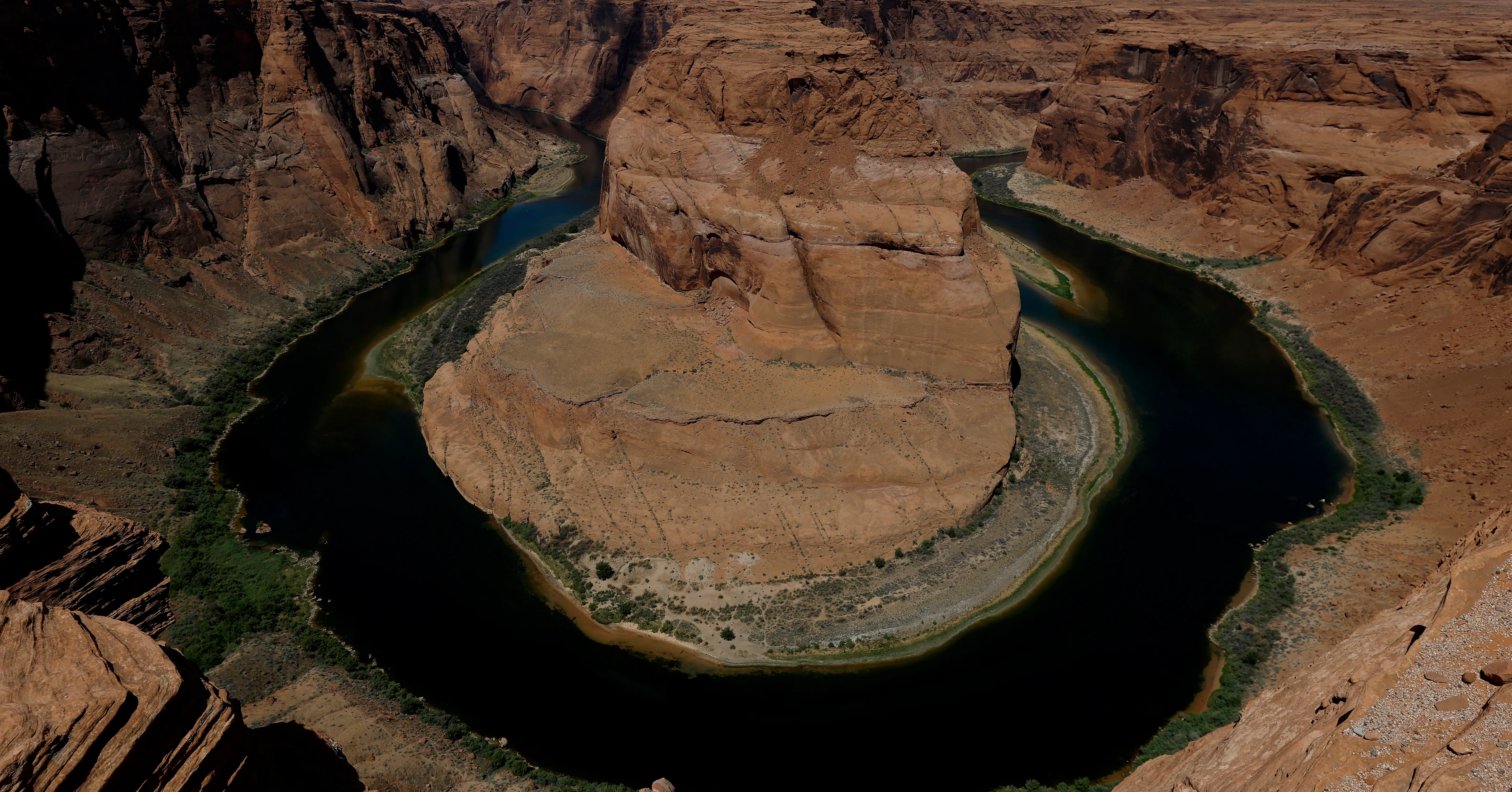
The Colorado River, which supplies water to 40 million people across seven US states, is facing a critical shortage as its two largest reservoirs hit record low levels. On Thursday, Lake Powell was recorded at 3,519.4 feet, while Lake Mead sat at 1,039.6 feet. These levels are approaching the "deadpool" thresholds of 3,370 feet for Lake Powell and 895 feet for Lake Mead, points at which water can no longer flow downstream to the Lower Basin states of California, Arizona, and Nevada.
Although a record-breaking El Niño event is expected to bring increased precipitation to the southwestern United States, climate scientists caution that this may not be sufficient to resolve the crisis. The river is primarily fed by snowmelt from the Upper Basin states of Colorado, Utah, New Mexico, and Wyoming. Zeke Hausfather, a climate scientist at Berkeley Earth, noted that during the previous very strong El Niño in 2015–16, the Upper Basin experienced only a normal amount of snowfall, suggesting that peer-reviewed correlations between El Niño and Upper Basin snowpack are modest at best.
Daniel Swain, a climate scientist at the University of California Agriculture and Natural Resources, described a normal El Niño and a "ridiculously strong" El Niño as "almost two completely distinct things." While the current event could bring some precipitation to the Upper Basin, Swain warned that climate change has altered baseline winter conditions, making snow droughts more common. Precipitation is increasingly likely to fall as rain rather than snow, or be intercepted by drying soil and re-evaporated into a thirstier atmosphere, reducing its effectiveness compared to historical snow years.
The physical crisis is compounded by a political dispute over water rights. A century-old compact governing the river’s allocations expires at the end of this year, with states having missed several deadlines to determine future shares. This has necessitated federal intervention to step in and manage the distribution of an increasingly scarce resource.
John Berggren, policy manager at Western Resource Advocates, stated that while a wet winter might provide temporary relief, the long-term outlook remains dire. "Even one big year is not going to save us," Berggren said. "It might be a sigh of relief, but we'll be right back in it."
Projections indicate that the river’s flow could shrink by as much as 30 per cent by 2050 due to climate change. As the El Niño is set to temporarily intensify global temperatures next year, the situation highlights how quickly changing climate patterns are transforming water availability in the region.