Radiology’s AI era: Collaboration over replacement
A decade after a prominent prediction that computers would supplant human readers of medical images, the profession is growing. The shift is now about how radiologists manage the risks of automation bias while leveraging superior machine precision.
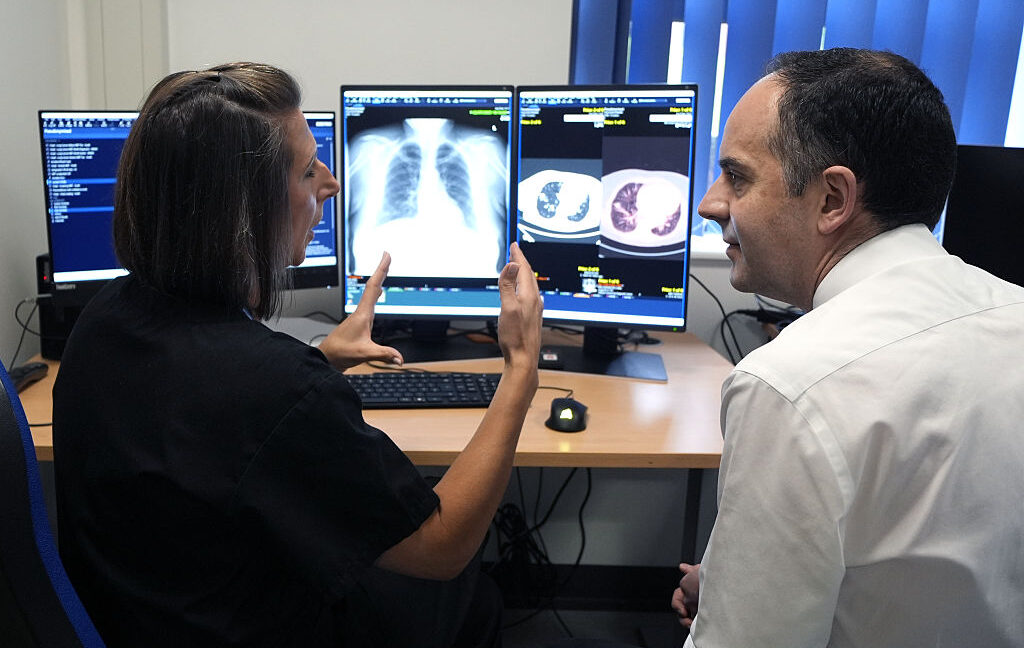
In 2016, Geoffrey Hinton, the Nobel-winning "godfather of AI," predicted that radiologists would be replaced by computers within five years. Ten years on, the profession has not only survived but is expected to expand by 26 per cent over the next three decades. However, the role of the radiologist is undergoing a fundamental transformation as artificial intelligence becomes the dominant force in medical imaging.
Radiology has emerged as the primary sector for AI adoption in medicine. As of early 2026, approximately three-quarters of the 1,400 AI-enabled medical devices cleared by the US Food and Drug Administration are dedicated to the field. These tools range from efficiency aids that draft reports to diagnostic systems that can identify abnormalities invisible to the human eye. An analysis of 43 clinical trials found that AI-assisted colonoscopies reveal more polyps than conventional methods, addressing a sector where human error rates are estimated at 3 to 5 per cent, or roughly 40 million errors globally each year.
The core challenge is no longer whether AI is statistically better than humans, but how to integrate the two. Radiologists are now tasked with evaluating AI decisions, a process that requires overcoming deep-seated cognitive habits. While physicians have long overridden rule-based alerts in electronic medical records, the new "black box" neural networks in radiology do not reveal how they reach conclusions. This opacity makes it difficult for doctors to determine when to veto a machine’s diagnosis.
Experts identify two primary cognitive risks: automation bias, where doctors over-rely on the machine, and automation complacency, where they trust the AI to catch errors it actually misses. One study noted that experienced radiologists experienced significant drops in accuracy when influenced by incorrect AI predictions. Conversely, natural distrust of the technology can lead physicians to dismiss valid AI findings after encountering a single obvious error.
Training is identified as the critical gap in this transition. A 2026 survey by the American Medical Association found that more than a quarter of physicians had received no training on AI, with only 11 per cent reporting they had received a lot of training. To optimise human-machine collaboration, radiologists need to understand the specific limitations of the tools they use, such as how patient movement affects scan accuracy.
The consensus among experts is that the future lies in a collaborative model where human experience complements machine precision. As Curtis Langlotz of Stanford University notes, it is not that AI will replace radiologists, but that radiologists who utilise AI will replace those who do not.