Putin arrives in India as BRICS summit faces divisions over regional wars
The expanded grouping is expected to address the wars in Iran and Ukraine, economic pressures and tensions among its members.
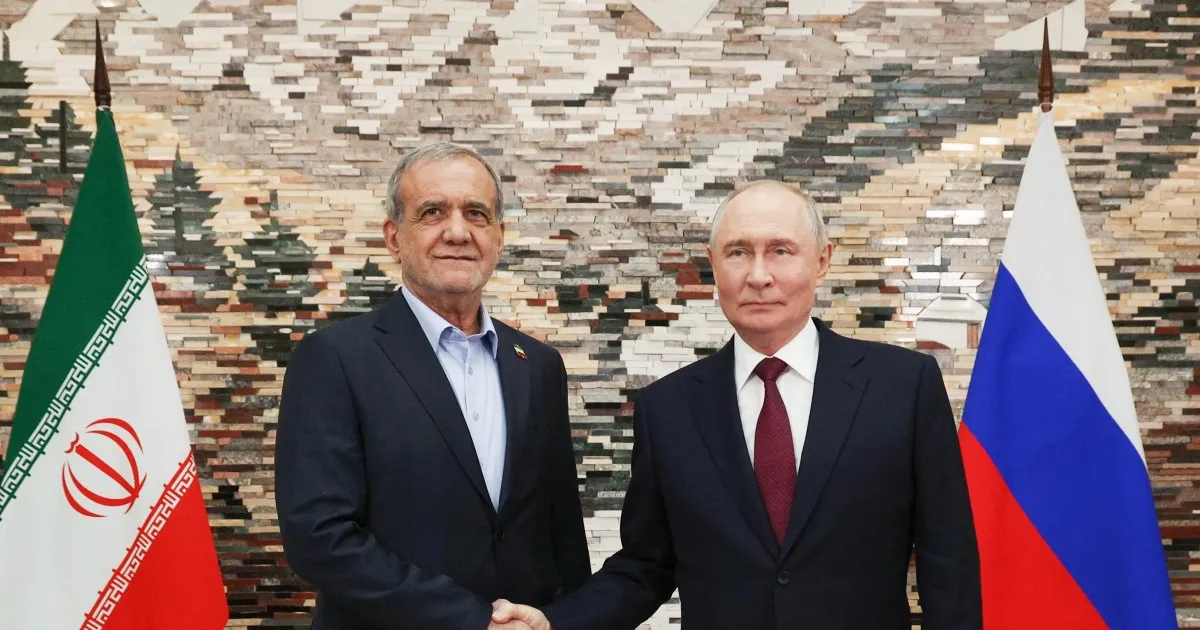
Russian President Vladimir Putin has arrived in New Delhi ahead of an 11-member BRICS summit expected to focus on the wars in Iran and Ukraine, economic challenges and tensions within the expanded grouping.
Putin arrived at Palam Air Force Station on Friday and was greeted by India’s Minister of State for External Affairs, Kirti Vardhan Singh. Iranian President Masoud Pezeshkian is due to visit India for talks with Prime Minister Narendra Modi, while Chinese President Xi Jinping is expected to meet Modi on the sidelines of the two-day summit.
BRICS was established in 2009 by Brazil, Russia, India, China and South Africa as a forum for major emerging economies. It has since expanded to include Iran, Saudi Arabia and the United Arab Emirates, whose differing positions on the US-Israel war on Iran have sharpened questions about the group’s cohesion.
Harsh V Pant of India’s Observer Research Foundation told AFP that the conflict in the Gulf would be a central fault line at the summit. Shilan Shah of Capital Economics said the war in Iran would test the expanded group, after BRICS foreign ministers failed to agree on a joint statement in New Delhi in May.
India is seeking to balance relations with Iran, Israel, Russia and the United States while dealing with the energy effects of the war on Iran and Russia’s continuing war against Ukraine. The final agenda, outcomes and any joint statement from the summit were not yet known.
Xi’s expected visit would be his first to India since 2019 and comes amid a cautious improvement in ties following a deadly 2020 border clash. Flights, visas and high-level contacts have gradually resumed, but territorial disputes, a widening trade deficit and strategic rivalry continue to complicate relations.