Putin and Xi deepen strategic ties in Beijing summit
Russian President Vladimir Putin has arrived in Beijing for a two-day visit to meet Chinese President Xi Jinping, focusing on economic integration and the Power of Siberia 2 pipeline amid Western sanctions.
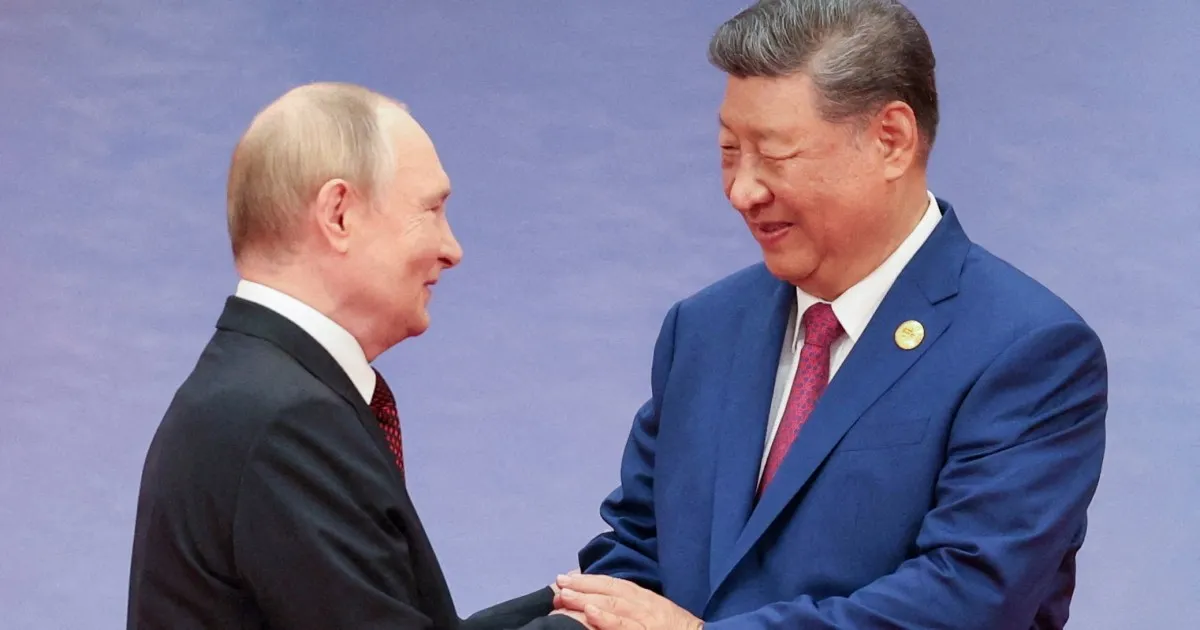
Russian President Vladimir Putin arrived in Beijing on Tuesday for a two-day visit to meet Chinese President Xi Jinping, marking the second face-to-face summit between the leaders in less than a year. The diplomatic engagement coincides with the 25th anniversary of the 2001 Treaty of Good-Neighborliness and Friendly Cooperation, an agreement that formalised relations between the two nations following decades of Cold War ideological rivalry and border tensions.
The visit follows closely on the heels of a two-day trip to the Chinese capital by United States President Donald Trump, whose departure was announced just a day before Putin’s arrival. Analysts suggest that Beijing’s decision to host both leaders within a week reflects an attempt to position itself as a stabilising actor in a fragmented global order, while simultaneously navigating the unpredictability of US foreign policy.
Central to the discussions is the deepening of economic and strategic ties, particularly regarding the proposed Power of Siberia 2 pipeline. The project, which would transport 50 billion cubic metres of Russian gas annually to China via Mongolia, has gained renewed urgency due to disruptions in global energy markets. Tensions surrounding Iran and shipping issues in the Strait of Hormuz have heightened Beijing’s concerns over energy security, prompting a shift toward reliable overland suppliers.
Trade volumes have surged significantly, with two-way commerce between Russia and China more than doubling between 2020 and 2024 to reach $237bn. However, the relationship remains structurally uneven. While China is Russia’s largest trading partner, Russia accounts for only about four percent of China’s total international trade. This imbalance grants Beijing considerable leverage, allowing it to secure discounted energy resources while Moscow relies on Chinese markets following the closure of European demand.
The economic interdependence is further underscored by defence and technology cooperation. A recent Bloomberg report indicated that Russia sources more than 90 percent of its sanctioned technology imports from China, including components vital for drone production. Despite this reliance, both nations maintain a strategic distance from a formal military alliance, preferring to signal alignment through joint exercises such as the recent naval drills in the Sea of Japan near Vladivostok.
Putin, who is subject to an International Criminal Court arrest warrant, and Xi, who rarely travels abroad, have invested heavily in maintaining personal diplomatic channels. In remarks carried by Russian state media ahead of the summit, Putin described the partnership as one where both nations are "actively developing cooperation in politics, economics, defence" to advance global development.
The enduring nature of the relationship appears rooted in shared strategic interests rather than ideology alone. As permanent members of the UN Security Council, Russia and China frequently align diplomatically against US-led policies, utilising their economic and military coordination to navigate an increasingly volatile international landscape without the binding commitments of a formal treaty.