Putin and Xi cement strategic alignment in Beijing, though Power of Siberia 2 deal stalls
The Kremlin reported a "general understanding" on pipeline parameters, but Beijing remains cautious over pricing and energy security, underscoring the limits of Moscow’s reliance on Chinese markets.
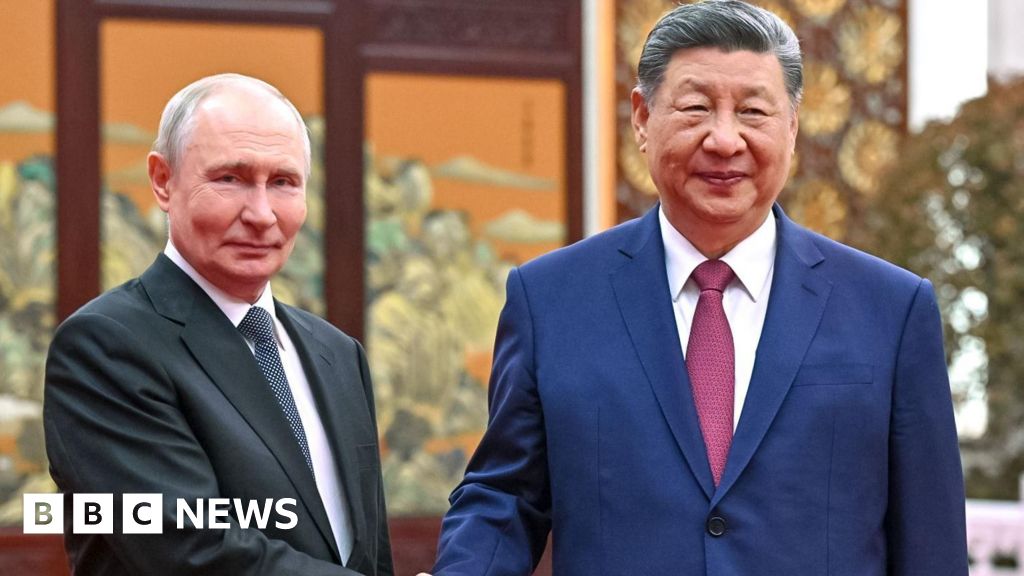
Russian President Vladimir Putin and Chinese President Xi Jinping concluded a summit in Beijing that reinforced the strategic partnership between Moscow and Beijing, yet failed to deliver a binding agreement on the Power of Siberia 2 gas pipeline. The visit, marked by ceremonial gestures highlighting their close ties, saw the two leaders emphasise mutual trust and strategic cooperation while jointly criticising United States nuclear policy.
During the red carpet proceedings at the Great Hall of the People, a Chinese military band performed the Russian classic "Moscow Nights," a gesture interpreted as underscoring the special relationship between the two heads of state. The leaders have met more than 40 times over the years, establishing a long-standing political rapport that they described through terms such as "partnership," "friendship," and "trust."
The summit also featured a sharp rhetorical divergence from Washington. Both leaders condemned what they termed the "irresponsible" nuclear policy of the United States, specifically targeting former President Donald Trump’s proposed "Golden Dome" missile defence shield. This alignment was visually reinforced by the Russian government newspaper, which published a comparison of Trump boarding Air Force One alongside an image of Putin and Xi, signalling Russia’s prioritisation of its relationship with Beijing over Washington.
Despite the warm reception, the core economic objective of the visit—the finalisation of the Power of Siberia 2 pipeline—remained unresolved. The project, designed to transport additional Russian gas from Western Siberia to Northern China via Mongolia, aims to offset Russia’s loss of European markets. Although a memorandum of understanding was signed last year, Beijing has not committed to the final deal due to ongoing pricing disputes and concerns regarding over-dependence on Russian fossil fuels.
The Kremlin stated that a "general understanding" on project parameters had been reached, but confirmed no binding deal was signed. This outcome aligns with earlier concessions in the Russian press, which noted that the interests of the two nations are not identical and that both possess a "great-power psyche" that necessitates distinct national priorities.
Putin’s foreign policy aide, Yuri Ushakov, confirmed the existence of a "spirit of Beijing" to describe the current relationship, while explicitly rejecting the notion of a "spirit of Anchorage." This dismissal references the summer meeting in Alaska between Putin and US officials, which had previously generated hopes for a thaw in relations and an end to the war in Ukraine, hopes that have since faded.
The summit concluded with the signing of a joint declaration establishing a "multipolar world," accompanied by approximately 40 bilateral documents. While the diplomatic messaging emphasised unity, the lack of a pipeline agreement highlights the pragmatic limits of the alliance, where geopolitical alignment does not automatically translate into economic concession.