Public broadcaster NHK releases poll on necessity of Japanese constitutional amendment on Constitution Day
Thirty-eight per cent of respondents believe the current framework requires amendment, while 20 per cent oppose changes, with the remainder undecided
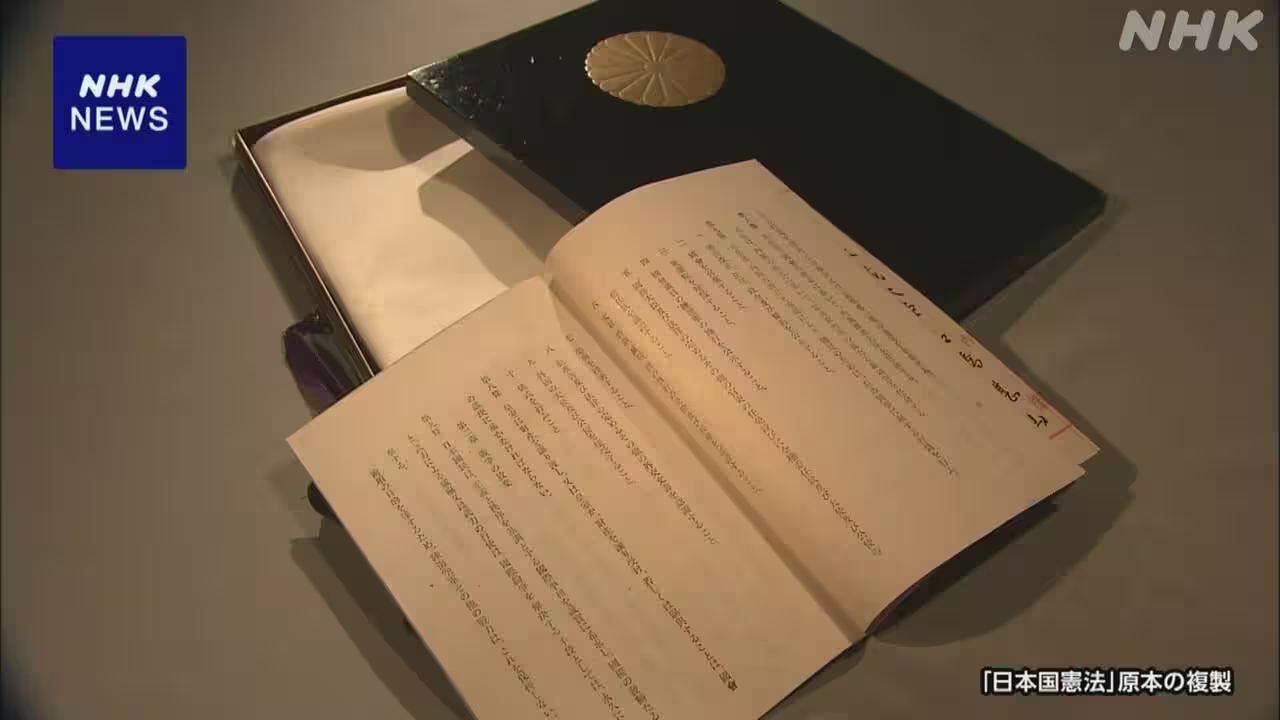
On Constitution Day, marking the 79th anniversary of the Japanese Constitution's promulgation, public broadcaster NHK released a public opinion survey regarding the necessity of amending the current constitution. The data, issued on 3 May 2026, highlights a significant portion of the population supporting constitutional reform while a smaller segment opposes it.
When asked if the current constitution needs amendment, 38 per cent of respondents said yes. This figure represents the largest single group in the poll, indicating that a substantial minority of the public views the existing legal framework as requiring structural change.
Conversely, 20 per cent of respondents stated that no amendment is necessary. This opposition to reform contrasts with the majority sentiment, suggesting that while there is a clear demand for alteration from a significant demographic, it does not yet command an absolute majority of the electorate.
The remainder of the respondents were undecided. While the exact percentage was not explicitly stated in the source material, the figures provided allow for the inference that the undecided segment comprises the balance of the sample, reflecting a level of public ambivalence regarding the direction of constitutional policy.
The survey was conducted by NHK on the occasion of Constitution Day, a date chosen to gauge public sentiment at a time when the anniversary of the document's implementation is observed. The results underscore the complexity of the ongoing discourse surrounding the constitution, where institutional stability competes with calls for modernisation.
The poll results indicate a divided public opinion with a large undecided segment, complicating any immediate consensus on the path forward for legal reform. As the nation marks nearly eight decades of the current constitution's operation, the data serves as a snapshot of the prevailing mood within the electorate.