President Mahama calls for specific legislation to criminalise 'sex for jobs' coercion
President John Mahama has urged the creation of a standalone law to criminalise employers demanding sexual favours as a condition of employment, distinguishing the practice from existing harassment provisions.
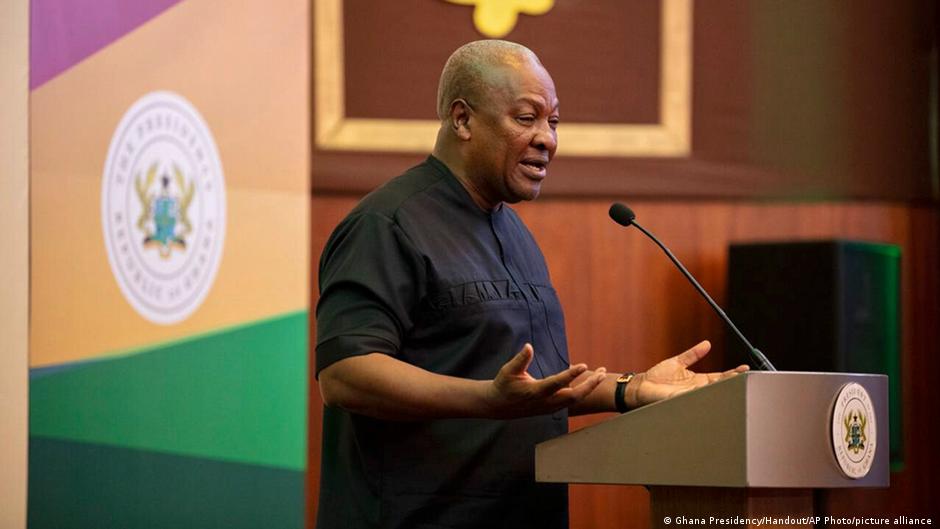
President John Mahama has publicly called for the introduction of specific legislation to criminalise the practice of employers demanding sexual favours in exchange for jobs. Speaking at a town hall in Koforidua on 1 May, the President described the behaviour as exploitative and unacceptable, urging the creation of a specific law to address what he termed a legal grey area. Mahama framed the demand for sexual compliance as a form of corruption and an abuse of power that must be stopped, noting that existing norms and policies are insufficient to tackle the issue head-on.
While Ghana currently has protections against sexual harassment under its Labour Act and criminal code, activists argue these laws do not adequately cover pre-employment coercion. The current framework typically addresses harassment after employment has begun or focuses on coercion in domestic settings, leaving the specific scenario of conditioning access to employment on sexual compliance largely unregulated. Mahama's proposal seeks to distinguish this specific scenario from existing laws by attaching explicit criminal penalties to the act, elevating it from general misconduct to prosecutable abuse of power.
The proposal is being positioned as part of a broader push for gender parity within the government's agenda. This includes the implementation of the Affirmative Action Act and an ambitious target of achieving equal representation in public appointments by 2028. Legal experts and activists note that while symbolic progress is welcome, the practical test lies in how the law is structured, particularly regarding evidentiary standards and whistleblower protections to ensure it does not become another statute that remains underused in practice.
Legal experts and civil society organisations highlight that the primary challenge remains effective enforcement, given historical difficulties in prosecuting such cases. Victoria Bright, a lawyer and former legal advisor to former President John Kufuor, stated that when conduct is clearly named and penalized, institutions are more likely to adopt internal safeguards and victims gain a stronger basis to seek justice. However, she cautioned that symbolic progress does not automatically dismantle entrenched power dynamics, especially where recruitment remains discretionary and largely male-dominated.
The intensity of competition for public and formal-sector jobs creates an environment where employers wield enormous power over applicants, particularly young women. Recruitment processes are often opaque, and victims frequently fear stigma, reputational damage, or retaliation, leading to a culture of impunity where abuse is discussed informally but seldom prosecuted. Roland Affail Monney, former president of the Ghana Journalists Association, argued that while cases are notoriously difficult to prove, new technologies and electronic means of communication may now simplify the gathering of evidence required for prosecution.
For Mahama's proposal to move forward, it must be translated into a bill and passed by parliament. It remains unclear whether lawmakers will opt for a narrow amendment to existing labour and criminal laws or introduce a comprehensive new statute. If enacted and meaningfully enforced, the law could alter recruitment norms and reinforce the idea that abuse of authority in hiring is not just unethical, but criminal, though skepticism persists regarding Ghana's record on enforcing gender-based offences.