Preseason Film Analysis: Rams’ Controlled Start and Titans’ Early Struggles
While statistical outputs suggest divergent trajectories for the two quarterbacks, institutional context and simplified defensive schemes complicate early-season assessments.
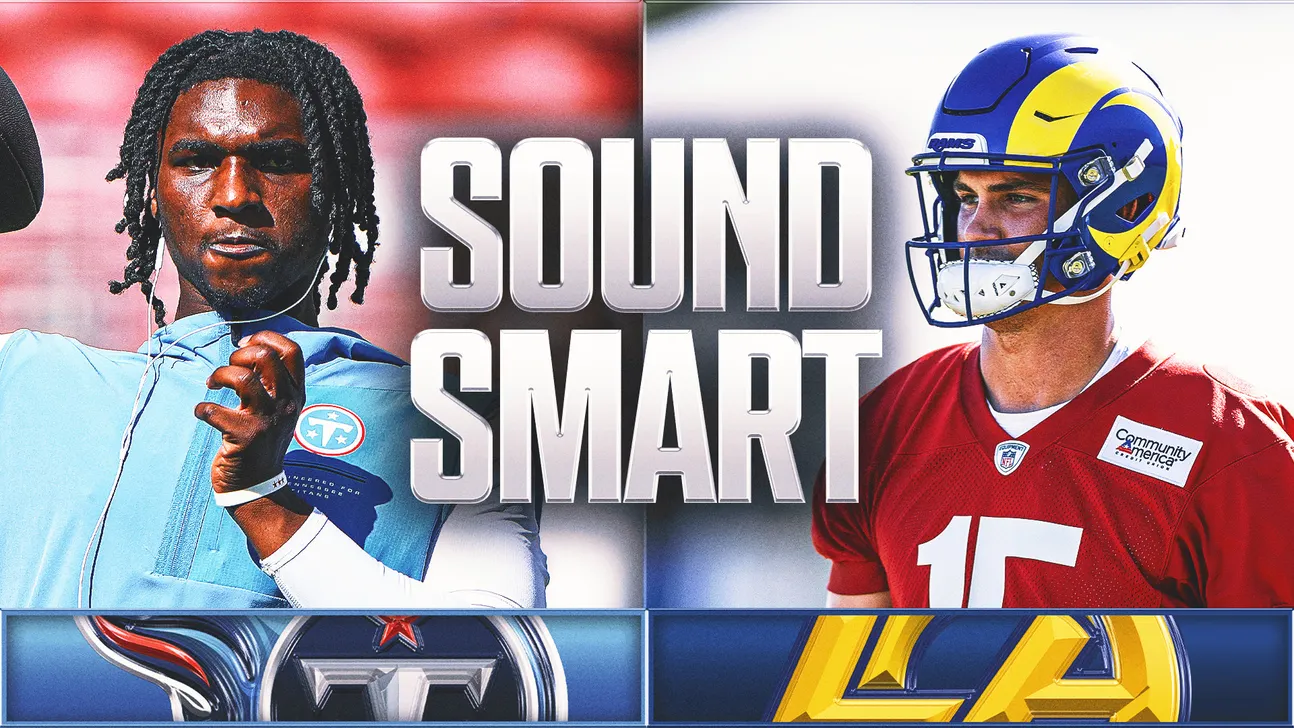
During the 2026 NFL preseason, Los Angeles Rams rookie quarterback Ty Simpson executed a performance characterised by extreme caution and structural simplicity. According to analysis published by Fox Sports, 84 per cent of Simpson’s passes travelled 15 yards or fewer, with 72 per cent covering 10 yards or less. The offensive scheme, orchestrated by playcaller Nate Scheelhaase, prioritised rollouts and passes behind the line of scrimmage to minimise decision-making complexity for the rookie.
Rams head coach Sean McVay publicly endorsed the coaching staff’s approach, stating that the unit had done a good job putting players in advantageous positions. Simpson faced pressure on only three of his 25 dropbacks and recorded a tight-window throw on 8 per cent of his passes. The limited exposure to defensive pressure and the constrained field usage resulted in a controlled debut that McVay described as well-executed by the coaching staff.
Conversely, Tennessee Titans quarterback Cam Ward exhibited significant accuracy deficits during limited action. Across 12 dropbacks, Ward also recorded a tight-window throw on 8 per cent of his passes but displayed a broader lack of composure. The contrast between Simpson’s structured execution and Ward’s struggles has prompted immediate scrutiny, despite the generally deceptive nature of preseason film where defensive schemes are often simplified.
The analysis draws a historical parallel to the 2015 Philadelphia Eagles, where quarterback Sam Bradford delivered a strong preseason performance under coach Chip Kelly. That performance did not translate to regular-season viability, and Kelly was subsequently fired after a 6-9 season. This precedent underscores the caution required when interpreting preseason outcomes, as early-season results frequently fail to reflect regular-season capabilities.
While Simpson’s performance was uniformly praised for its control, the analysis notes that the ease of the execution was largely a product of the simplified scheme rather than a demonstration of elite NFL readiness. Similarly, Ward’s early struggles are viewed with skepticism regarding their long-term predictive value. The preseason environment, designed to test roster depth rather than competitive readiness, remains a poor indicator of future institutional success for either quarterback.