Plaud One: AI earbuds with eSIM case target the always-on office
The $249 device aims to turn passive listening into active workflow automation, but the launch is a limited trial to test market appetite.
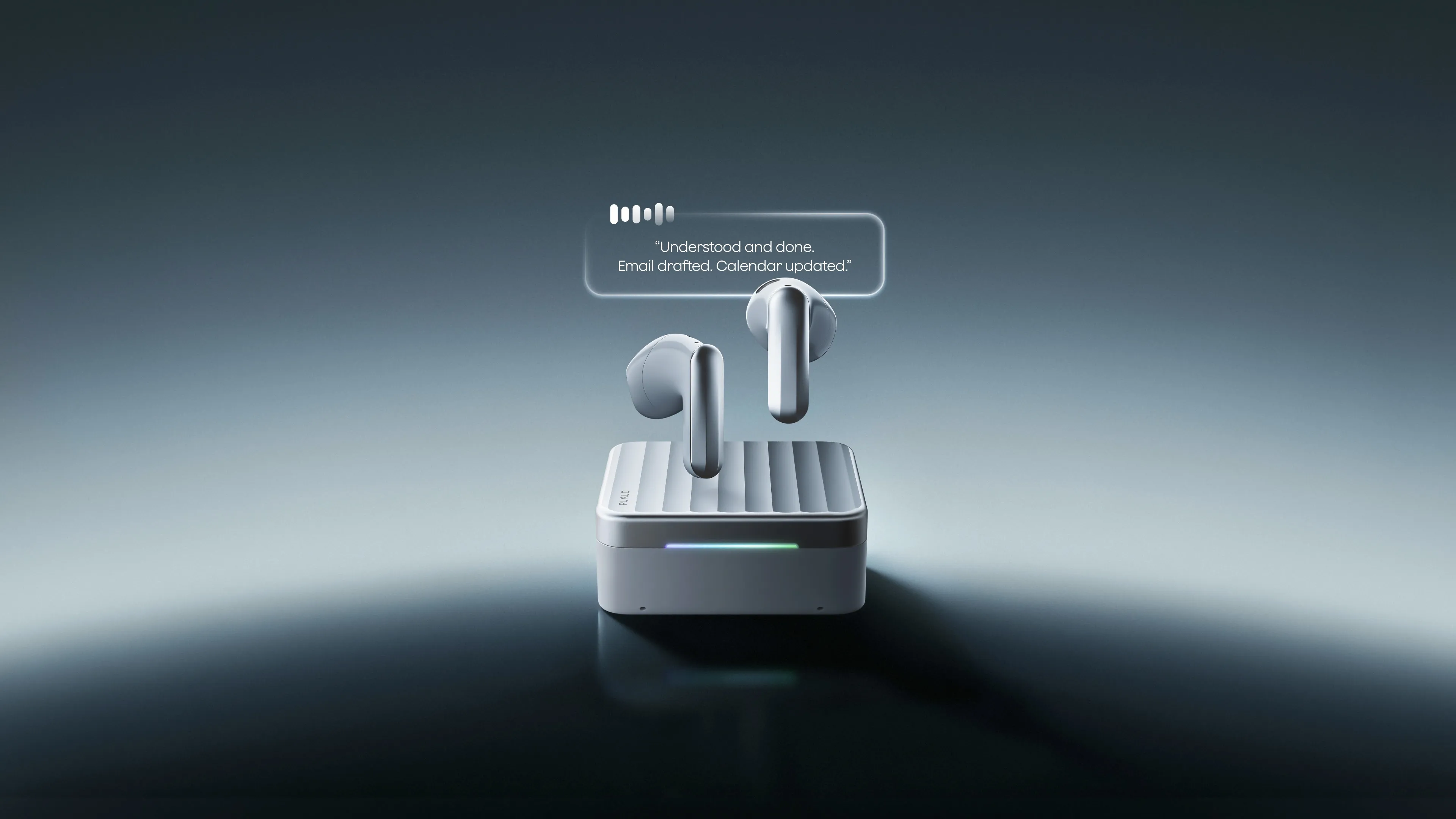
Plaud has entered the crowded AI note-taking hardware market with the Plaud One, a pair of AI-powered earbuds priced at $249. The device adopts a minimalist design similar to Apple’s AirPods, featuring 12mm drivers and active noise cancellation. While the earbuds handle call recording, the accompanying charging case is designed to capture in-person conversations within a five-metre range, effectively turning a standard accessory into a dedicated meeting recorder.
The key differentiator for the Plaud One is its eSIM-enabled charging case. This feature allows users to interact with Plaud’s AI agents remotely without the need for a smartphone or computer. The built-in AI agent can integrate with productivity tools such as Gmail, Google Calendar, Notion, and Slack to automate tasks, including drafting follow-up emails and creating documents based on recorded conversations.
Battery life is a significant selling point, with the earbuds offering six hours of call recording and three hours of in-person meeting recording on a single charge. When combined with the case, total recording capacity extends to up to 25 hours. Buyers receive 300 minutes of free transcription per month, with additional plans starting at $8.33 per month when paid annually.
Despite the feature set, the launch is structured as a limited-quantity trial run. Plaud appears to be gauging demand for AI-focused earbuds before committing to a full-scale rollout. The company is also developing agentic capabilities expected in a future update, which will introduce a credit-based system; Plaud One buyers will receive $200 in credits for these tasks.
The move comes as Plaud scales rapidly, having reached an annual run-rate revenue of $100 million in June 2026 and serving over 2.5 million users. However, competition is intense, with rivals such as Viaim, Anker, Pocket, Comu, and Genspark all vying for market share in both hardware and software note-taking solutions.
CEO Nathan Xu positions the device as a necessary evolution for the AI era, arguing that users need a wearable, always-ready interface that is socially acceptable and private by design. While pre-orders are open now, shipping is scheduled for the fourth quarter of 2026, leaving a gap for competitors to further solidify their positions in the market.