Peru’s Presidential Runoff: A Vote on Stability Amid Institutional Crisis
With nine presidents serving in ten years, the runoff highlights a profound crisis of representation, as voters prioritize security concerns over ideological divides.
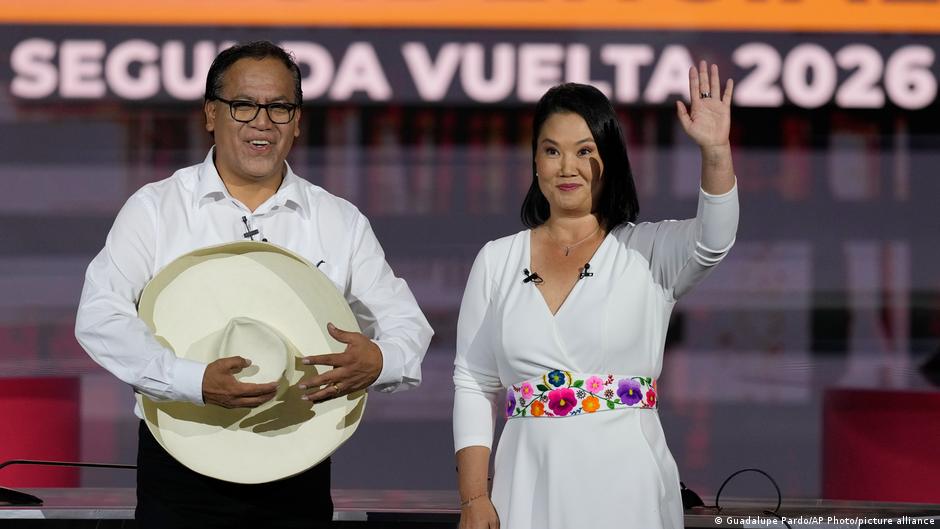
Peru is set to hold a presidential runoff on Sunday between conservative candidate Keiko Fujimori and left-wing candidate Roberto Sanchez, an election defined by deep-seated political distrust and social tension. The vote follows a first round marked by significant fragmentation, with 35 candidates competing for the presidency. Fujimori, leader of the Popular Force party, secured 17 per cent of the first-round vote, while Sanchez of Together for Peru received approximately 12 per cent. The low vote shares for both finalists underscore a political landscape where neither candidate commands broad support, entering the second round amid what experts describe as a profound crisis of representation.
The context for this election is a decade of intense instability, during which nine different individuals have served as president. Alonso Cardenas, a political science professor at Antonio Ruiz de Montoya University, told Deutsche Welle that the roots of the current turmoil extend beyond a simple electoral contest. He described a serious process of implosion within the system of political representation, noting widespread discrediting of the ruling class across Congress, the presidency, and the judiciary. This sentiment is echoed by Johanna Pieper, a researcher at the German Institute for Global and Area Studies, who highlighted a society divided between Lima and historically marginalized regions, particularly the Andean highlands.
Fujimori’s campaign centres heavily on the legacy of her father, former President Alberto Fujimori, who ruled from 1990 to 2000. Supporters cite economic stabilization and the fight against the Shining Path guerrilla group, while critics point to authoritarian tendencies, corruption, and human rights violations. Political scientist Fernando Tuesta noted that Fujimorismo has shaped Peruvian politics for decades, yet it generates significant resistance. Pieper observed that Fujimori has already lost three previous runoffs and that many Peruvians are aware of her party’s contribution to the country’s instability. Economically, Fujimori advocates for continuity of the market-based model, though experts warn of risks regarding illiberal positions and potential influence over the judiciary.
Roberto Sanchez, by contrast, has adopted a more moderate stance during the campaign. Initially calling for a greater state role in the economy and a new constitution, he has shifted emphasis toward macroeconomic stability, central bank independence, and private investment. Cardenas drew parallels to former President Ollanta Humala, suggesting a sharp shift to the left is unlikely. However, Sanchez faces considerable institutional obstacles, as Congress is dominated by conservative forces and Fujimorismo. Pieper warned that a Sanchez presidency would likely be politically weakened, forcing reliance on fragile alliances to govern.
Beyond ideological differences, insecurity remains the primary concern for voters, with extortion, contract killings, and illegal gold mining spreading in regions where state control is weakening. Foreign policy alignments also differ, with Fujimori expected to align with conservative regional governments and the United States, while Sanchez may seek closer cooperation with left-leaning governments in Brazil and Mexico. Regardless of the outcome, experts caution that rapid stabilization is unlikely due to weakly institutionalised political parties and deep-seated public dissatisfaction. The next president will face the challenge of rebuilding trust in a system that many citizens feel has lost touch with their everyday lives.