Perseverance Rover Completes Martian Marathon in Record Time
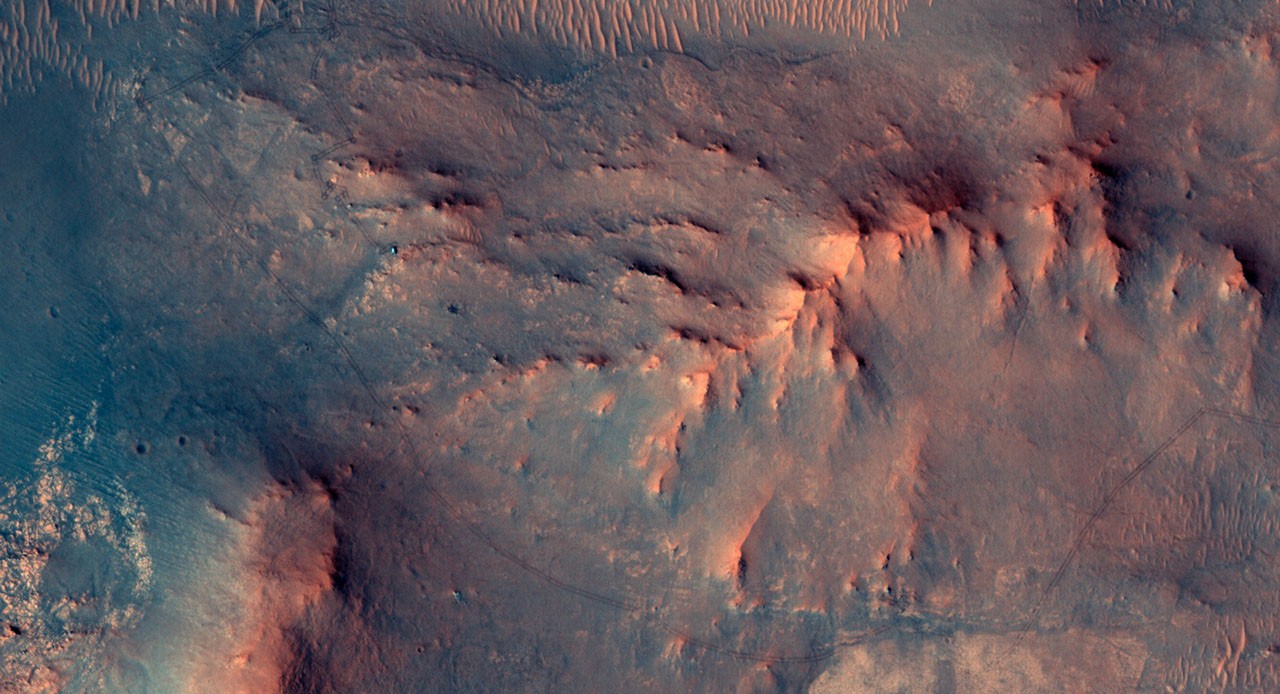
High-resolution imagery from the Mars Reconnaissance Orbiter captures the vehicle in the Arbot region, marking a significant operational milestone achieved in just over five years.
NASA’s Perseverance rover has travelled a cumulative distance of 26.2 miles (42.195 kilometres) on the Martian surface, equating to a full marathon. The milestone was reached on the 1,890th Martian day, or sol, of the mission, following five years and four months of driving. This achievement marks a significant acceleration in operational pace compared to previous missions, as the rover reached the distance faster than the Opportunity rover, which required 11 years and two months to cover the same ground.
The rover’s location was documented by the High-Resolution Imaging Science Experiment (HiRISE) camera aboard the Mars Reconnaissance Orbiter on 13 June 2026. The imagery, released by NASA, shows the rover as a green speck on the Martian surface, with its tracks clearly visible tracing the terrain. The photograph was captured one day before the robotic explorer officially marked the distance milestone, providing a visual record of the vehicle in the area west of Jezero Crater designated by the science team as “Arbot”.
Operations for both the Perseverance rover and the Mars Reconnaissance Orbiter are overseen by NASA’s Jet Propulsion Laboratory in Southern California. Managed for NASA by Caltech, the laboratory directs these missions on behalf of the agency’s Science Mission Directorate as part of the broader Mars Exploration Program portfolio. The logistical coordination required to maintain such a long-duration mission underscores the sustained effort behind the rover’s continued mobility and scientific return.
The hardware supporting this milestone involves multiple international and industrial partners. Lockheed Martin Space in Denver built the Mars Reconnaissance Orbiter and supports its operations. The HiRISE camera, which captured the high-resolution imagery, was constructed by BAE Systems in Boulder, Colorado. The University of Arizona in Tucson operates the instrument, ensuring the detailed surface observations necessary for tracking the rover’s progress and geological context.
This milestone highlights the enduring capability of NASA’s robotic explorers on the Red Planet. While the Opportunity rover previously held the record for distance covered, Perseverance’s ability to reach the marathon mark in less than half the time demonstrates advancements in mission efficiency and rover durability. The continued operation of these assets within the Jezero Crater region remains a focal point for planetary science, with ongoing data collection supporting the agency’s understanding of Martian geology and potential past habitability.