NASA traces the elements in our bodies to cosmic events
NASA says hydrogen dates to the Big Bang, while many heavier elements formed inside stars or during stellar explosions.
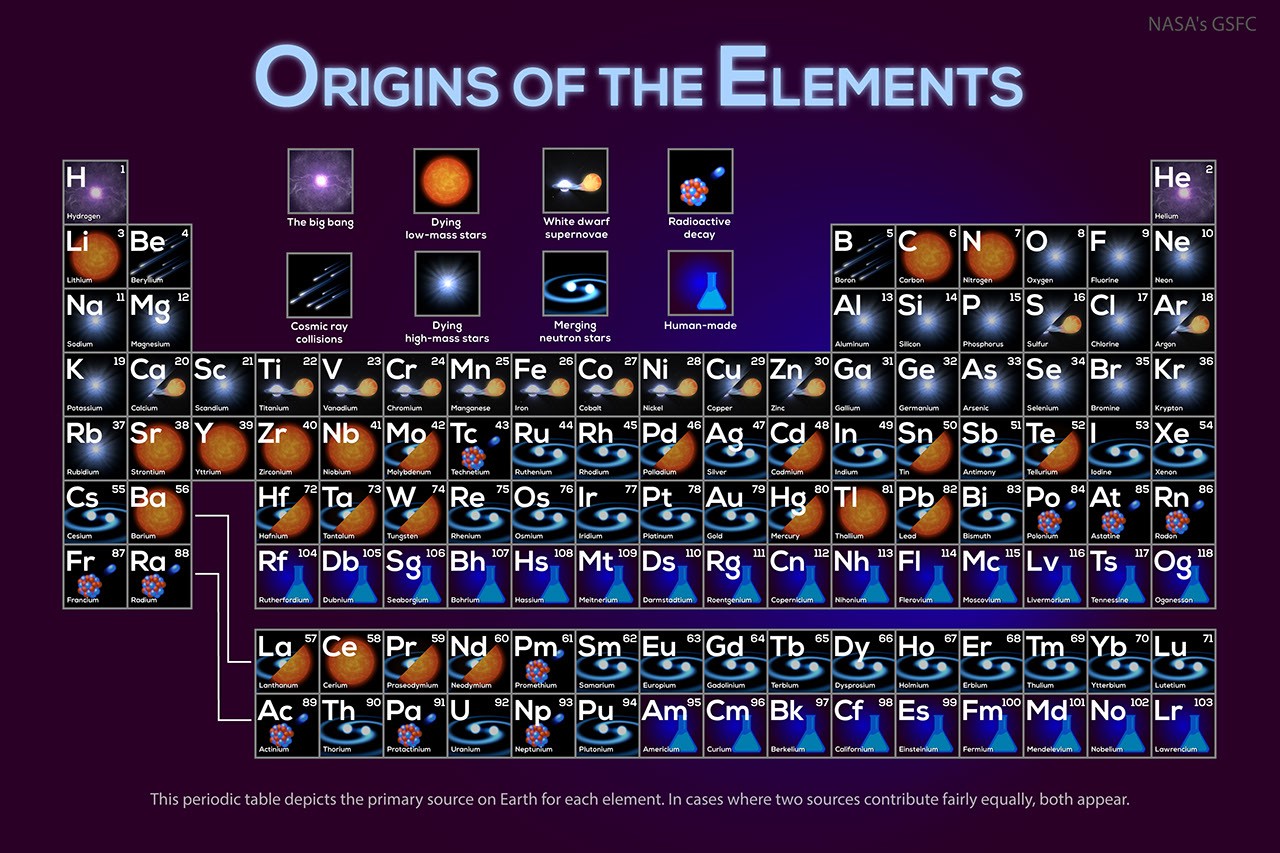
NASA’s Astronomy Picture of the Day for 14 September 2026 examines the likely cosmic origins of the elements found in the human body, using a colour-coded periodic table to map their nuclear sources.
The explanation attributes hydrogen — including the hydrogen in water — to the Big Bang. Carbon and oxygen formed through nuclear fusion inside stars, while much of the iron in the body was produced in supernovas that occurred long ago.
Gold is described as likely having formed during collisions involving neutron stars. Those events may have been associated with short-duration gamma-ray bursts or gravitational-wave events, although NASA presents the link as a possibility rather than a settled account.
Phosphorus and copper occur in the body in small amounts but are essential to the functioning of all known life. NASA says the origins of some elements, including copper, remain incompletely understood and are the subject of continuing observational and computational research.
The periodic table represents humanity’s best current understanding of how the known elements were created. NASA also said the main Astronomy Picture of the Day site is moving from apod.nasa.gov to science.nasa.gov/apod.