Paris Grand Mosque centenary highlights colonial legacy and geopolitical tensions
As the Grand Mosque of Paris celebrates its centenary, historical revelations about its role as a sanctuary during World War II contrast with contemporary political disputes over influence and governance.
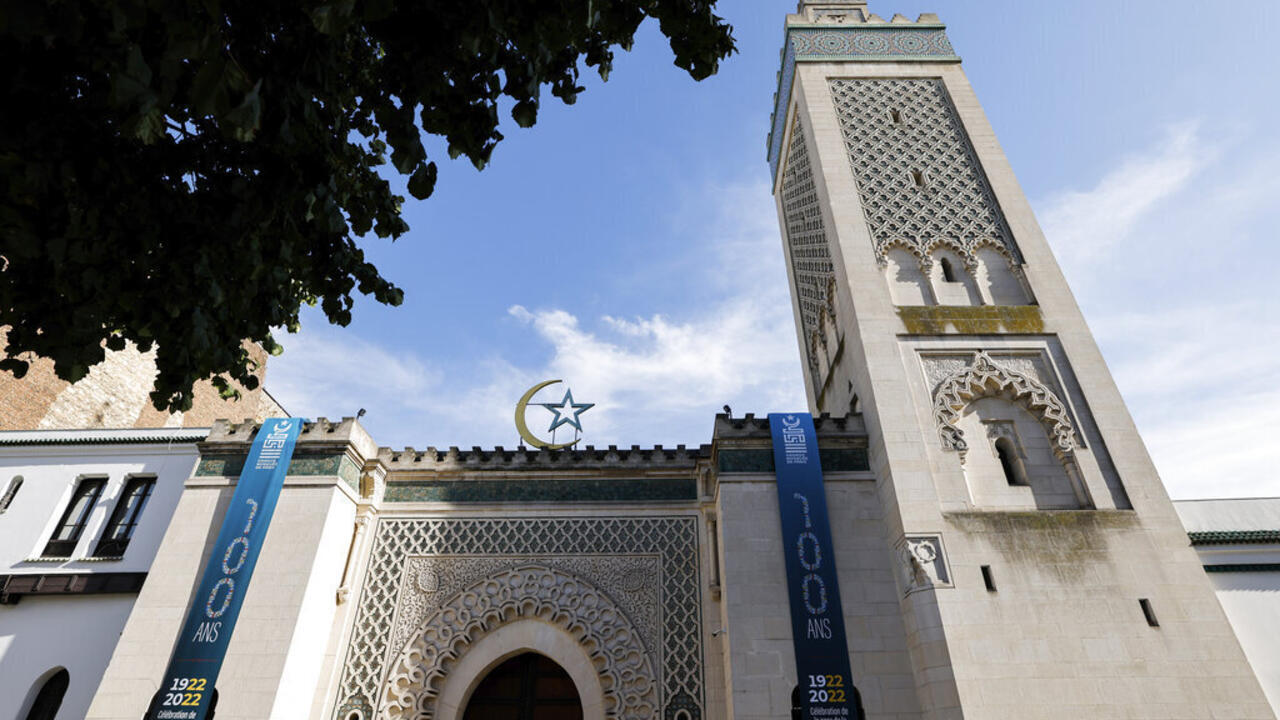
The Grand Mosque of Paris is marking its 100th anniversary, commemorating its inauguration on 15 July 1926 as a tribute to the more than 100,000 Muslim soldiers who fought and died for France during World War I. Located in the Latin Quarter, the Hispano-Moorish landmark has evolved from a colonial-era instrument of surveillance into a significant cultural and historical site. The centenary coincides with the publication of a collaborative book, "La Grande Mosquée de Paris, Regards sur 100 ans en 100 événements," edited by current rector Chems-eddine Hafiz, which offers archival documents tracing the institution's complex history.
French historian Benjamin Stora has highlighted the mosque’s lesser-known role as a geopolitical bridge, particularly its function as a safe haven for Jews during the German occupation of World War II. Following the Vel’ d’Hiv roundup in 1942, former rector Si Kaddour Benghabrit issued fake Muslim IDs to Jewish children, and the mosque sheltered Jewish-Algerian singer Salim Halali. Stora emphasises that this history of coexistence is often contested, noting that irrefutable evidence and eyewitness accounts confirm the institution's protection of Jewish citizens during the occupation.
The institution’s origins were rooted in colonial administration, designed to exert control over Muslim populations in France. Between 1919 and 1939, approximately 100,000 Algerian workers, mostly of Kabyle origin, arrived in France, prompting the construction of monitoring institutions including the mosque and the Franco-Muslim Institute. Early Algerian nationalists viewed the mosque with suspicion, seeing it as a tool to counter the rise of pro-independence movements led by figures such as Messali Hadj. Surveillance intensified during the Algerian War, with social organisations like the Social Action Fund used to monitor migrant workers living in slums.
Contemporary political tensions surround the institution, including diplomatic friction between Algeria and Morocco regarding influence over the site. While Morocco’s sultan initially headed the project, Algeria gradually gained influence through its large population in France following its independence in 1962. The current rector, Chems-eddine Hafiz, faces accusations of opacity regarding an exclusive mandate granted by Algeria in 2023 to certify halal products across the European Union. Hafiz has stated that attacks on him are effectively attacks on Algeria, underscoring the deep geopolitical entanglements of the mosque.
The anniversary also follows recent diplomatic strains, including Interior Minister Bruno Retailleau’s refusal to attend the Iftar meal marking the end of Ramadan in 2025. This decision followed the imprisonment of writer Boualem Sansal in Algeria. Despite being listed as a historic monument since 1983 and serving as a major tourist attraction, the mosque remains a focal point of political crosshairs, reflecting the enduring complexities of France’s relationship with its Muslim communities and its former colonies.