OpenAI enters hardware market with $230 Micro keypad for ChatGPT
Developed with Work Louder, the Micro keypad targets power users and coders but draws criticism over price and complexity as OpenAI navigates ongoing trade secret allegations.
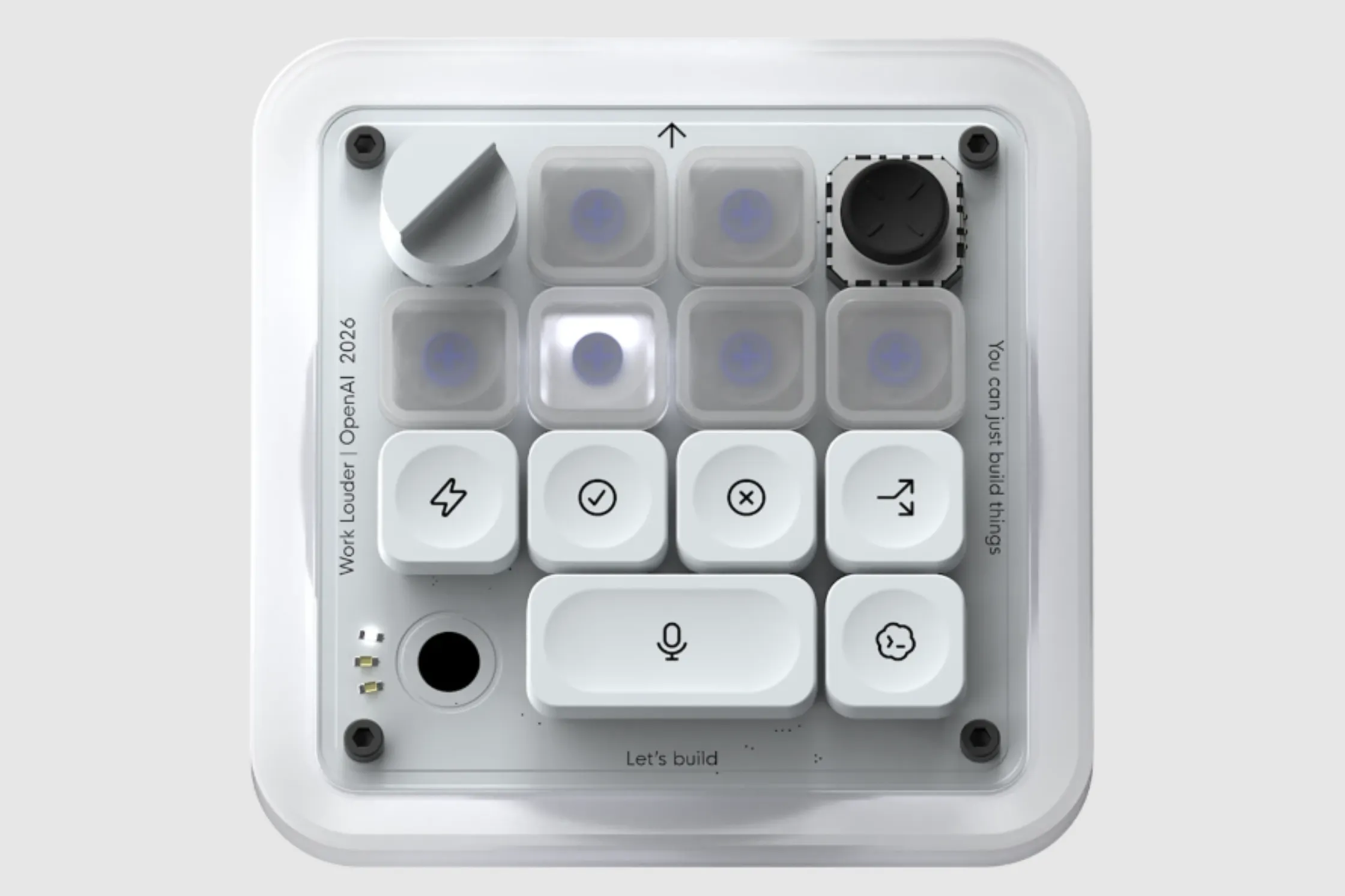
OpenAI has released its first hardware product, the Micro keypad, a $230 device designed to integrate with ChatGPT and the agentic coding tool Codex. Developed in collaboration with specialty keyboard designer Work Louder, the keypad features six customizable agent keys, six command keys, and a dedicated voice dictation button. The launch marks the artificial intelligence lab’s formal entry into the physical device market, positioning the Micro as a tool for efficiency among power users and hard-core coders.
The device connects to computers via Bluetooth or a USB cable and allows users to customise key brightness and assign specific commands or projects to individual buttons within the ChatGPT interface. It utilises a colour-coded status system to indicate agent activity: white for idle, blue for thinking, green for task completion, and red for errors. TechCrunch obtained and tested a unit of the Micro keypad, noting its sturdy build and the ability to toggle between various ChatGPT sessions with ease once programmed.
Initial reception has been polarised, with significant pushback from the coding community. Reviews from users on Reddit have been largely negative, with some dismissing the device as a prank or unnecessary novelty. Independent outlet Aftermath published a critical review, describing the $230 price tag as difficult to justify given the availability of cheaper DIY and off-the-shelf mechanical keyboard alternatives, with one reviewer stating the device felt engineered to frustrate users.
The launch occurs against a backdrop of legal tensions between OpenAI and Apple. Several weeks ago, Apple sued the AI lab, alleging trade theft, which analysts suggest could lead to a protracted legal battle. Reports indicate that former Apple engineers are involved in OpenAI’s hardware development, including the Micro keypad and other alleged smart home products. The packaging of the Micro has also drawn comparisons to Apple’s aesthetic, fueling speculation about the origins of the design.
While the device offers a steep learning curve, TechCrunch’s testing found that it can become efficient and enjoyable for those who frequently toggle between AI sessions. However, the value proposition remains questionable for general users who may not see the benefit of spending time learning to program a separate keypad when standard laptop inputs are already familiar. The Micro is currently positioned as an artisanal workplace novelty, with its long-term utility dependent on how deeply users integrate ChatGPT into their daily workflows.