OpenAI claims Jalapeño chip beats Nvidia on efficiency and speed
New benchmarks suggest the custom ASIC delivers significantly lower latency and higher throughput, though OpenAI says it will keep its Nvidia partnership.
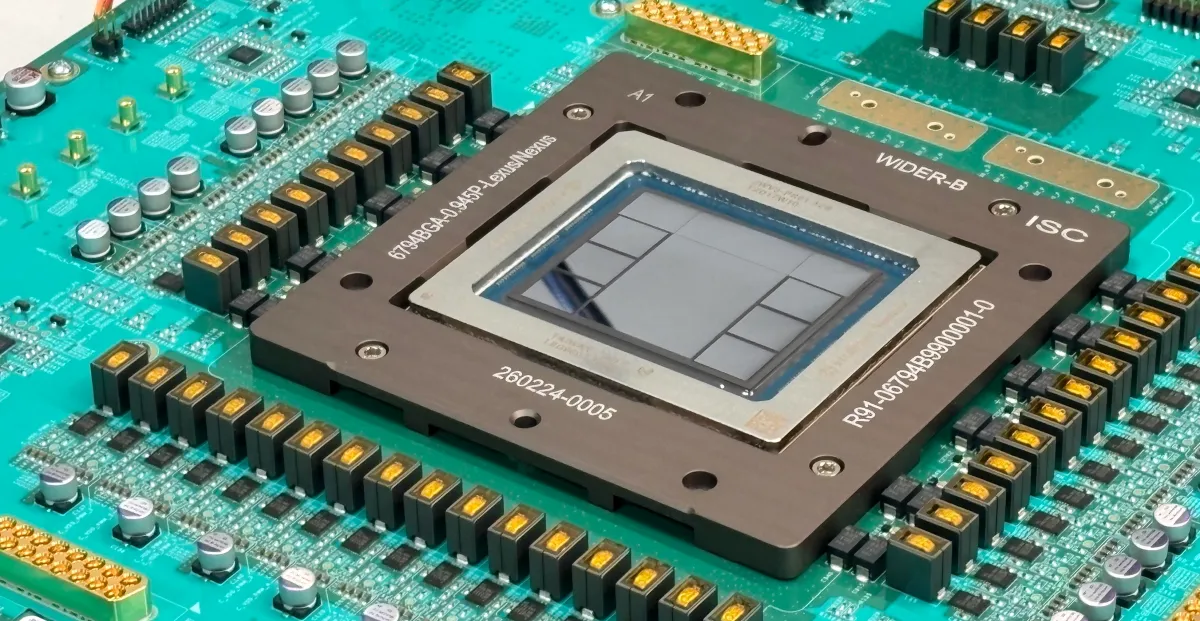
OpenAI has published performance benchmarks for its custom Jalapeño processor, claiming the chip outperforms Nvidia’s leading superchips in both efficiency and speed. The results, released on Tuesday, indicate that the Application-Specific Integrated Circuit (ASIC) can complete AI inference tasks more efficiently while returning responses faster than competing systems.
The benchmarks were conducted using the InferenceX platform, which measures how well AI systems handle inference. OpenAI compared Jalapeño against the best recorded results for Nvidia’s GB200 and GB300 superchips. The company reported that Jalapeño delivered 1.5 to 1.9 times more AI work per watt across the GPT-OSS 120B, DeepSeek R1, and Kimi K2.5 1T models. Additionally, the chip offered 1.7 to 3.6 times lower end-to-end latency across these same models.
Richard Ho, OpenAI’s hardware vice-president, stated that the chip offers the “best of both worlds” by providing lower latency and higher throughput. He noted that AI systems typically require a trade-off between these two metrics, but Jalapeño appears to avoid that limitation. Ho said this means the chip can provide users with faster responses, more responsive agents, and more reliable access as demand grows.
Jalapeño was first introduced in June and was developed in partnership with Broadcom. It is designed specifically for AI inference, the process of running a trained AI model to complete a task or deploy an agent. While the performance gains are significant, the results are based on OpenAI’s own briefings and blog post, with independent verification of the InferenceX results still pending.
Regarding deployment, OpenAI plans to roll out Jalapeño in small volumes by the end of 2026. The company intends to ramp up production volumes in 2027, although it has not disclosed the exact number of chips it plans to deploy next year. OpenAI will also continue developing the second and third generations of the chip.
Despite the strong benchmark results, Ho said OpenAI does not expect to replace its entire chip lineup with Jalapeño. The company’s overall compute strategy includes “very good partners,” such as Nvidia, meaning the new ASIC will complement rather than replace existing hardware relationships.