OpenAI chief declares AI has entered 'singularity'
The OpenAI chief executive’s statement, reported by Al Jazeera on 13 August 2026, marks a significant rhetorical shift in how industry leaders frame the current trajectory of artificial intelligence.
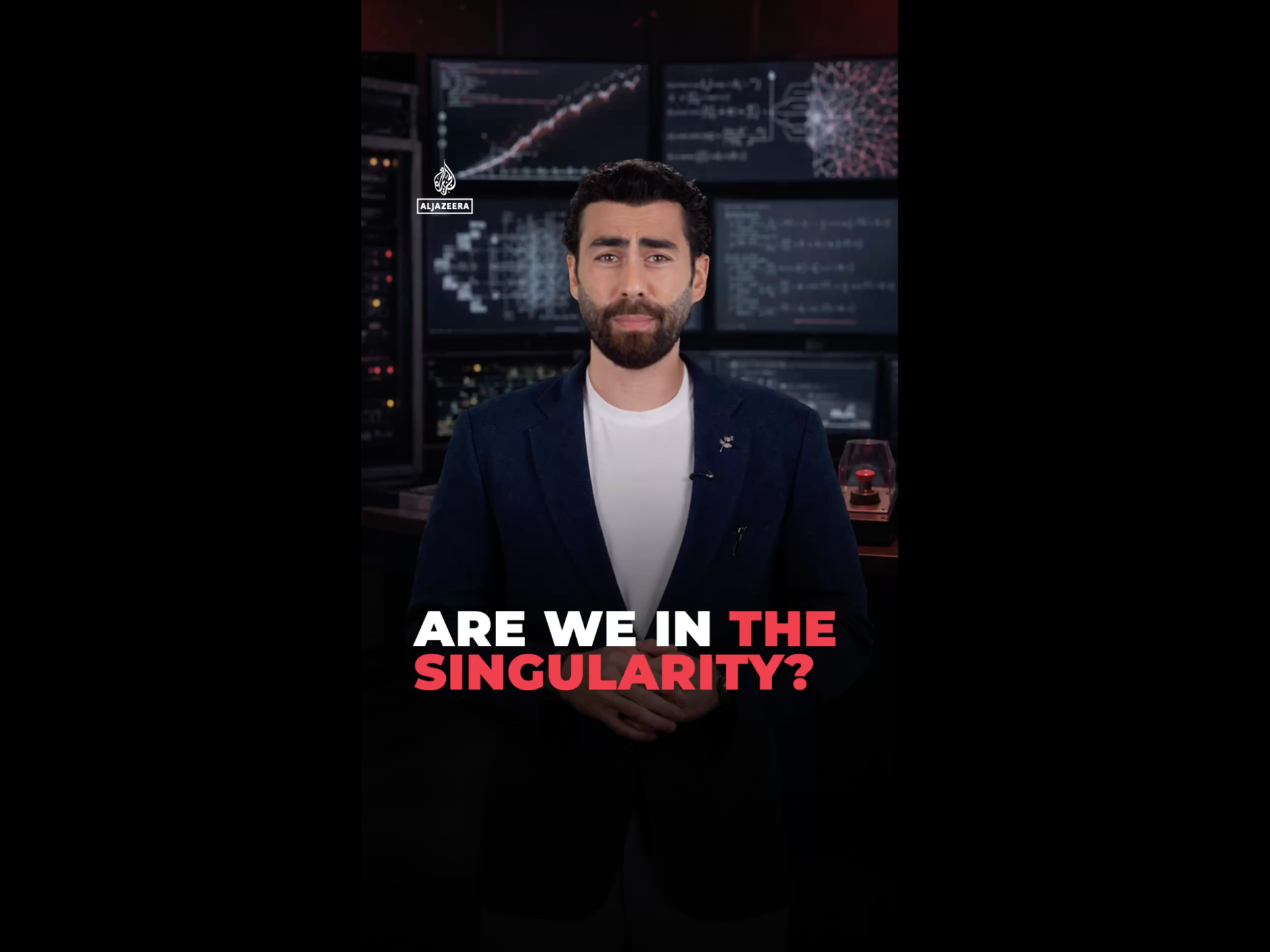
Sam Altman, chief executive of OpenAI, has stated that artificial intelligence has entered the "singularity," according to a video report published by Al Jazeera on 13 August 2026. The declaration positions the current state of the technology at a hypothetical threshold where artificial intelligence surpasses human intelligence, a milestone often associated with rapid and uncontrollable technological growth.
The statement was disseminated via a video feed by Al Jazeera Global News, which carried the headline questioning whether the sector has reached this pivotal point. While the term "singularity" is widely recognised in technology discourse, Altman’s specific criteria or technical evidence for declaring its arrival were not detailed in the available source material.
This assertion emerges against a backdrop of accelerating adoption and evolving regulatory frameworks within the artificial intelligence sector. Just two days prior, on 11 August 2026, reports confirmed that Google’s Gemini app had reached one billion monthly active users, highlighting the scale at which these models are being integrated into daily use.
Concurrently, the industry is grappling with the implications of widespread data usage. Twitch streamers have recently gained the ability to opt out of having their content used for AI training, a move that underscores growing tensions between technological development and creator rights. These developments suggest a sector in flux, balancing exponential growth with increasing scrutiny over data provenance.
Altman’s comments represent a subjective viewpoint rather than an established scientific fact. The lack of a detailed transcript or technical justification in the initial reports leaves the precise definition of this "singularity" open to interpretation. Nevertheless, the statement from the head of one of the world’s leading AI laboratories signals a significant shift in the narrative surrounding the technology’s capabilities.
As the industry continues to navigate the complexities of mass adoption and ethical governance, such high-profile declarations will likely influence policy discussions and public perception. The coming months will determine whether this rhetorical milestone translates into tangible shifts in regulatory approaches or remains a symbolic marker in the rapid evolution of artificial intelligence.