OpenAI bets on white-collar workers with new ChatGPT Work agent
The $20-a-month tool aims to bring autonomous AI to non-technical professionals, but early adoption data reveals a significant gap between internal enthusiasm and external uptake.
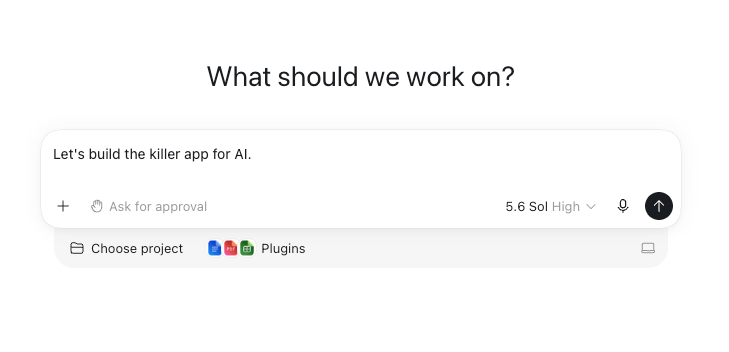
OpenAI has released ChatGPT Work, a subscription product priced at $20 a month, designed to extend the reach of autonomous AI agents beyond software engineers to white-collar professionals. The tool, a modified version of the company’s Codex coding application, allows users to connect large language models to digital workflows such as email, Slack, and project management software. The launch represents a strategic pivot for the frontier lab, which is seeking to justify its massive investment in training and computation by capturing a broader segment of the professional workforce.
The commercial logic behind the move is clear: agents that operate for longer stretches consume more tokens, making them more lucrative for OpenAI on a per-user basis. However, the path to mass adoption remains fraught with challenges. An OpenAI-backed study found that in June, 98 per cent of OpenAI employees were using Codex, but just 17 per cent of organisational subscribers and less than one per cent of individual subscribers were using the agentic coding tool. This disparity highlights the difficulty of translating internal efficiency into external market share.
To compete with rivals like Anthropic’s Claude Cowork and vertical-specific tools such as Harvey and Clay, OpenAI engineers have focused on simplifying the user experience. The product is intended to handle routine, data-intensive coordination tasks, such as generating weekly metrics reports or creating investment memos. Thibault Sottiaux, who leads OpenAI’s core product work, stated that the goal is to bring everyone along by allowing the AI to complete multistep projects autonomously.
Despite the ambition, practical hurdles remain regarding data permissions and token costs. A TechCrunch reporter noted that using the tool for four days on the $20-a-month subscription consumed more than 80 million tokens, costing approximately $65 according to model analysis. This suggests a significant subsidy for casual users, a factor that could pressure margins if uptake does not scale rapidly. OpenAI has responded by pointing to recent price cuts for its Luna model, promising improved efficiency in the coming months.
The competitive landscape is intensifying, with industry analysts warning that if AI labs cannot rapidly acquire key complementary assets to scale their tools, value will accrue elsewhere. While Codex has taken a slight lead over Claude Code in download statistics since April, the market for general-purpose AI agents is still nascent. OpenAI relies on its benchmark GDPval, drawn from 44 occupations and hundreds of knowledge work tests, to evaluate performance, though critics argue that non-technical tasks are harder to measure than code.
For investors, the launch signals OpenAI’s attempt to move beyond the developer niche and into the broader enterprise software market. The success of ChatGPT Work will depend on whether the company can resolve the friction of integrating AI into messy, legacy digital workflows without overwhelming users with complexity. As the company pushes to make its models the default choice for knowledge work, the next six months will be critical in determining whether this new product line can sustain its growth trajectory.