OPEC Plus reaffirms production coordination as remaining members approve output hike
The bloc announces a daily crude increase of more than 180,000 barrels for June, underscoring institutional resilience in the face of geopolitical fragmentation.
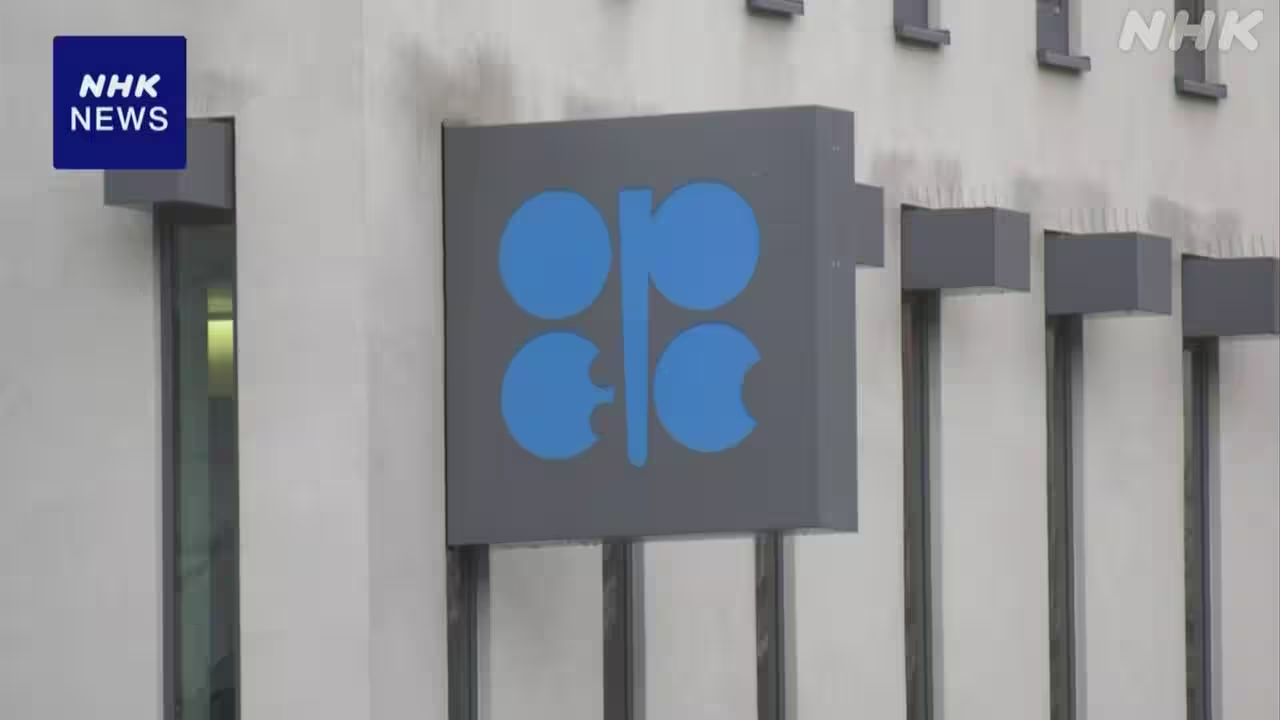
Major OPEC Plus producers, led by Saudi Arabia, have formally announced a decision to increase daily crude oil production by more than 180,000 barrels for the month of June. This move represents a significant policy adjustment by the remaining members of the alliance, occurring shortly after the United Arab Emirates withdrew from the group.
The announcement, reported by NHK News on 3 May 2026, highlights a deliberate effort to maintain cooperative frameworks within the organisation. Despite the UAE's departure raising initial concerns regarding the stability of the alliance's coordination, the remaining nations have demonstrated a clear commitment to continuing their joint production strategies.
This production increase serves as a tangible indicator of the bloc's institutional durability. By proceeding with the quota adjustments without the UAE, the core members have effectively insulated their policy mechanisms from the immediate disruption caused by the exit. The decision underscores that the operational capacity of the group remains intact even as its composition shifts.
The broader geopolitical context surrounding this energy policy decision remains complex. The announcement coincides with ongoing tensions in the Middle East, including developments involving Iran and shifting US policy under the Trump administration. These external factors provide an unstable backdrop against which the OPEC Plus nations are recalibrating their output levels.
While the specific volume of the increase is quantified at over 180,000 barrels per day, the precise causal link between the UAE's withdrawal and the exact magnitude of the hike is not explicitly detailed in the source material. The increase may reflect pre-existing planning or broader market conditions rather than being solely a direct reaction to the UAE's exit.
The implementation of this production increase is scheduled for June 2026. As the remaining members execute this policy, the long-term impact of the UAE's absence on future production quotas and alliance cohesion will require continued observation. The current move suggests a pragmatic approach to governance, prioritising the maintenance of the production framework over the preservation of the alliance's original membership structure.