Nvidia chief claims AGI achieved, then calls the milestone 'senseless'
Jensen Huang stated that Nvidia has reached artificial general intelligence for many tasks, yet dismissed the term as arbitrary due to a lack of industry consensus on its definition.
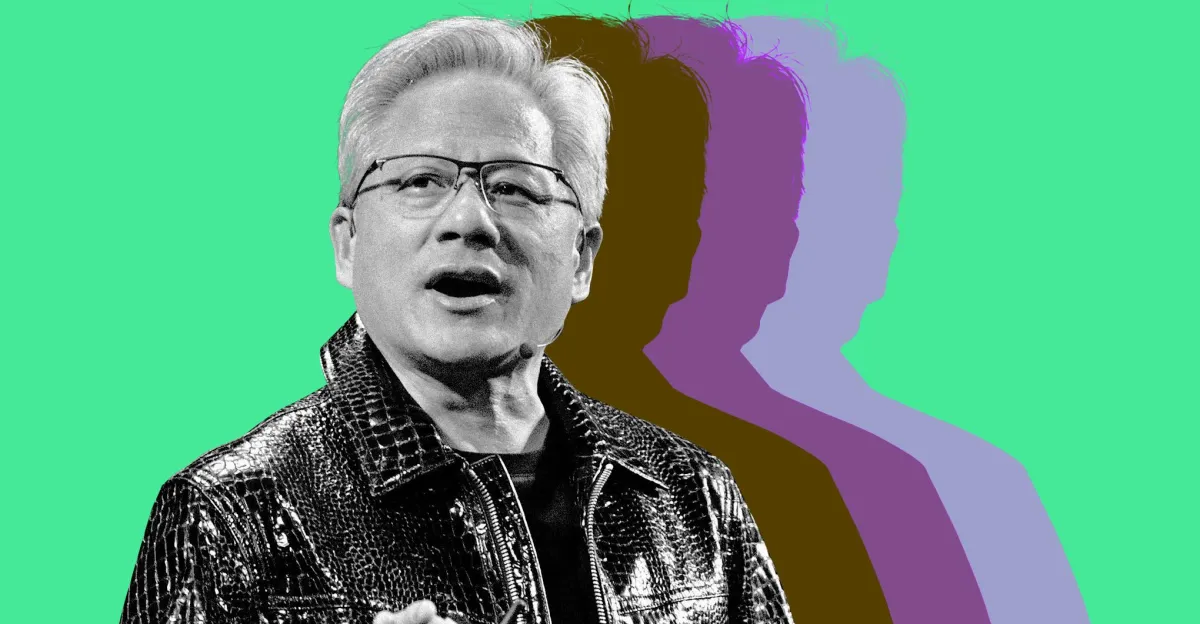
Nvidia CEO Jensen Huang has declared that the company has achieved artificial general intelligence (AGI) for many tasks, a claim he simultaneously described as "senseless" due to the absence of a clear industry standard. Speaking during the company's earnings call, Huang noted that while the milestone is often cited as the ultimate goal of the AI race, the lack of a consensus definition makes the achievement arbitrary.
Huang emphasised that the focus should remain on AI performing "productive and useful work" and "generating profitable tokens." He linked increased compute to token generation and, consequently, profit, stating, "This is the exact phase where we're at. Which is the reason why everybody's leaning in." He also highlighted the evolution of AI from simple prompt responses to autonomous agents capable of learning new skills and improving themselves recursively.
This is not the first time Huang has made such an assertion. In March, during an appearance on the Lex Fridman podcast, he stated, "I think we've achieved AGI." However, he walked back the scale of that claim during the earnings call, noting that the odds of 100,000 autonomous agents building Nvidia is "zero percent."
The ambiguity of AGI is a persistent issue across the technology sector. OpenAI, which was founded with the explicit goal of building AGI, defines it in its charter as "highly autonomous systems that outperform humans at most economically valuable work." Sam Altman has acknowledged that this is hardly a measurable standard, admitting that AGI is "not a super useful term."
Complicating the landscape further is a reportedly financially driven definition used by OpenAI and Microsoft, which requires systems to generate at least $100 billion in profits. OpenAI chief research officer Mark Chen has estimated the company is "80% of the way" to AGI, while Altman predicted the company would have something he would call AGI by the end of the year.
Other tech leaders have adopted varying terminology to describe similar concepts. Anthropic CEO Dario Amodei has called AGI "imprecise" and a "marketing term," preferring "powerful AI." Meta discusses "personal superintelligence," Microsoft refers to "humanist superintelligence," and Amazon uses "useful general intelligence." Google DeepMind's Demis Hassabis has described the current state as the "foothills of the singularity."
With no universally agreed-upon definition of intelligence or a threshold for AGI, the term remains a nebulous concept. As long as the definition remains poorly defined and carelessly used, the industry is likely to continue using the term to highlight progress, despite the underlying ambiguity.