Nvidia CEO Jensen Huang forecasts 70% revenue growth next year
Jensen Huang says Nvidia’s reach across the AI ecosystem supports his outlook, while rejecting concerns over circular investment deals.
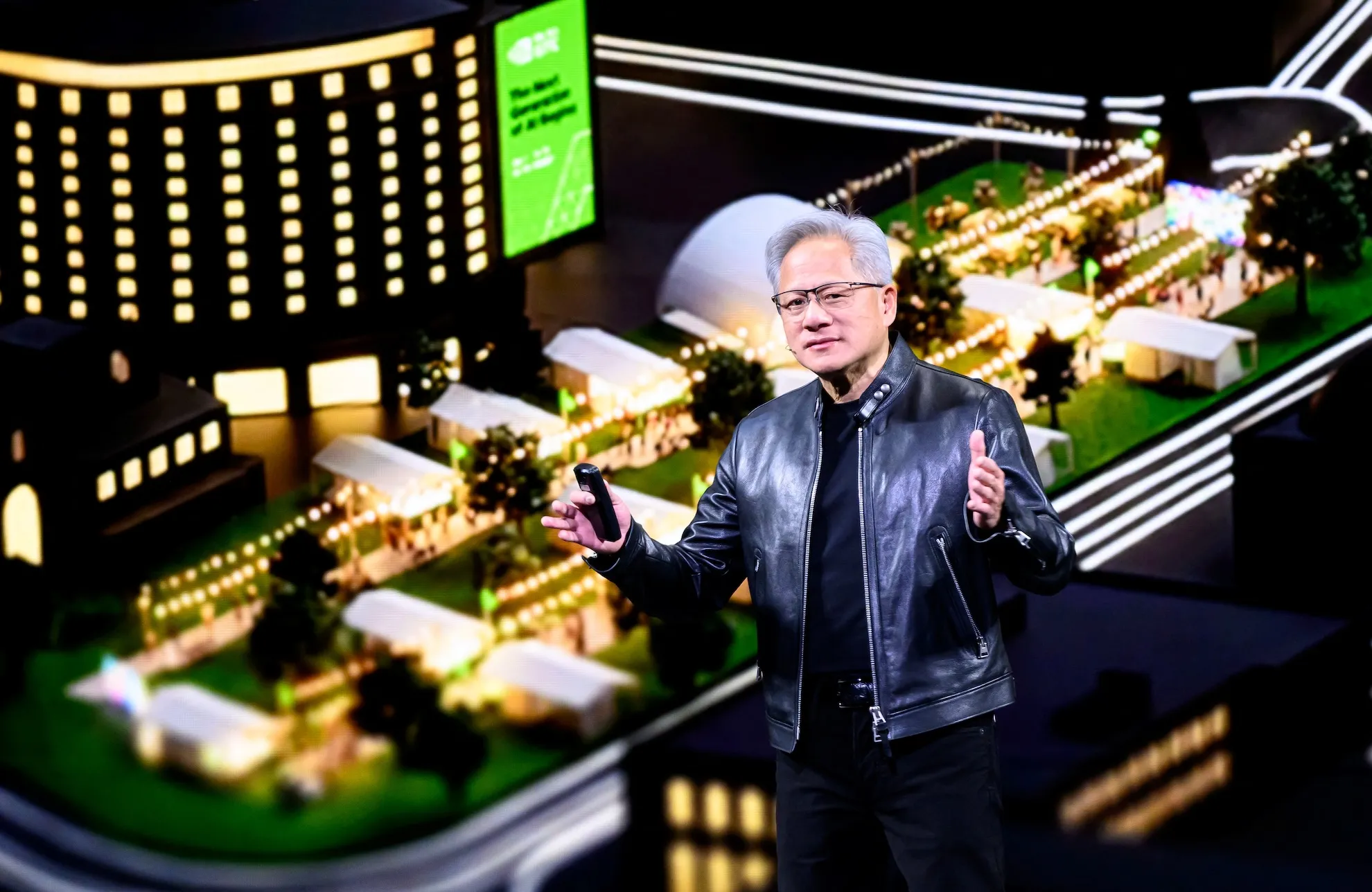
Nvidia chief executive Jensen Huang has reiterated his forecast that the company’s revenue could grow by about 70% next year, citing its role across the artificial-intelligence ecosystem.
Speaking at the Goldman Sachs Communacopia + Technology conference, Huang said Nvidia was embedded across suppliers, data-centre projects, cloud providers, original equipment manufacturers and AI companies. He said the company’s systems were used by every major AI laboratory.
Huang also pointed to demand for a system combining 36 Grace CPUs with 72 Blackwell GPUs. Sales of that product were growing by 27% month on month, he said, although the figure applies to that product line rather than Nvidia’s overall business.
Analysts expect Nvidia to generate approximately US$400 billion in revenue in the current fiscal year. If Huang’s forecast is met, revenue would reach roughly US$680 billion next year. The projection remains a forecast, not a confirmed result.
Huang rejected claims that Nvidia’s investments in customers amounted to circular deals, in which companies receiving Nvidia funding then use it to buy Nvidia products. He said companies in which Nvidia had invested accounted for about US$100 billion in contracts, and argued those investments were backed by customer revenue.
Nvidia’s outlook faces competition from hyperscalers and AI laboratories developing their own chips, as well as Cerebras and other specialised chip companies. The sustainability of its position may also depend on how efficiently the maturing AI industry uses computing infrastructure.