NTSB restricts docket access after AI reconstructs voices from UPS crash data
The US National Transportation Safety Board has restored access to its online docket system but kept 42 investigations, including the UPS Flight 2976 case, closed pending review after artificial intelligence tools were used to approximate cockpit audio.
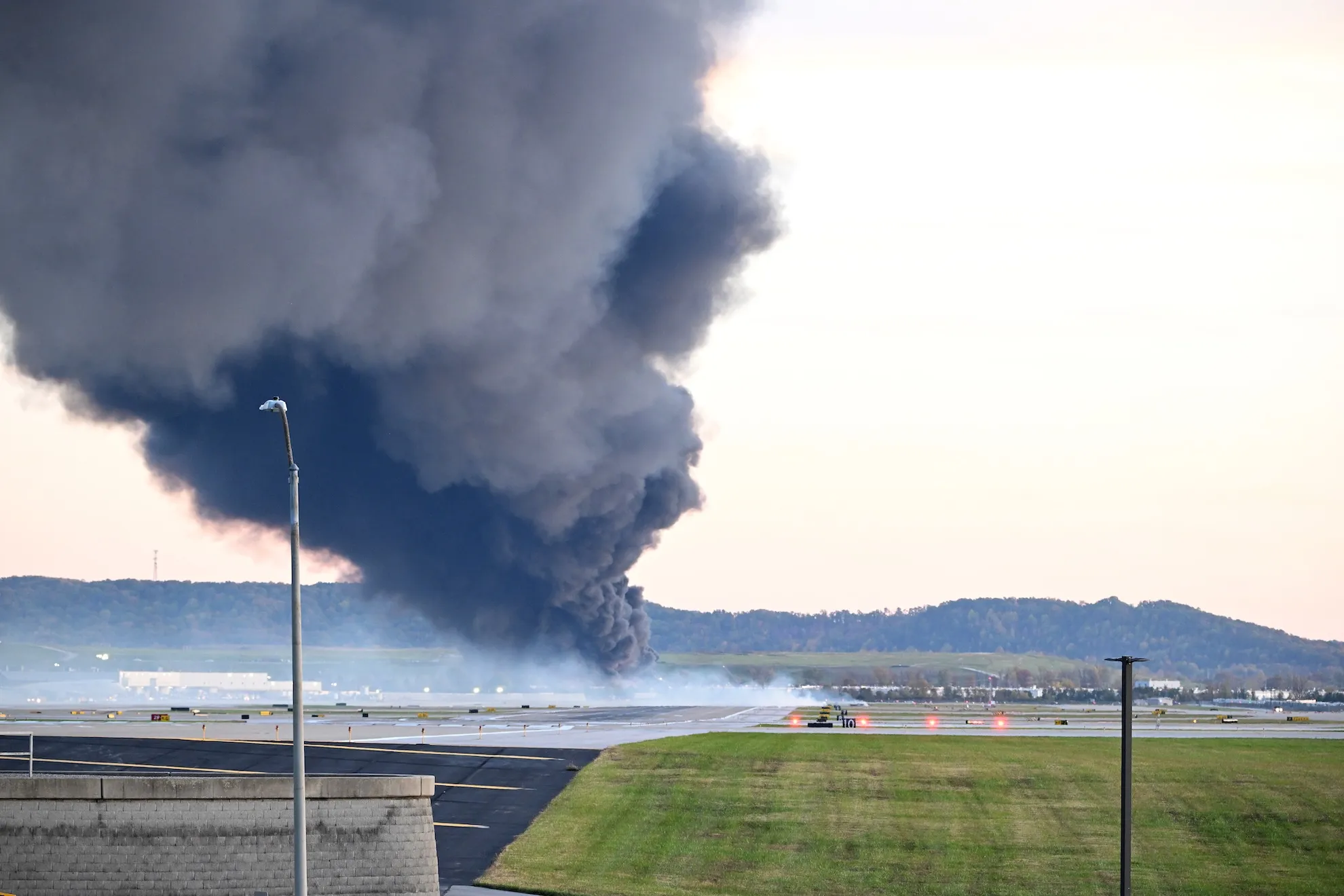
The US National Transportation Safety Board (NTSB) has temporarily restricted public access to its online docket system following the discovery that artificial intelligence tools were used to reconstruct the voices of pilots killed in the UPS Flight 2976 crash in Louisville, Kentucky. The agency restored general access to the system on Friday but kept 42 investigations, including the UPS Flight 2976 case, closed pending a review of the incident.
The reconstruction was facilitated by a spectrogram file included in the accident docket, which converts sound signals into a visual image using mathematical processes. While federal law prohibits the NTSB from including actual cockpit audio recordings in its docket system, spectrograms—visual representations of sound frequencies—have historically been included as part of the investigation data. Users combined this visual data with publicly available transcripts and AI software, specifically identified as Codex, to approximate the cockpit voice recorder audio.
Scott Manley, a YouTuber known for content combining physics, astronomy, and video games, highlighted on X that the megabytes of data encoded in the spectrogram image made audio reconstruction possible. Following this observation, individuals utilised the spectrogram alongside the available transcripts to generate approximations of the audio, which then circulated on the internet. The NTSB confirmed that these approximations were created using AI tools, though the exact technical methodology for converting the spectrogram back into audio was not fully detailed.
The NTSB docket system serves as a public repository for investigation data, though specific audio evidence is legally restricted. The agency noted that the reconstructed voices were approximations rather than recovered original audio. The incident has prompted the board to keep the UPS Flight 2976 investigation and 41 others closed while it reviews the implications of AI tools being applied to publicly available docket data.
This development underscores the evolving intersection of artificial intelligence and public data accessibility. The NTSB’s decision to temporarily block access and subsequently limit specific investigations highlights concerns regarding the potential misuse of visual data formats that contain encoded audio information. The board is now assessing how to manage the release of such data in future investigations to prevent similar reconstructions.
