Northern Sea Route fails to meet 2024 trade targets despite Kremlin investment
While President Vladimir Putin promotes the corridor as a vital alternative to the Suez Canal, data from Rosatom shows 2024 volumes fell to less than 1 per cent of global maritime trade, hindered by the war in Ukraine and a lack of international cooperation.
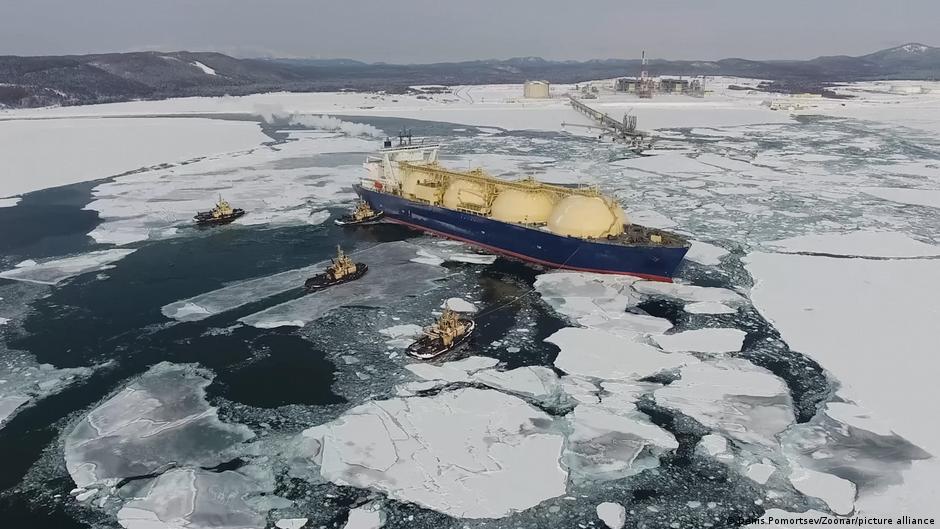
The Russian government's ambition to transform the Northern Sea Route into a primary artery for global commerce has not materialised in 2024. Despite official assertions that the corridor represents the safest and most efficient path between Asia and Europe, actual cargo throughput recorded by Rosatom reached only 38 million tonnes. This figure falls significantly short of the 80 million tonne target set for the year and represents less than one per cent of total global maritime trade.
The disparity between Moscow's strategic vision and operational reality is stark when compared to established alternatives. While the Northern Sea Route is theoretically capable of reducing travel distance by up to 40 per cent relative to the Suez Canal, its utilisation remains marginal. In contrast, the Suez Canal continues to handle up to 15 per cent of global maritime traffic. The Northern Sea Route remains dominated by domestic energy exports, with Russian crude oil and liquid natural gas accounting for more than 80 per cent of the cargo transported in 2024.
Significant financial resources have been allocated to overcome these hurdles, with the state budgeting 1.8 trillion Russian rubles for development through 2035. However, the efficacy of this investment is constrained by persistent geopolitical instability stemming from the war in Ukraine. Ksenia Vakhrusheva of the Bellona Environmental Foundation notes that the Kremlin's desire to popularise the route is not matching the economic realities, as major international shipping entities remain hesitant to engage with infrastructure controlled by a government disregarding international law.
Environmental considerations further complicate the route's viability as a major trade corridor. Although climate change has reduced ice cover, the passage remains hazardous for much of the year, requiring icebreaker escort which Russia restricts to its own vessels. Additionally, the International Maritime Organization's 2024 ban on heavy fuel oil in Arctic waters to mitigate black carbon risks has not been ratified by Moscow, whose waiver is set to expire in 2029. The environmental foundation warns that any fuel spill in the Arctic poses unique risks due to the slow decomposition of oil products in cold waters.
International cooperation remains elusive, with major European and Chinese shipping giants reluctant to commit to the corridor. China's state-owned COSCO suspended regular Arctic transit in 2022 following the invasion of Ukraine, and while smaller shipments have resumed, large-scale commercial integration has not occurred. South Korea has announced plans for a test transit to Rotterdam in September 2026, yet experts suggest current engagement is driven more by political considerations than economic viability.
Looking toward the longer term, a 2024 study published in Communications Earth \& Environment suggests the Northern Sea Route could become navigable year-round by 2100. However, Bellona's Vakhrusheva cautions that by that time, the global consequences of climate change may render such a route irrelevant. Until geopolitical tensions ease and environmental risks are adequately managed, the Northern Sea Route will likely remain a niche energy corridor rather than the global trade artery Moscow envisions.