North Korea channels Russia-linked revenues into military and infrastructure projects
South Korean intelligence estimates Pyongyang received up to US$14 billion from Russia over three years, funding projects from factories and hospitals to military expansion.
North Korea is reportedly using financial aid and economic benefits linked to its support for Russia’s war in Ukraine to finance military expansion and long-delayed infrastructure projects.
South Korea’s National Intelligence Service estimated in May that Pyongyang received at least US$7.7 billion, and potentially as much as US$14 billion, from Russia over the preceding three years. The estimate includes financial aid and economic value linked to North Korea providing personnel and materiel for the war.
Reported spending includes factories, hospitals, rural housing and new districts in Pyongyang, alongside upgrades to ports, roads and bridges. The projects align in part with the Regional Development 20x10 Policy, which aims to build modern industrial facilities in 20 regional cities each year for a decade.
Military investment has also expanded. The International Atomic Energy Agency reportedly identified a new uranium-enrichment facility at Yongbyon, potentially capable of producing enough highly enriched uranium for about four warheads annually. North Korea has also commissioned the 5,000-tonne destroyer Kang Kon, which Kim Jong Un claimed could launch nuclear weapons.
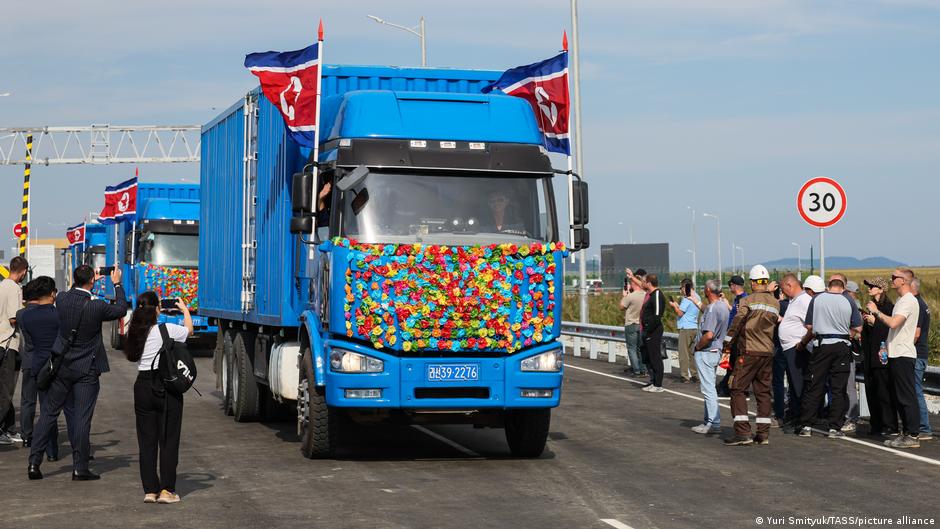
North Korea and Russia have opened their first road bridge across the Tumen River, while customs and warehousing facilities are being developed. Analysts cited by Deutsche Welle say renewed trade has benefited Pyongyang and some border cities, but the hinterland remains stagnant. They warn the economy could face difficulties if war-related revenues end, although the scale of any future decline remains uncertain.