Norbert Olah turns Romani identity into a political art practice
At Budapest’s Bura Galeria, the Romani artist is confronting exclusion, political power and the limits placed on Roma culture.
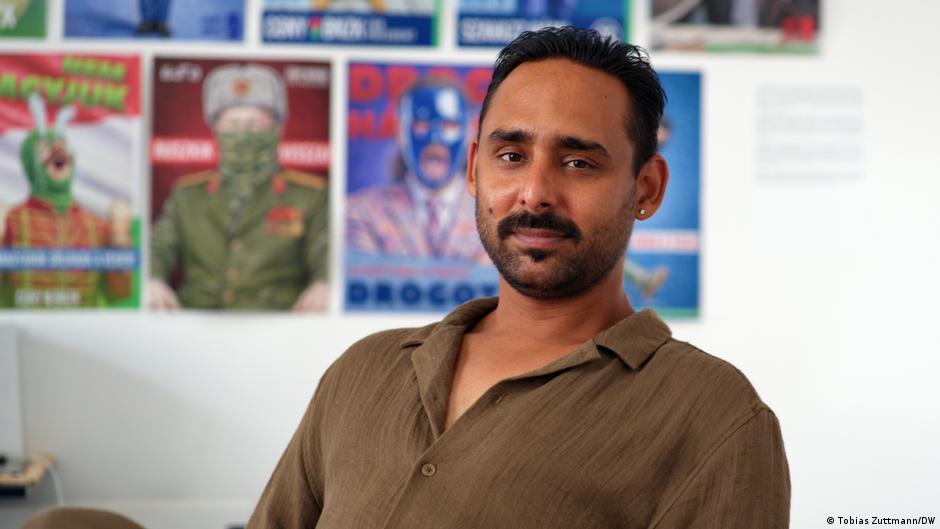
Hungarian Romani artist Norbert Olah has made identity, exclusion and political power central to his work after years of avoiding an ethnic label. His paintings and projects challenge prejudice against Roma while asking how Romani identity might change in the future.
Olah is working from Budapest’s Bura Galeria, a contemporary Roma art platform established by Romani activists in 2021. His recent work includes repeated images of the blue-and-green Roma flag, a satirical election poster and plans for a “Roma futurism” project imagining Romani life in space.
In 2021, Olah and his father built a brick wall outside the former Roma Parliament building as part of The Romani Artist’s Fears. The wall carried words including “integration”, “assimilation” and “segregation” before Olah demolished it with a sledgehammer. The building was evicted in 2016 and, according to Deutsche Welle, has remained empty.
Olah’s work also responds to the political treatment of Hungary’s Roma population, which the source describes as facing persistent poverty, social exclusion and marginalisation. He founded the Gypsy Criminals collective in 2024, using a discriminatory political term ironically, after the term had been used by right-wing politicians to imply that Roma were criminals.
The source reports that four of the Tisza party’s nine new MPs were Romani after Hungary’s April 2026 election, with one elected deputy speaker. Olah regards the change in political tone with cautious interest but says the developments so far amount mainly to symbolic gestures. His planned images of Roma on Mars and the moon extend the same argument into the future: social advancement remains inseparable from the barriers imposed by origin, poverty and minority status.