Nikkei Average Surges to Record High, Entering 66,000 Yen Range
Japanese equities climb over 1,400 yen following gains on the Nasdaq, reflecting shifting market dynamics in the Asia-Pacific region.
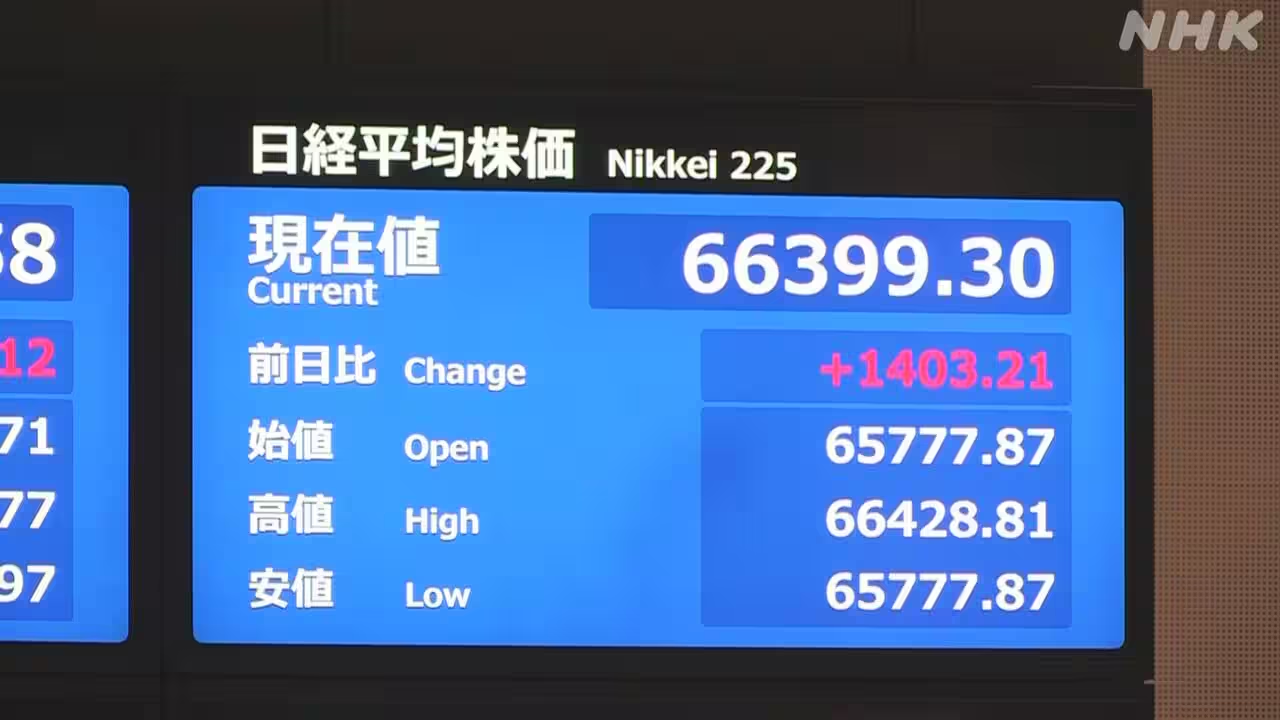
The Nikkei Average has reached an unprecedented intraday high, breaking into the 66,000 yen range for the first time on 27 May 2026. According to reporting from NHK News Japan, the primary index for the Tokyo Stock Exchange rose by more than 1,400 yen during trading hours, establishing a new benchmark for market performance in Japan.
The surge in Japanese equities followed a significant rally on the Nasdaq index in New York on 26 May. Gains on the US exchange were largely propelled by high-tech stocks, creating a positive momentum that carried over into the Tokyo trading session. The correlation between the two markets highlights the interconnected nature of global financial systems, particularly regarding technology sector performance.
While the intraday peak marks a historic milestone for the Nikkei Average, the source material specifies that this record refers to trading hours rather than the final closing price. The exact closing figure for 27 May 2026 was not provided in the initial reports from NHK News Japan, leaving the final daily performance to be determined by end-of-day trading activity.
The Nikkei Average serves as a critical indicator of the health of the Japanese equity market. Its entry into the 66,000 yen range signals a substantial shift in investor sentiment and capital allocation within the region. This movement occurs against a backdrop of broader global economic trends, where technology-driven growth continues to influence major indices across Asia and North America.
Market observers note that the specific high-tech stocks driving the Nasdaq gains were not identified in the available data. However, the ripple effect on the Tokyo Stock Exchange underscores the sensitivity of Japanese markets to international developments. The performance on 27 May 2026 stands as a notable event in the recent history of Japanese financial markets.