NASA upgrades 20-year-old propulsion code to handle green fuels
The modernised Chemical Equilibrium with Applications code offers faster processing for large-scale studies and expanded data for sustainable aviation fuels.
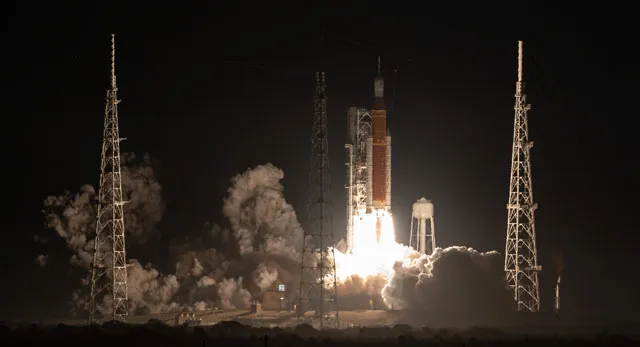
NASA has completed a major modernisation of its Chemical Equilibrium with Applications (CEA) code, a foundational tool used for propulsion system analysis across the aerospace community. The update, released as CEA v3, transforms the legacy software originally written in 2002 into a contemporary package designed to support modern engineering workflows and emerging fuel types.
The project, conducted by NASA’s Engineering and Safety Center, converts the original procedural Fortran code into an object-oriented Fortran 2008 package. This architectural shift introduces stricter typing and a thread-safe equilibrium solver, addressing long-standing difficulties in maintaining and extending the legacy system. The new version also expands interface support to include Python, C, MATLAB, and Excel, allowing engineers to integrate the tool directly into automated analysis pipelines and multidisciplinary design frameworks.
A key feature of the update is the expansion of the thermodynamic database to accommodate next-generation propulsion needs. The code now includes data for green propellant constituents such as ADN, HAN, and LMP-103S, as well as sustainable aviation fuel candidates like n-Butanol. This broader species coverage improves the applicability of the software for studies focused on reducing the environmental impact of spaceflight and aviation.
Performance benchmarks indicate a trade-off between single-case speed and large-scale efficiency. While individual equilibrium calculations are approximately 40 per cent slower than the legacy version, the absolute difference is minimal at about 0.004 seconds per case. However, for multi-case workflows common in design-of-experiments studies, the new architecture delivers significant gains.
In one specific benchmark, a sweep of 108,500 cases was completed in approximately 1.11 seconds using CEA v3, compared with roughly 15 minutes using the previous version. This represents an approximately 800-times reduction in runtime, making large-scale propulsion trade studies and automated design-space exploration significantly more practical for engineering teams.
The modernised code maintains backward compatibility through a legacy command-line interface, ensuring that existing input files and workflows can be carried forward with minimal disruption. The update preserves the validated technical basis of the original tool while enhancing its usability and maintainability for future applications.