Composite image captures 1,706 meteors during 2026 Perseid peak
NASA’s Astronomy Picture of the Day highlights an all-sky view from Czechia that distinguishes Perseid meteors from other active showers.
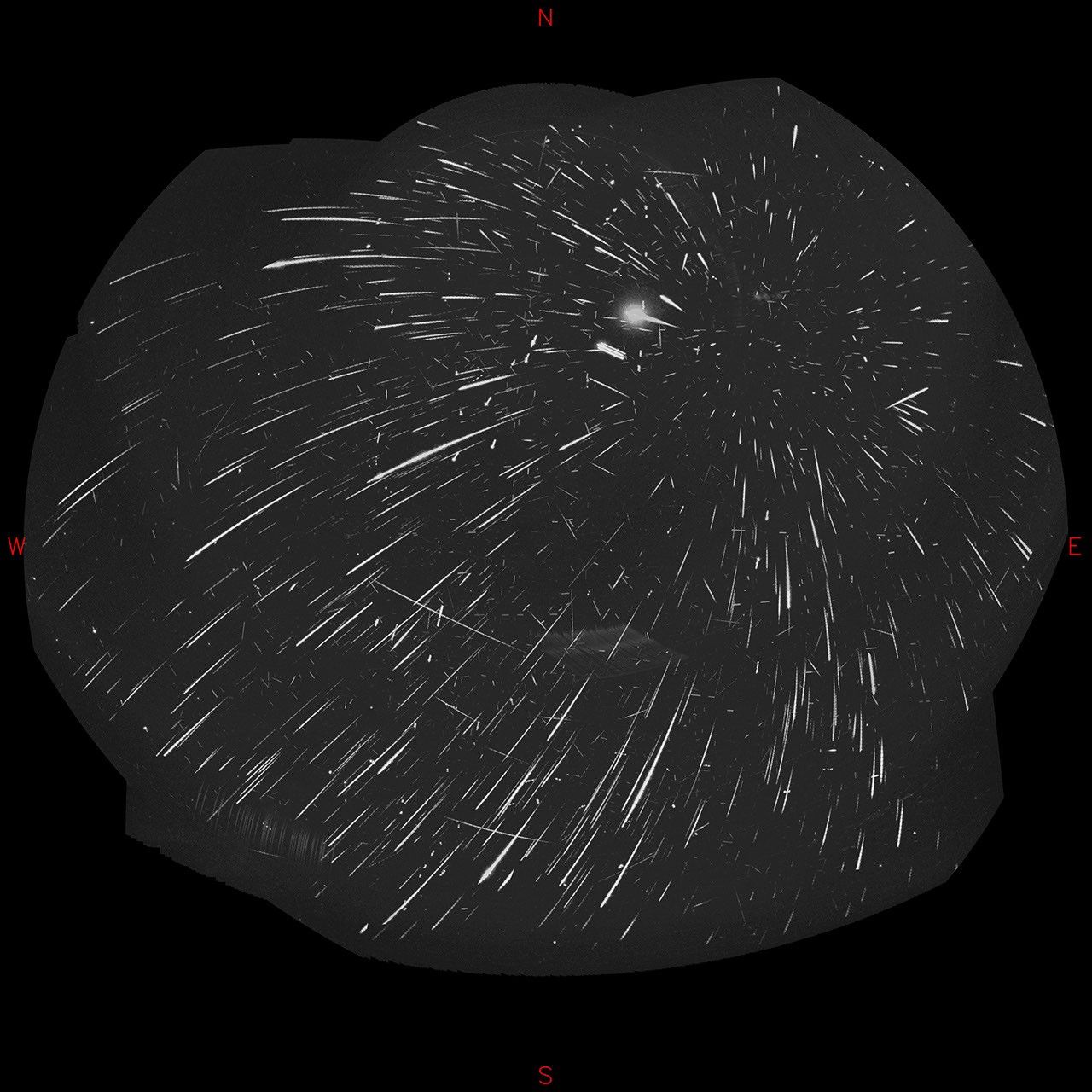
NASA’s Astronomy Picture of the Day has featured a composite all-sky image recorded during the peak of the 2026 Perseid Meteor Shower. The visual data was captured on the night of 12–13 August 2026 at Valašské Meziříčí Observatory in Czechia. The image is credited to Jakub Koukal of the observatory.
To create the final view, images from four dedicated meteor-monitoring cameras were aligned and combined. This process produced an all-night, all-sky perspective that documents the activity of the annual shower. The total count for that specific night reached 1,706 meteors.
Because the recording coincided with the peak activity of the 2026 Perseid Meteor Shower, the majority of the captured objects are Perseids. Their high volume makes them distinct within the composite image. The trails of these meteors trace back to a single radiant located in the upper right of the sky, corresponding to the constellation Perseus.
The image also reveals meteors from other, less active showers by identifying their respective radiants. Meteors from the Kappa Cygnids, a shower with a radiant in the constellation Cygnus, are visible crossing the Perseid trails. Additionally, the antihelion complex, a general region near Aquarius opposite the Sun, is identifiable as a weak source for meteors.
The Astronomy Picture of the Day is a service of the Astrophysics Science Division at NASA’s Goddard Space Flight Center, NASA Science Activation, and Michigan Tech. U. The featured image was published on 22 August 2026.