NASA captures August solar eclipse from ground, air and space
A coordinated observation campaign documented the 12 August total solar eclipse using research jets, scientific balloons and the International Space Station to study the Sun’s corona and atmospheric effects.
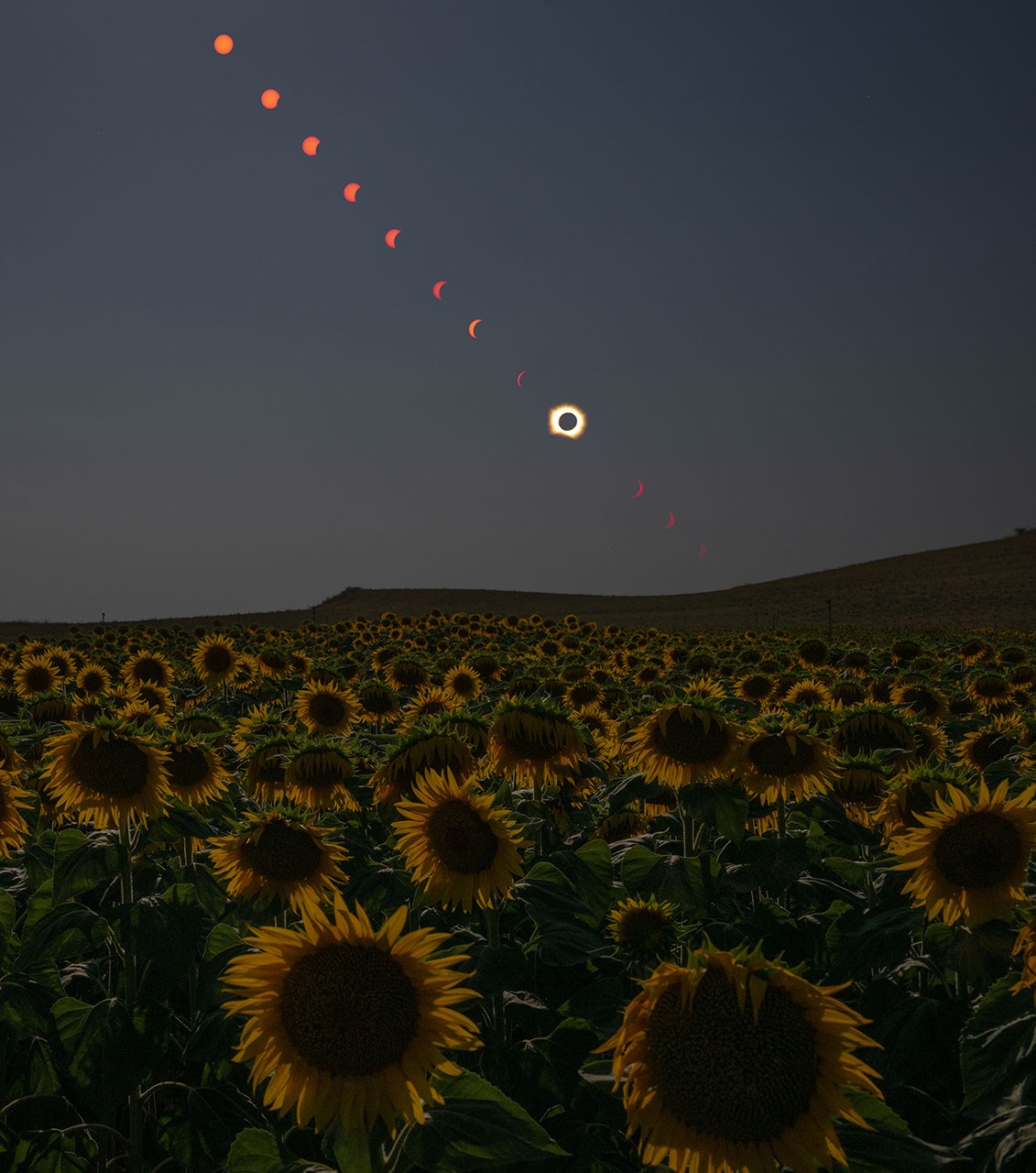
A total solar eclipse passed over Greenland, Iceland and Spain on 12 August, briefly revealing the Sun’s wispy outer atmosphere, known as the corona, to observers in the path of totality. NASA researchers and photographers deployed across multiple platforms to study the phenomenon and document its impact on Earth.
In Spain, a NASA photographer recorded the total eclipse along with the partial phases before and after, continuing until the Sun set below the horizon. In northern Maine, where only a partial eclipse was visible, another photographer captured the International Space Station passing in front of the partially eclipsed Sun. From approximately 250 miles above the ground, a NASA astronaut aboard the station also photographed the partial eclipse from orbit.
NASA pilots flew a WB-57F research jet at an altitude of 50,000 feet to pass through the eclipse’s shadow, extending their time within the darkness. The aircraft carried a suite of cameras that captured high-resolution images of the corona and prominences, which are plumes of electrically charged gas rising off the Sun, in several different wavelengths of light.
Students participating in the NASA-funded Nationwide Eclipse Ballooning Project launched scientific balloons in both Iceland and Spain. These balloons carried instruments designed to capture images of the eclipse’s shadow and study its effects on the lower atmosphere. Although clouds obscured the ground view in Iceland, the weather did not interfere with the balloon-borne instruments’ ability to gather data on how the brief loss of light and heat affected the atmosphere.
Scientists at Predictive Science Inc. had previously used observations from NASA spacecraft and ground-based telescopes to predict the appearance of the corona during the eclipse. They compared these pre-eclipse predictions with a composite image of the corona created from multiple images captured by the NASA-supported DEB Initiative project near León, Spain.
Over the coming months, scientists will analyse the observations and images captured during the 12 August eclipse to present findings about the Sun and its effects on Earth. These observations will also help prepare science teams for future events, including a much longer total solar eclipse expected to be visible from southern Spain and northern Africa on 2 August 2027.