NASA Shifts Deep Space Operations to California as Spanish Wildfires Threaten Madrid Observatory
Mission control for Voyager 1 and the James Webb Space Telescope rerouted to Goldstone complex as fire damage assessment remains pending in Spain.
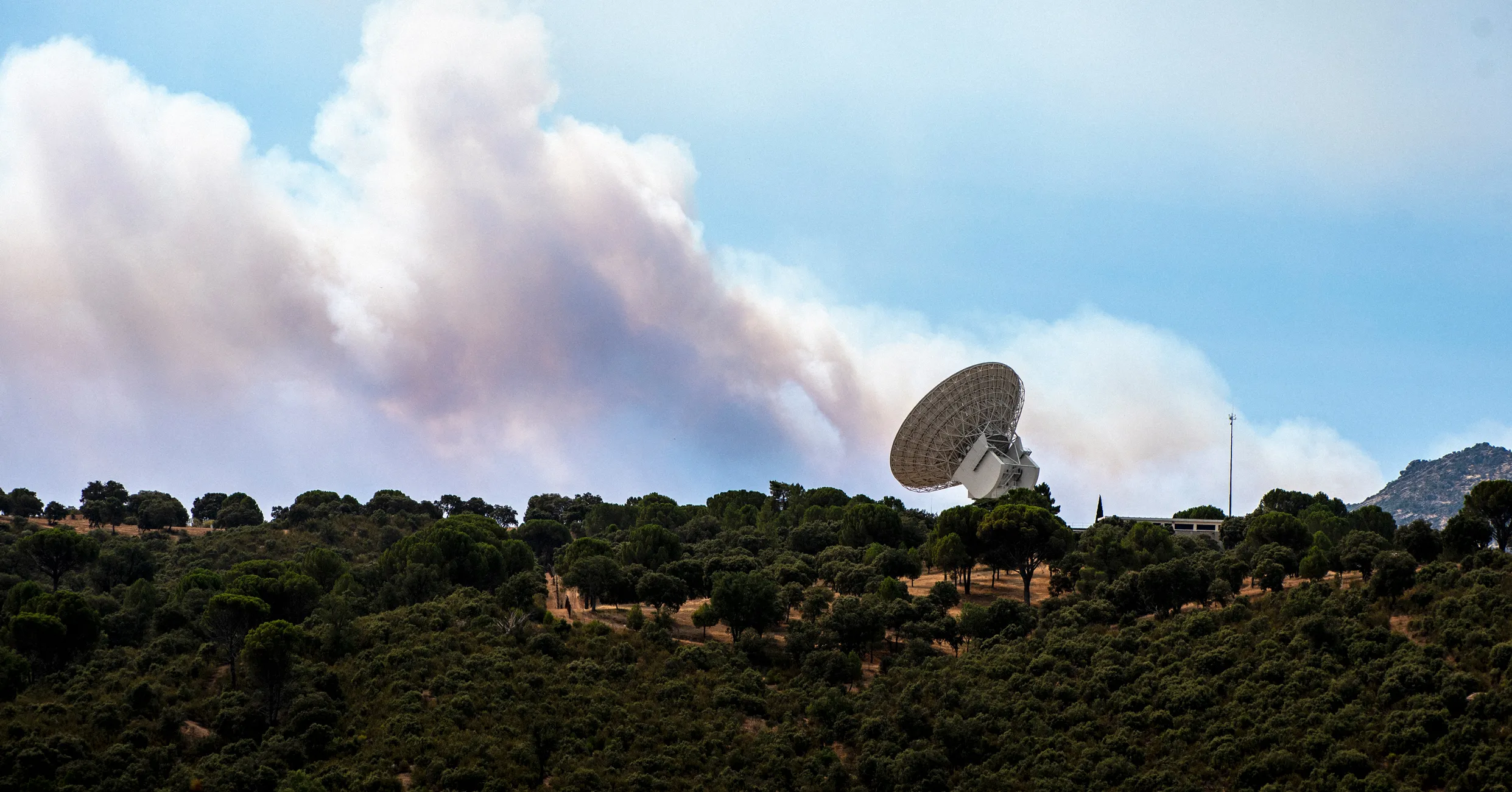
NASA has successfully transitioned mission operations for critical deep space assets to its Goldstone Deep Space Communications Complex in California following the engulfment of its Spanish facility by wildfires. The agency confirmed that all personnel were evacuated from the Robledo de Chavela site near Madrid, ensuring the continuity of support for spacecraft including Voyager 1 and the James Webb Space Telescope.
The incident occurred as Spain declared a wildfire emergency, with multiple blazes burning out of control in the region. Evacuation orders were issued for 60,000 people in the affected municipality, where dramatic images captured radio telescopes surrounded by smoke and flames. While the fire has passed through the observatory complex, the extent of damage to the sensitive equipment remains unassessed due to ongoing emergency conditions.
A NASA spokesperson confirmed that a site assessment could occur as soon as Saturday, provided safety conditions permit. The agency emphasised that the seamless transition to Goldstone has ensured uninterrupted service for spacecraft communications. The Madrid facility, along with counterparts in Canberra and Goldstone, constitutes the largest and most sensitive scientific telecommunications system in the world.
The disruption to the Deep Space Communications Complex is part of a broader European wildfire crisis driven by record high temperatures and climate change. Approximately 200,000 people have been ordered to evacuate across Spain and France, where blazes are also threatening the Bordeaux wine region. French officials described the fires as large, self-sustaining, and difficult to control, with winds shifting to push flames toward metropolitan areas.
Although cooler weather is expected over the weekend to assist firefighters, temperatures are forecast to rise again by Monday, potentially reaching 10 degrees Celsius above normal. This sharp increase could exacerbate existing fires or spark new ones across the region, mirroring similar climate-driven disasters recently seen in Ontario and the US Pacific Northwest.