NASA astronaut Jonny Kim departs agency to resume naval aviation training
After nearly a decade at NASA, including an eight-month expedition to the International Space Station, Jonny Kim is returning to active duty as a lieutenant commander in the U.S. Navy.
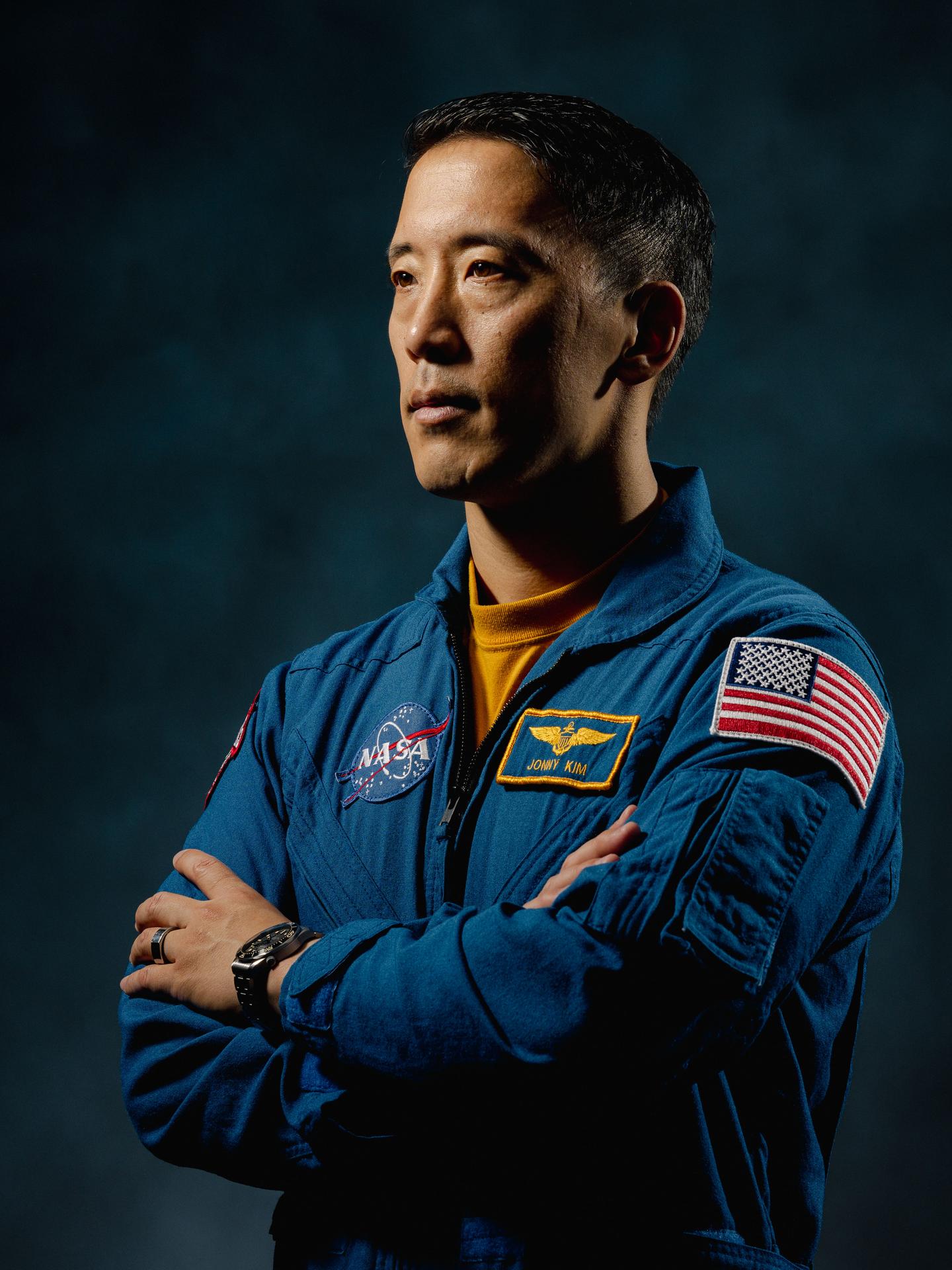
Astronaut Jonny Kim has concluded his tenure at NASA, marking the end of nearly a decade of service that included an eight-month science expedition aboard the International Space Station. His final day at the agency was Thursday, after which he will return to active duty as a lieutenant commander in the U.S. Navy to complete his career in naval aviation training.
Kim launched to the space station in April 2025 aboard the Soyuz MS-27 spacecraft to conduct scientific research as a flight engineer during Expeditions 72 and 73. During the mission, he orbited Earth 3,920 times and travelled nearly 104 million miles. His work contributed to a broad range of scientific investigations spanning technology development, Earth science, biology, and human research critical for future exploration.
Serving as the U.S. Operating Segment lead for the second half of Expedition 73, Kim oversaw operations across the station’s international modules. During this period, the station achieved a historic milestone when every available docking port was occupied for the first time in 25 years. He also commanded the Canadarm2 robotic arm during the first capture of Northrop Grumman’s new Cygnus XL spacecraft, securing 11,000 pounds of supplies for the station. Kim and his Roscosmos crewmates landed safely in Kazakhstan in December 2025.
NASA Administrator Jared Isaacman praised Kim’s contributions, stating that he represented the very best of the agency and continually pushed the boundaries of exploration. Isaacman noted that Kim’s work aboard the International Space Station advanced critical science that will shape NASA’s future missions for decades to come.
Kim was selected as a NASA astronaut in 2017 and completed two years of astronaut candidate training, which included instruction in space station systems, Russian language, robotics, and T-38 flight operations. He later supported station operations as a capsule communicator in NASA’s Mission Control Center at Johnson Space Center. He also contributed to Artemis program development and served as increment lead for Expedition 65.
Born in Los Angeles, Kim enlisted in the U.S. Navy after graduating high school in 2002. He trained as a hospital corpsman and completed Basic Underwater Demolition/SEAL training before joining SEAL Team Three. Over the course of more than 100 combat operations, he served as a medic, sniper, navigator, and point man, earning the Silver Star and Bronze Star with Combat “V.” He holds a bachelor’s degree in mathematics from the University of San Diego and a doctor of medicine from Harvard Medical School.
Kim is a dual-designated naval aviator and flight surgeon. He completed flight training at Naval Air Stations Corpus Christi in Texas and Whiting Field in Florida, and aerospace medical training at the Naval Aerospace Medical Institute at Naval Air Station Pensacola. As he begins his next chapter, Kim said he looks forward to carrying his commitment to service and his enduring love for space and technology into his remaining military career.