Myanmar’s Min Aung Hlaing seeks legitimacy in Thailand
Analysts say the visit aims to leverage Thailand’s influence within ASEAN and secure economic engagement, but experts warn that regional bodies are unlikely to readmit the Myanmar leader until meaningful steps are taken on a peace plan.
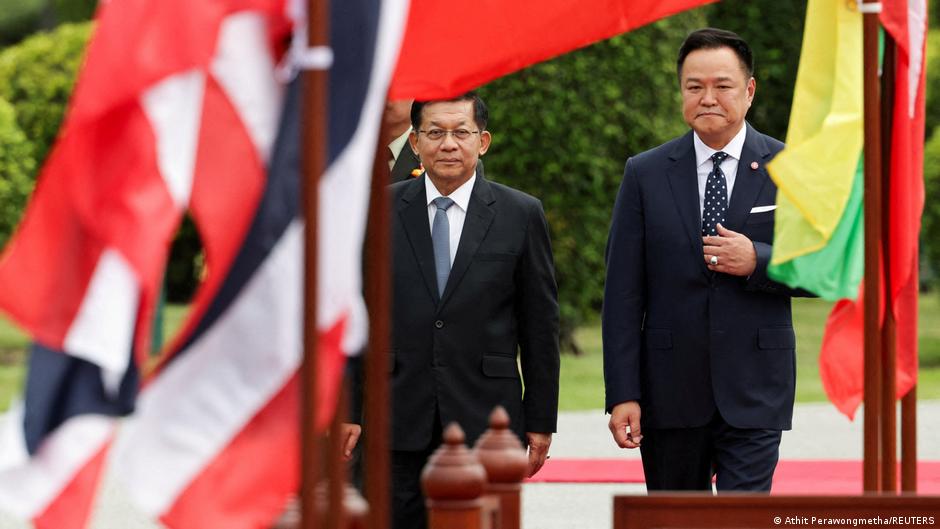
Myanmar’s President Min Aung Hlaing concluded a two-day official visit to Thailand on Friday, marking his first trip to the neighbouring nation since assuming the presidency. The visit included high-level meetings with Thai Prime Minister Anutin Charnvirakul and a business forum for Thai and Myanmar firms, aimed at boosting economic engagement and addressing border trade concerns.
Upon his arrival in Bangkok on Thursday, Hlaing received a state-level reception featuring a red carpet, an honour guard, and national anthems. The pomp and circumstance were designed to recast the former junta chief as the leader of a civilian government after years of diplomatic isolation. Naypyidaw has equated such engagement with acceptance, seeking to leverage bilateral relations to secure greater recognition from external partners.
Thailand is a key strategic partner for Myanmar, serving as one of its top trade partners and a significant investor in the energy sector. A Thai firm operates two of Myanmar’s main gas fields, which supply much of Thailand’s natural gas. The business forum during the visit focused on prioritising economic ties and addressing concerns related to the 2,400-kilometre shared border.
Despite the warm reception, experts note that ASEAN is unlikely to readmit Hlaing to its leaders’ summits until Myanmar demonstrates meaningful progress on a peace plan. The regional bloc, which traditionally emphasises non-interference, has barred Hlaing and his foreign minister from attending summits since the 2021 coup. Hlaing has repeatedly dismissed the peace plan agreed upon by ASEAN members following the coup.
Moe Thuzar from the ISEAS-Yusof Ishak Institute and Wai Yan Phyo Naing from Academia Sinica suggest that Hlaing is attempting to use Thailand’s influence as an ASEAN founder to pressure other member states into accepting his administration. However, both analysts agree that the bloc is not likely to endorse his government on its own terms in the near future.
The political context in Myanmar remains volatile, with a brutal civil war between the military and armed resistance groups killing an estimated 100,000 people and displacing over 3 million since the 2021 coup. Western countries have imposed sanctions over alleged war crimes, and the International Criminal Court requested an arrest warrant for Hlaing in 2024 for crimes against humanity.
Hlaing’s recent official visits to India, China, and Laos, followed by Thailand, reflect a strategy to break out of isolation. Analyst David Mathieson notes that Hlaing is appealing to an international system that may prioritise economic stability over democratic principles, thereby shoring up support among economic elites.