Myanmar military president commutes Aung San Suu Kyi sentence to house arrest amid wider prisoner pardon
President Min Aung Hlaing reduces the Nobel laureate's remaining term as part of an amnesty linked to a Buddhist holiday, leaving more than 13 years of her original 33-year sentence to be served at a designated residence.
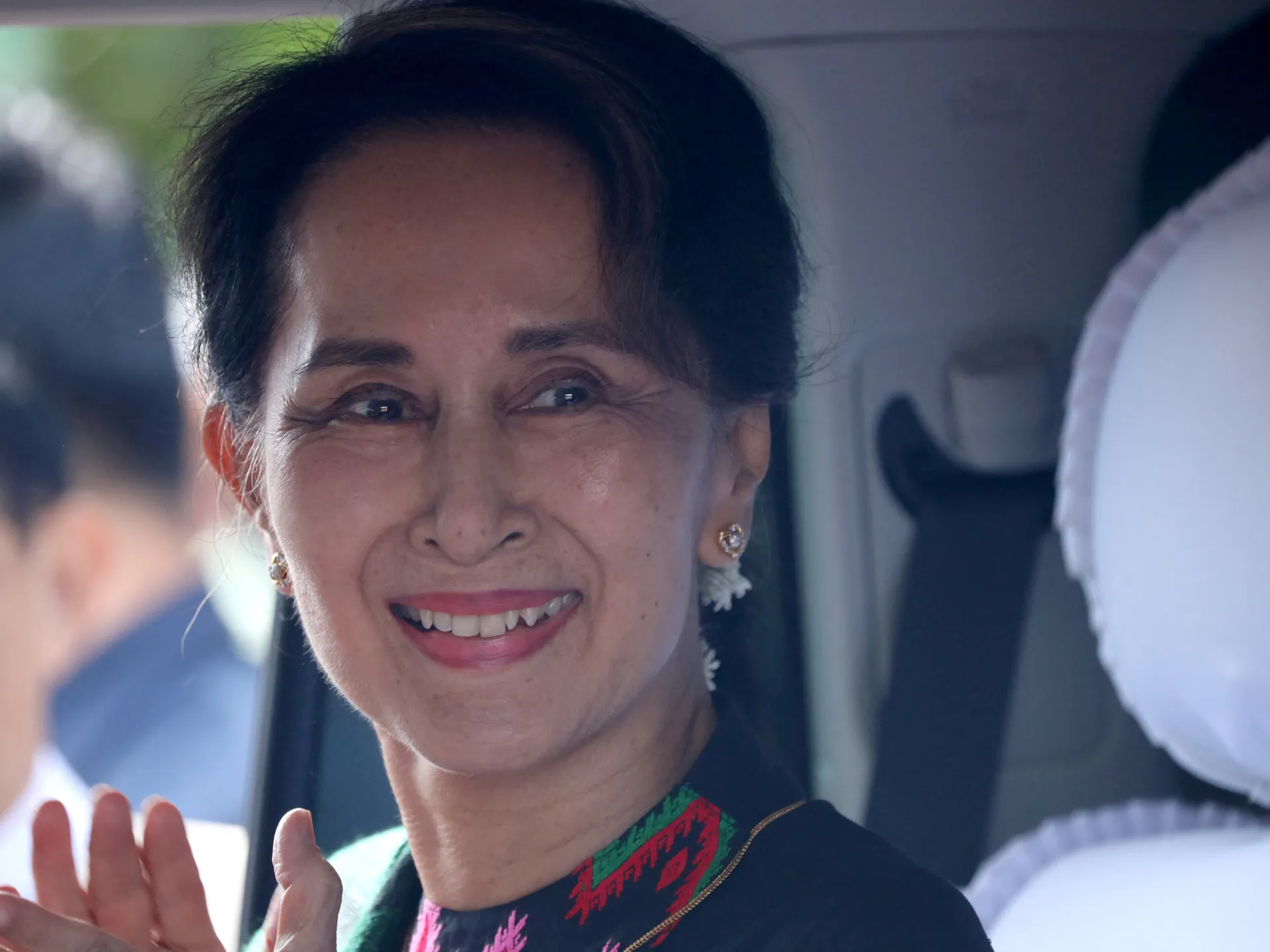
President Min Aung Hlaing has ordered the transfer of former State Counsellor Aung San Suu Kyi from prison to house arrest at a designated residence, a move that commutes her remaining sentence. The decision, announced on Thursday, reduces her original 33-year term to 18 years, meaning she still faces more than 13 years of incarceration. This commutation is the second granted to Suu Kyi in two weeks and forms part of a broader amnesty affecting 1,519 prisoners, including 11 foreigners, tied to a Buddhist religious holiday.
State media broadcast the first public image of the 80-year-old democracy campaigner in years, showing her seated on a wooden bench flanked by two uniformed personnel. However, the procedural governance of this transfer remains opaque; a member of Suu Kyi's legal team confirmed to Reuters that they received no direct notification of the move and only learned of it through news announcements. The legal team noted that they have not been permitted to meet her in person since December 2022, raising questions about the oversight of her detention conditions.
The reduction in sentence follows Suu Kyi's imprisonment since the military coup in 2021, which ousted the civilian government she had led. She was originally sentenced in late 2022 for offences supporters describe as attempts to discredit her and legitimise the army takeover. While the military leadership frames the amnesty as a step toward social reconciliation and justice, rights groups and her supporters have long argued the charges were politically motivated to prevent her return to politics.
International reaction to the commutation has been cautiously positive. A spokesman for United Nations Secretary-General Antonio Guterres, Stephane Dujarric, welcomed the move as a "meaningful step" towards a credible political process. The UN reiterated its call for the swift release of all political prisoners in Myanmar, suggesting that while the shift to house arrest is a development, it does not fully satisfy demands for the complete release of detainees.
The wider amnesty comes after President Min Aung Hlaing was sworn into office in April following an election critics described as neither free nor fair. In his inauguration speech, the president stated his government's aim to promote peace through such amnesties. This latest action follows an earlier pardon on April 17 that released more than 4,500 prisoners, yet the Assistance Association for Political Prisoners reports that 22,047 people have remained in detention since the 2021 takeover.
Despite the change in status, Suu Kyi's confinement remains at an undisclosed location in the capital, Naypyitaw. Reports from 2024 and 2025 suggested declining health issues, including heart problems and dizziness, though these claims could not be independently verified. As she continues to serve her reduced sentence, the focus remains on whether this administrative adjustment signals a genuine shift in policy or simply a modification of existing control mechanisms.