Municipal polls open in Deir el-Balah and West Bank as PA seeks legitimacy
The Central Elections Commission has organised the ballot without direct coordination with Israel or Hamas, facing significant hurdles in importing materials into Gaza while implementing a new electoral system that mandates acceptance of the PLO programme.
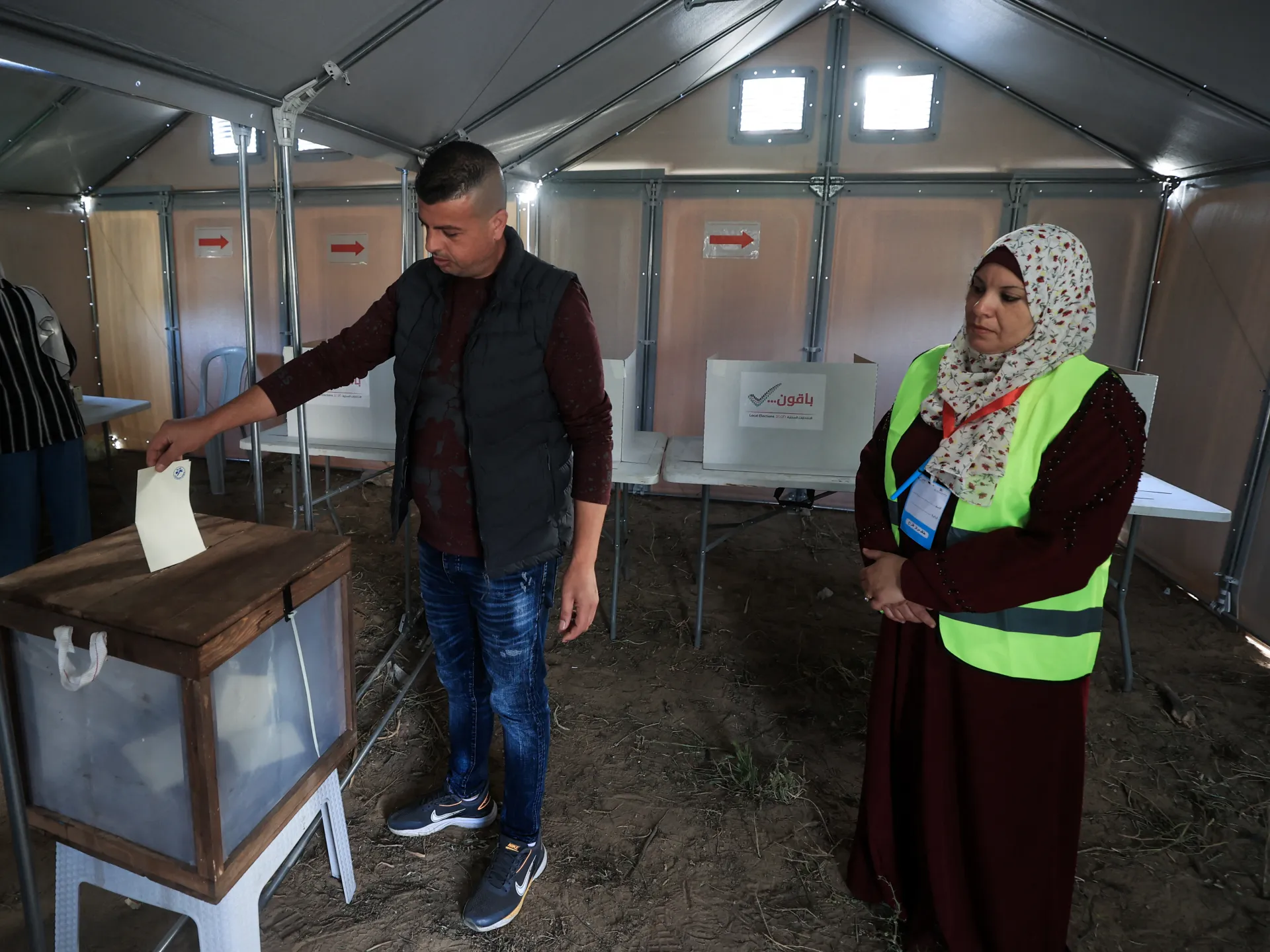
Polling stations opened on Saturday for the first municipal elections in Gaza's Deir el-Balah area in 20 years and in the occupied West Bank since the 2023 war began. The vote represents a significant administrative challenge for the Palestinian Authority, which has organised the process without direct coordination with Israel or Hamas. In Deir el-Balah, approximately 70,000 eligible voters participated in what officials describe as a symbolic pilot vote, while nearly 1.5 million registered voters in the West Bank cast ballots for local councils.
The Central Elections Commission faced severe logistical constraints in the Gaza enclave, specifically an inability to import ballot materials, ballot boxes, or ink. Consequently, the commission was forced to improvise the voting process rather than conduct traditional voter registration. A spokesperson for the commission, Fareed Taamallah, stated that the main idea behind holding the vote in a single city was to link the West Bank and Gaza politically as one system. This approach aims to project an image of reform and legitimacy for the PA, even as public frustration grows over corruption and political stagnation.
To facilitate this process, President Mahmoud Abbas signed a decree last year to overhaul the electoral system. The reforms allow voting for individuals rather than party lists, lower the eligibility age for candidates, and raise quotas for female candidates. However, a requirement introduced in January mandates that all candidates accept the Palestine Liberation Organization programme. This programme calls for the recognition of Israel and the renunciation of armed struggle, effectively sidelining Hamas and other factions that do not adhere to these conditions.
Despite the absence of official candidates from Hamas, polling data from the Palestinian Center for Policy and Survey Research indicates the group remains the most popular Palestinian faction in both Gaza and the occupied West Bank. Most electoral lists are backed by President Abbas's Fatah movement or independent candidates, marking the first time in six local elections that no other faction has officially put forward its own slates. The elections are being held in Area C of the West Bank, which covers 60 per cent of the territory under direct Israeli control, as well as in municipalities occupied since last year's northern West Bank invasion.
The elections come at a time when the PA's power has withered amid years without peace negotiations with Israel and the expansion of illegal Israeli settlements. While the vote in Deir el-Balah is largely symbolic given the enclave's decimated state, the broader exercise in the West Bank allows local councils to oversee services such as water, roads, and electricity. Ramiz Alakbarov, the United Nations deputy special coordinator for the Middle East peace process, described the event as an important opportunity for Palestinians to exercise their democratic rights during an exceptionally challenging period.