Morocco becomes first Arab state to join Gaza stabilisation force amid political deadlock
While Rabat has committed military and police personnel, experts warn that divergent expectations between troop contributors and Israel, alongside the absence of a legitimate Palestinian administration, threaten the mission's viability.
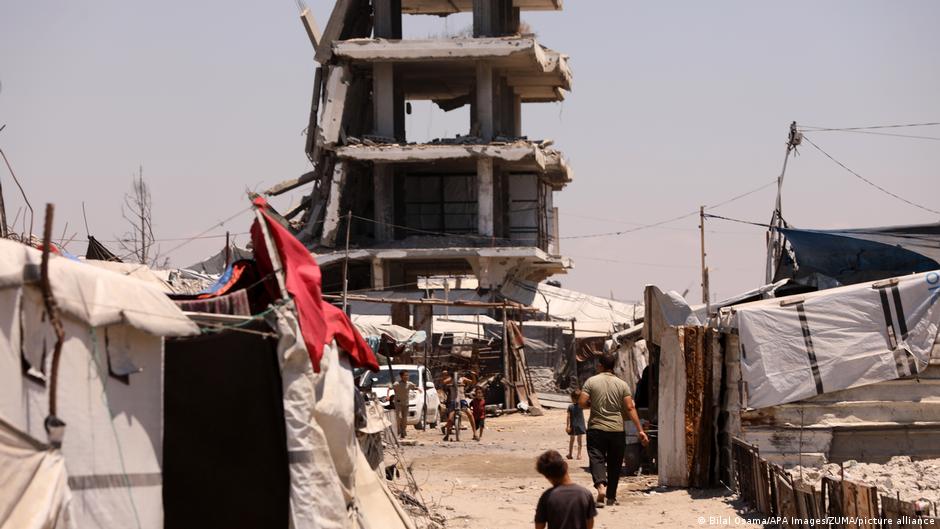
Morocco has signed an agreement to join the International Stabilization Force (ISF) for Gaza, becoming the first Arab nation to commit to the multinational security mission. According to Morocco’s state news agency, MAP, the contribution includes military personnel, police, gendarmerie forces, and a field hospital, reflecting a determination to establish peace and security in the region. The deployment is linked to the "Board of Peace" initiative associated with former US President Donald Trump and is tasked with securing reconstruction, protecting humanitarian aid, and training Palestinian security forces.
The ISF is designed to operate outside standard United Nations command structures, despite receiving UN authorization. Alongside Morocco, Indonesia, Kazakhstan, Kosovo, and Albania have agreed to participate, while Jordan and Egypt have committed to supporting roles only. The force is intended to serve as the security cornerstone of a planned post-war order, aiming to support a long-term political transition rather than merely securing aid deliveries.
However, the mission’s deployment remains uncertain due to a fundamental lack of political consensus among key stakeholders. Gil Murciano, executive director of the Israeli Institute for Regional Foreign Policies, noted that the primary obstacle is not the mission itself but the absence of a political framework in which it can operate. He emphasized that international involvement requires a minimum level of political stability that currently does not exist.
Marcus Schneider, head of the Friedrich Ebert Foundation’s Regional Project for Peace and Security in the Middle East, highlighted a critical divergence in expectations. He stated that Israel seeks to maintain military freedom of action, while potential troop-contributing countries are interested in a traditional peacekeeping mandate with clearly defined risks. These opposing goals create a deadlock that experts from the International Peace Institute argue makes the mission difficult to reconcile.
Israel has maintained that reconstruction should not begin until Hamas disarms, a condition the group has refused to meet despite signalling willingness to withdraw from civilian administration. Hamas is designated as a terrorist organization by the US, EU, and others, complicating its involvement in any international security framework. Arab states, while willing to provide financial backing, are hesitant to send troops or aid without a credible political roadmap and regional legitimacy.
The Washington-based think tank Arab Center Washington DC noted that many Arab governments view participation in the stabilization mission as contingent upon a credible political process. Murciano warned that separating reconstruction from security risks further entrenching the stalemate, as reconstruction itself is an essential component of long-term stability.
While planning for the ISF is well advanced, the mission lacks the necessary political conditions for deployment. The differing views of Israel, Hamas, and Arab states regarding the force’s role and the prerequisites for its operation continue to hinder progress, leaving the future of the stabilization effort in doubt.